





Tokyo's Precarious Power
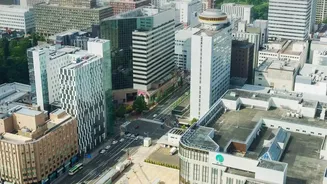
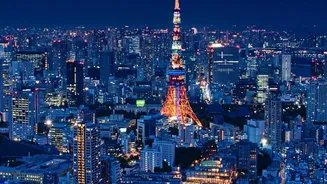
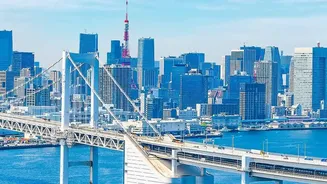
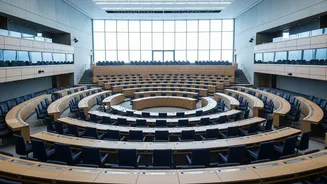
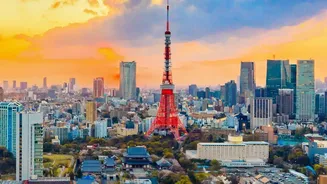
To understand the gravity of Japan's decision, one must first understand Tokyo. It is more than just a capital; it is a megacity that stands as the nation's political, financial, and cultural heart. Home to the Emperor, the Diet (Japan's parliament),
and the headquarters of a vast number of Fortune 500 companies, its greater metropolitan area houses over 37 million people. This immense concentration of people and power has driven Japan's post-war economic miracle. However, this strength is also a profound vulnerability. Tokyo sits precariously at the intersection of four tectonic plates, an area known as the Pacific Ring of Fire. The Japanese government estimates there is a 70% chance of a magnitude-7 earthquake striking the city within the next 30 years. Such a catastrophe could paralyze the country in an instant.
A National Insurance Policy
In response to this existential threat, Japan's Diet passed a landmark law in July 2026. It does not propose moving the capital from Tokyo entirely. Instead, it creates a legal framework to designate one or more 'secondary capitals' to serve as a backup. The legislation's purpose is to ensure the continuity of national government and social functions if Tokyo is incapacitated by a natural disaster, cyber attack, or other major emergency. This isn't just about finding a temporary office for the Prime Minister. The plan involves building redundant government facilities, securing data and communication infrastructure, and ensuring that a chosen city—or cities—can seamlessly take over legislative and administrative functions. It is, in essence, a national insurance policy against a worst-case scenario.
The Contenders for the Crown
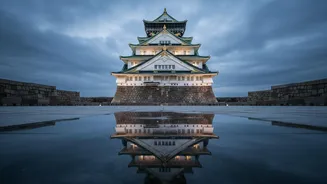
The new law has officially started the hunt for Japan’s backup hub, and several prefectures have already expressed strong interest. Osaka, Japan's second-largest metropolitan economy, is widely seen as the frontrunner. Supporters point to its existing infrastructure, international airport, and historical role as a commercial center as proof of its readiness. However, the plan is not without controversy, as critics note that Osaka is also in a region with significant seismic risk. Other cities and prefectures, including Fukuoka, Aichi (home to Nagoya), and Hokkaido, have also thrown their hats into the ring, each arguing their unique geographical and infrastructural advantages make them a suitable choice. The law allows for multiple regions to be selected, potentially creating a network of resilient hubs rather than a single alternative.
More Than Just Disaster-Proofing
While disaster preparedness is the primary driver, the new law is also a key part of Japan's broader “Regional Future Strategy.” For years, leaders have struggled with the 'overconcentration' in Tokyo, which has led to depopulation and economic stagnation in other parts of the country. By designating secondary capitals, the government hopes to stimulate large-scale private investment, create industrial clusters in fields like AI and semiconductors, and encourage a more balanced distribution of wealth and opportunity. The initiative aims to offer tax incentives and deregulation to attract businesses and talent away from the crowded capital, hoping to revitalise regional economies and create a more multipolar, decentralized nation. This dual-purpose approach seeks to turn a crisis-management plan into a catalyst for long-term national renewal.
A Lesson for Megacities Everywhere
Japan's bold move offers a powerful lesson for countries around the world, including India, that are grappling with similar issues of urban over-concentration. Many of the world's most important cities are also dangerously exposed to natural disasters. From Delhi's position in a high-risk seismic zone to Mumbai's increasing vulnerability to coastal flooding and rising sea levels, the risks are clear. While wholesale relocation of a capital is rarely feasible, Japan’s model of creating functional redundancy is a pragmatic and forward-thinking strategy. It demonstrates an understanding that resilience in the 21st century is not about building impenetrable fortresses, but about creating flexible, distributed systems that can absorb shocks and ensure continuity. As extreme weather and other threats intensify globally, Japan’s plan may become a blueprint for how megacities can prepare for an uncertain future.