


What Is an Evening Elongation?
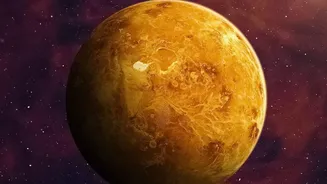
In simple terms, an elongation is the point where Venus appears farthest from the Sun in our sky. Because Venus orbits the Sun inside of Earth's own orbit, it’s forever tethered to the Sun from our perspective. We never see it at midnight; it's always
lingering near sunrise or sunset. This event is called an evening elongation because Venus will be visible after sunset. On August 15, 2026, Venus will reach its maximum angular distance from the Sun—a full 46 degrees. This means the planet will be high above the horizon, shining brightly in the twilight, offering one of the best opportunities to view it all year.
The Dazzling Evening Star
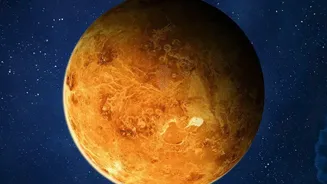
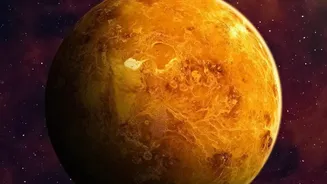
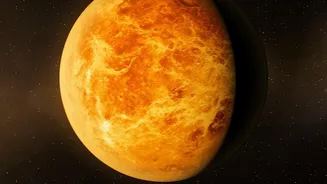
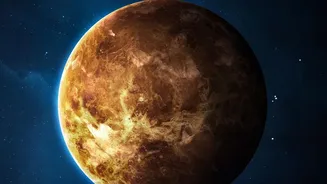
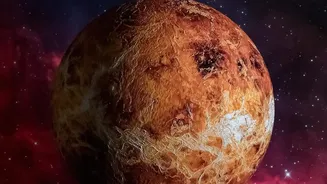
Often mistaken for a star or even an aircraft, Venus is, after the Moon, the brightest object in our night sky. During its August elongation, it will shine at a brilliant magnitude of -4.4. This exceptional brightness is due to its thick, highly reflective cloud cover and its relative proximity to Earth. While it appears as a bright dot to the naked eye, a telescope would reveal something more. Around its greatest elongation, Venus looks like a tiny, half-illuminated Moon. This is because, from our viewpoint, we are seeing only a portion of its sunlit side. As it continues its orbit, observers with telescopes can watch its phase change over the following weeks.
How to See Venus From India
The good news for sky-watchers in India is that Venus will be prominently visible. To catch this celestial sight, simply look towards the western sky shortly after sunset. You won’t need any special equipment; its brightness makes it unmissable, easily piercing the twilight glow. For the best view, find a location with an unobstructed view of the western horizon, away from tall buildings and bright city lights. The planet will be visible for a few hours after the sun goes down, giving you ample time to spot it. On the evenings of August 15 and 16, a lovely crescent Moon will appear near Venus, creating an even more picturesque scene.
An August Full of Celestial Events
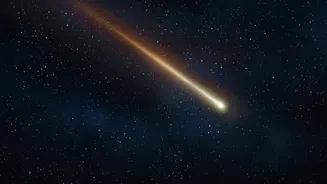
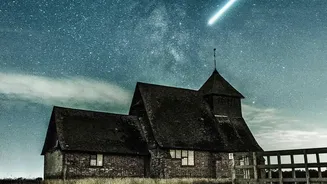
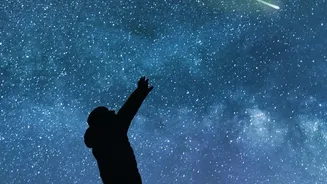
This year, Venus's performance is part of a particularly busy month for astronomy enthusiasts. Its greatest elongation happens to occur right around the peak of the annual Perseid meteor shower on August 12-13. With the New Moon ensuring dark skies, conditions are perfect for spotting meteors. While a total solar eclipse will also occur on August 12, it will not be visible from India. Even so, the combination of Venus at its best and a strong meteor shower provides a fantastic reason to spend a few evenings looking up. After its peak on August 15, Venus will remain a dominant feature in the evening sky through October before it begins to swing back toward the Sun's glare.