



From Sustainable to Regenerative Travel
For years, 'sustainable travel' was the buzzword, focusing on reducing negative impacts like minimizing waste and conserving water. Now, the concept has evolved into 'regenerative travel'. The goal is no longer just to do no harm, but to actively leave
a destination better than it was found. This approach sees hotels as integral parts of their local environment and community, with a responsibility to restore and replenish them. For luxury travelers, this means a vacation can be more than an escape; it can be a contribution. Properties are weaving conservation and cultural preservation into the very fabric of the guest experience, moving it from a back-of-house operation to a front-row activity.
What Does a Guest Gardener Do?
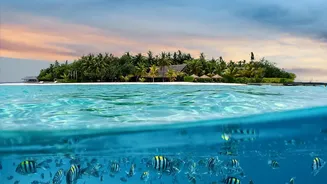
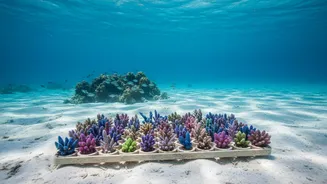
Instead of simply observing marine life from a glass-bottom boat, guests are now invited to become stewards of the reef. Guided by resident marine biologists, visitors can participate in hands-on coral planting sessions. The experience often begins with a briefing on reef ecology and the threats corals face. Guests then help attach small, living coral fragments—often pieces that have broken off naturally—to specially designed frames or structures. These frames are then carefully placed in underwater nurseries or directly onto degraded sections of the house reef. At resorts like the Waldorf Astoria Maldives Ithaafushi and Angsana Velavaru, this activity is as bookable as a spa treatment, creating a powerful, personal connection to the ocean. Many resorts, including the Four Seasons in the Maldives, even provide guests with photo updates on their adopted coral's growth long after they've returned home.
Pioneers of the Blue Transformation
The Maldives has become a global hub for this trend, where the health of the house reef is a primary selling point. Resorts like OUTRIGGER Maldives Maafushivaru and Siyam World have robust, biologist-led programs that engage families in coral restoration. The St. Regis Maldives Vommuli Resort partners with the organization Reefscapers, allowing guests to join an 'Adopt-a-Coral' program and actively help build new reef structures. By 2025, the resort had already planted around 300 coral frames. But the movement extends far beyond the Maldives. In Fiji, the Outrigger Fiji Beach Resort has seen an increase in marine life after guests helped plant an area equivalent to over 100 football fields with coral. In the Caribbean and Hawaii, resorts are also launching programs where guests can help maintain coral nurseries and learn from on-site experts.
Is It Truly Effective?
A critical question is whether these tourist-led initiatives deliver real ecological benefits or are simply a form of 'greenwashing'. The answer depends entirely on the program's design and scientific oversight. When properly managed by marine biologists, these projects can be highly effective. They help increase coral cover and genetic diversity in areas damaged by bleaching or storms. Some projects report high survival rates; the Soneva Foundation in the Maldives documented a 74% survival rate for its planted corals after a major bleaching event. However, success isn't guaranteed. One study on the Great Barrier Reef found that survivorship can vary significantly, with costs ranging from around $33 to $178 per surviving coral. The most impactful programs are those integrated into long-term, scientifically monitored strategies, rather than being offered as standalone, feel-good activities. They also generate crucial funding and awareness, turning tourists into advocates for marine conservation.