


The Old Way: A One-Way Trip
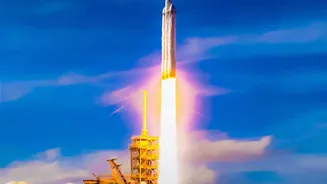
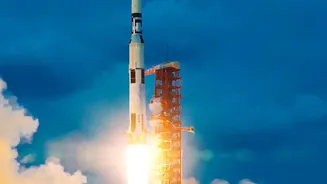
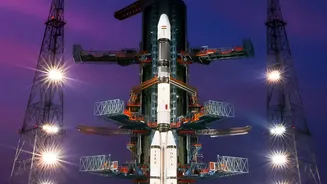
For most of spaceflight history, getting to orbit was an incredibly expensive, single-use affair. A rocket, a marvel of precision engineering costing hundreds of millions of dollars, would launch its payload and then be discarded, its valuable components
burning up on re-entry or falling into the ocean. Imagine flying from Mumbai to Delhi in a plane that is thrown away after a single journey. That was the economic reality of space travel. This 'expendable' model meant that access to space was limited to governments and large corporations that could afford the staggering price tag for each mission. The high cost was a fundamental barrier, restricting the frequency of launches and the scope of what was possible beyond Earth.
The Reusable Revolution Explained
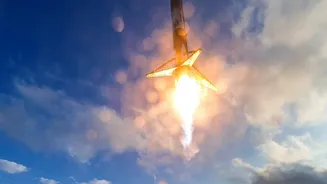
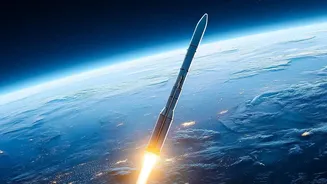
The 'Rocket Revolution' is centred on changing this wasteful paradigm. Companies, pioneered by SpaceX, have successfully developed rockets where the most expensive part—the first-stage booster—can return to Earth, land itself, and be used again for future missions. After separating from its upper stage, the booster uses its own engines, along with grid fins for steering, to perform a controlled descent and land vertically on a ground pad or a drone ship at sea. This feat of engineering turns the booster from a disposable piece of hardware into a reusable asset, much like a commercial airliner. While the technology is complex, requiring advanced navigation and control systems, the concept is simple: don't throw away the engine after one use.
The Game-Changer: Slashing Costs
The primary impact of reusability is a dramatic reduction in the cost of accessing space. A new Falcon 9 rocket from SpaceX, for example, costs around $60-$67 million, but reusing the booster can cut that cost significantly. Some estimates suggest reusability can lower launch costs by 30-50%, and in some cases even more. Before reusable systems, launching one kilogram of payload to low Earth orbit could cost tens of thousands of dollars; now, it can be under $2,000. This financial disruption is what fuels the revolution. It opens the door for new businesses, more frequent scientific missions, and large-scale projects that were once economically unfeasible, such as vast satellite constellations for global internet.
India’s Leap Into Reusability
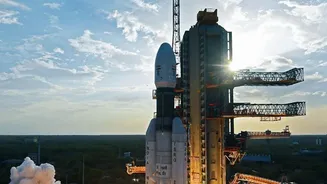
India, a major space-faring nation, is actively pursuing this crucial technology. The Indian Space Research Organisation (ISRO) is developing its own capabilities through its Reusable Launch Vehicle – Technology Demonstrator (RLV-TD) programme. This winged vehicle, which looks like a small space shuttle, is a testbed for key technologies like hypersonic flight and autonomous landing. Beyond the RLV, ISRO is also working on a Next Generation Launch Vehicle (NGLV) which is planned to be partially reusable with a vertically landing first stage, similar to the Falcon 9. As India aims to increase its share of the global space economy from about $8 billion to $44 billion by 2033, and with the private sector being encouraged to take over launch manufacturing, developing cost-effective, reusable rockets is essential for the country's future in space.
What 'Expanded Access' Really Means
Lower costs and more frequent launches are not just numbers on a spreadsheet; they translate into tangible new opportunities. 'Expanded access' means more satellites providing internet to remote villages, better climate and disaster monitoring from space, and new industries like in-orbit manufacturing and space tourism becoming viable. It allows universities, startups, and developing nations to participate in space exploration in ways they couldn't before. The rocket revolution is fundamentally democratising the final frontier, changing it from an exclusive club of superpowers into a bustling ecosystem of innovation open to more players than ever.