






What is NavIC and Why Is It Critical?
NavIC, or Navigation with Indian Constellation, is India's answer to foreign-owned Global Positioning Systems (GPS). Developed by the Indian Space Research Organisation (ISRO), it's a regional navigation satellite system designed to provide accurate positioning,
navigation, and timing (PNT) services across India and a region extending 1,500 kilometres beyond our borders. Its importance cannot be overstated. During the 1999 Kargil War, India experienced the strategic vulnerability of relying on a foreign-operated GPS, which can be restricted or denied during conflicts. NavIC ensures that our armed forces have a secure, encrypted, and independent system for missile guidance, troop movement, and coordinating warships. For civilians, it promises more accurate location data for everything from disaster management and transportation to banking and power grids.
The Heart of the Problem: Failing Clocks
The current challenge facing NavIC stems from a critical component: the atomic clocks aboard its first-generation satellites. These clocks are the heart of any navigation system. A satellite determines your location by sending a time-stamped signal; a receiver on the ground calculates the distance based on how long that signal took to arrive. Even a microscopic drift in time can lead to a positioning error of hundreds of metres. Unfortunately, the imported rubidium atomic clocks on several of India's initial IRNSS satellites have failed over the years. With some of the older satellites also past their ten-year operational lifespan, the constellation has been significantly weakened.
A Constellation Under Strain
To provide a standalone position, a navigation system needs a minimum of four functional satellites. Three are required to pinpoint a location (latitude, longitude, and altitude), while a fourth is necessary to correct for time errors in the user's device. Due to the clock failures, the NavIC constellation currently has only three fully operational PNT satellites left in orbit: IRNSS-1B, IRNSS-1I, and the newer NVS-01. This means that, as of now, NavIC cannot provide independent navigation services, a fact the government has confirmed. While its timing service remains functional, the crucial positioning capability for both strategic and civilian users is inactive, awaiting reinforcement.
Enter NVS-03: A Timely Reinforcement
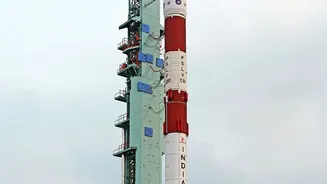
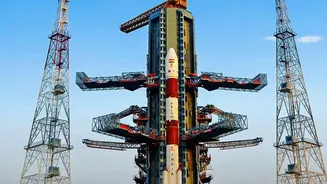
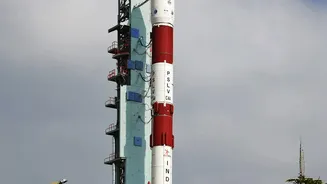
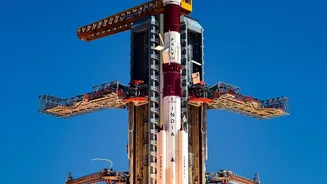
ISRO's solution is the NVS series of second-generation satellites, designed to replenish and upgrade the constellation. After the previous mission, NVS-02, failed to reach its final orbit in January 2025, all eyes are on the upcoming launch of NVS-03. ISRO is targeting a launch window between October 15 and 20, 2026, from the Satish Dhawan Space Centre. The successful launch of NVS-03 is critical as it will restore the minimum four-satellite quorum needed to reactivate NavIC’s standalone positioning services. This new satellite comes with significant upgrades, including a longer mission life of 12 years and, most importantly, an indigenously developed rubidium atomic clock designed to be more reliable than the imported ones that failed.
The Road to a Robust NavIC
The NVS-03 satellite will not only bring the constellation back to operational strength but also enhance its capabilities. The new satellites transmit signals in the L1 frequency band, which is widely used in civilian devices like smartphones and wearables globally. This will improve interoperability and make it easier for manufacturers to integrate NavIC compatibility into consumer products. The launch is just the first step in a broader recovery plan. Two more satellites, NVS-04 and NVS-05, are already in advanced stages of production. By systematically launching these new-generation satellites, ISRO aims to build a more resilient, reliable, and technologically advanced NavIC system for the decades to come, securing India's strategic autonomy and expanding its utility for all citizens.