





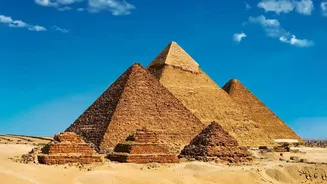

Saqqara and Dahshur: The Original Pyramids
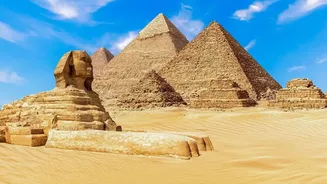
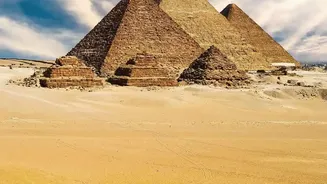
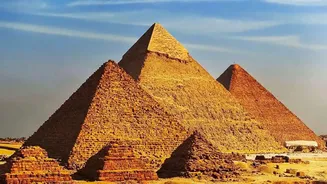
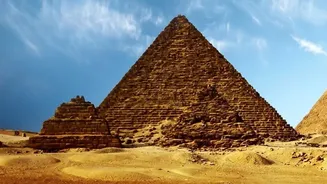
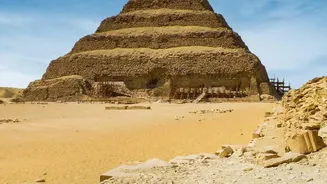
While the Pyramids of Giza are an unmissable spectacle, they are just one chapter in the story of ancient Egypt's architectural ambitions. A short drive from Cairo lies the sprawling necropolis of Saqqara, home to the Step Pyramid of Djoser, considered
the world's first monumental stone building. This is where pyramid-building began, and its vast, less-crowded complex allows you to trace that evolution. A little further south, the pyramids at Dahshur mark the next crucial phase. Here, you can witness the ancient architects' learning curve with the aptly named Bent Pyramid, their first attempt at a smooth-sided structure, and the magnificent Red Pyramid, Egypt’s first successful true pyramid. Exploring these sites often feels more like an adventure; you can descend into the chambers of the Red Pyramid, often without the long queues found at Giza, offering a more personal and thrilling connection to the past.
Abydos and Dendera: Masterpieces of Art
Many standard tours of Upper Egypt focus solely on the grand temples of Luxor and Karnak. But for those willing to take a day trip north, the temples of Abydos and Dendera offer a visual feast that is arguably unmatched. The Temple of Seti I at Abydos is renowned for its incredibly preserved, delicate reliefs, which are considered among the finest in all of Egypt. It is a site steeped in myth, once a primary cult center for the god Osiris. One of its most significant features is the Abydos King List, a carved chronological list of 76 pharaohs that has been vital for historians. Further along the route, the Temple of Hathor at Dendera is one of the country's best-preserved temple complexes. Its main highlight is the spectacular hypostyle hall, where massive columns topped with the face of the goddess Hathor support a brilliantly painted ceiling depicting astronomical scenes. Because they are off the main tourist circuit, both temples can be enjoyed with a sense of peace and quiet that is rare at more famous sites.
Siwa Oasis: A Desert Sanctuary
Deep in the Western Desert, near the border with Libya, lies the Siwa Oasis, a tranquil world away from the Nile Valley's intensity. This remote paradise is a unique blend of natural beauty and profound history. It is famous for the Temple of the Oracle, which was visited by Alexander the Great himself. Life here moves at a different pace, centered around lush date palm groves, shimmering salt lakes you can effortlessly float in, and the unique culture of its Amazigh (Berber) inhabitants. The heart of the oasis is the Shali Fortress, a 13th-century mud-brick citadel that offers a glimpse into a traditional way of life. Reaching Siwa requires a long journey by bus or car from Cairo or Alexandria, but the reward is an experience of profound peace and authenticity, making it the ultimate slow-travel destination for those looking to disconnect and immerse themselves in a unique corner of Egyptian heritage.
Coptic Cairo: A Story of Faith
Within the bustling metropolis of modern Cairo is a quiet, ancient neighborhood known as Coptic Cairo. This area, also called Old Cairo, predates the founding of the Islamic city and stands on the site of the Roman fortress of Babylon. It offers a fascinating journey into Egypt's rich Christian history. A walking tour here feels like stepping into another era. You can visit the famous Hanging Church, built atop the Roman fortress gatehouse, and the Church of Saints Sergius and Bacchus, which is believed to have sheltered the Holy Family during their flight into Egypt. The Coptic Museum houses a vast collection of art and artifacts that tell the story of one of the world's oldest Christian communities. Easily accessible by metro, this compact district is a place of serene courtyards, ancient walls, and layered history, offering a vital and often overlooked perspective on Egypt’s diverse cultural identity.