




The Key Ingredients for Life
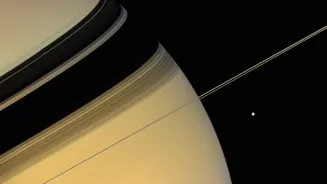
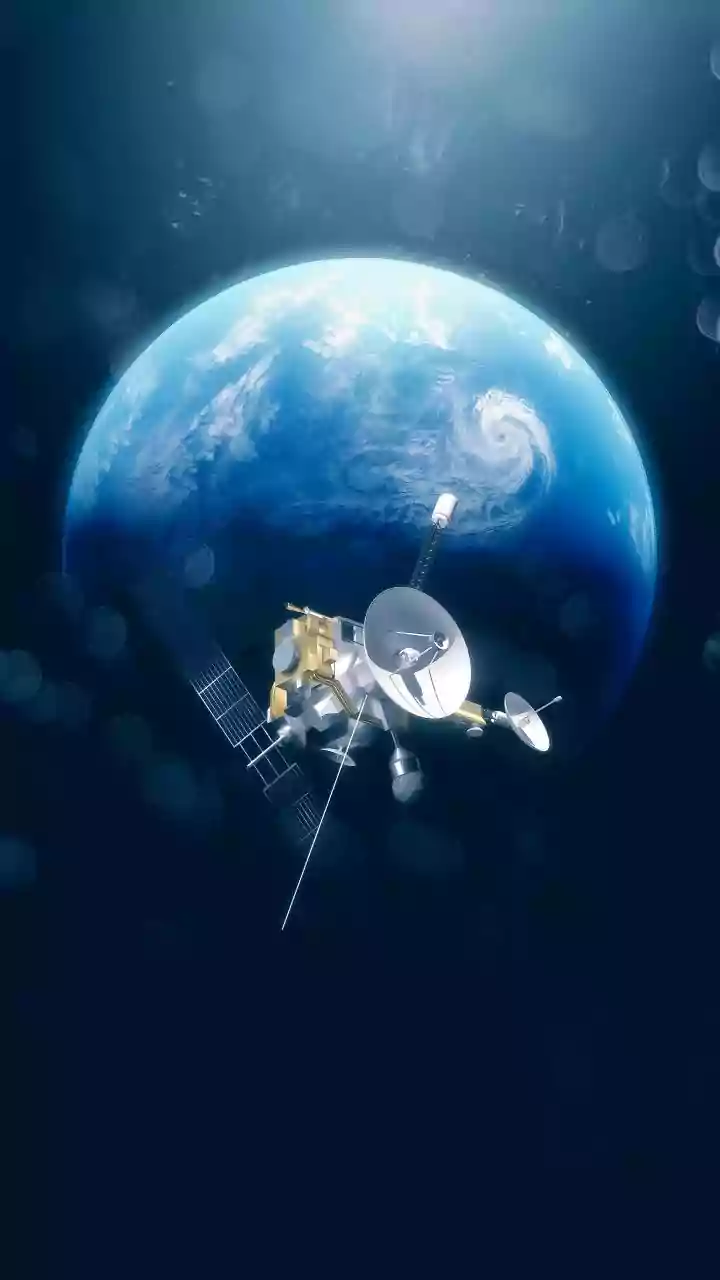
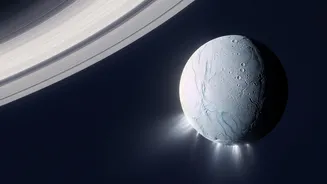
For years, scientists have been captivated by Enceladus, a relatively small moon covered in ice. The reason for this fascination lies beneath its frozen shell: a global, liquid water ocean. Data from NASA's Cassini mission, which explored Saturn and its moons
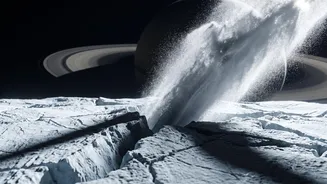
from 2004 to 2017, revealed that this ocean is not just water. It’s a salty sea that vents into space through huge cracks in the ice at its south pole, creating massive plumes of ice and vapour. By flying through these plumes, Cassini found that Enceladus has most of the essential elements for life as we know it: carbon, hydrogen, nitrogen, oxygen, and sulfur. However, one crucial ingredient was missing: phosphorus.
A Breakthrough Discovery of Phosphorus
That changed when scientists, re-analysing Cassini's data, made a groundbreaking discovery. They found clear evidence of phosphorus, in the form of phosphates, locked inside salt-rich ice grains ejected from the moon. This was the first time this essential element had been found in an ocean beyond Earth. Phosphorus is a fundamental building block for life. It forms the backbone of DNA, is a key component of cell membranes, and is vital for the energy-carrying molecules found in all terrestrial life. Lab experiments based on the Cassini data suggest that phosphate concentrations in Enceladus's ocean could be 100 times, or even thousands of times, higher than in Earth's oceans, satisfying one of the strictest requirements for habitability.
A Moon That Prepares Samples for Us
The latest headline-making news comes from two recent studies from researchers at Freie Universität Berlin, published in late September 2026. These new lab studies offer a double dose of good news. The first study reveals something remarkable about how the plumes are formed. As ocean water travels up through the cracks in the ice shell, it freezes slowly. This slow-freezing process naturally separates and sorts the ocean's chemical components. Instead of a uniform mix, salts and organic compounds can become highly concentrated in specific ice grains. In essence, Enceladus is performing a crucial step of laboratory analysis for us, concentrating potential biosignatures—the chemical fingerprints of life—making them much easier to detect by a future spacecraft.
Could Life Actually Survive There?
The second study tackled another critical question: even with all the right ingredients, could anything actually live in such an alien environment? The researchers simulated the presumed conditions on Enceladus's seafloor, where hydrothermal vents are thought to exist, creating a hot, energy-rich environment. They introduced a type of Earth microbe known as a methanogen, which thrives near deep-sea vents on our own planet. The microbes not only survived but thrived in the lab-created Enceladus ocean, even under its highly alkaline conditions. This demonstrates that similar organisms could potentially survive on Enceladus, using chemical reactions to fuel themselves.
Searching for Signs of Life
It's crucial to be clear: scientists have not found life on Enceladus. What they have found is mounting evidence that the conditions there are surprisingly favourable for life to exist. Previous studies of Cassini data have also identified nitrogen- and oxygen-bearing compounds that are precursors to amino acids—the building blocks of proteins. And other lab work has confirmed that amino acids could survive the high-speed journey from the ocean into space to be collected by a passing probe. These latest findings strengthen the case for a return mission. Proposed concepts, like the Enceladus Orbilander, would orbit the moon and sample its plumes before landing to search for definitive biosignatures. While such a mission is likely decades away, the science it would perform has never looked more promising.