

A New Beast in the Cosmic Zoo
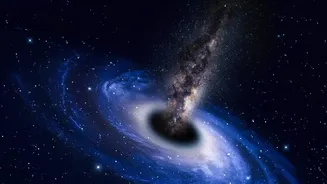
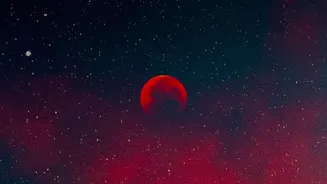
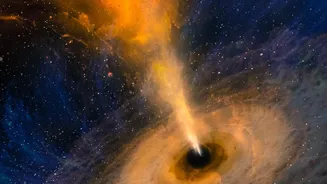
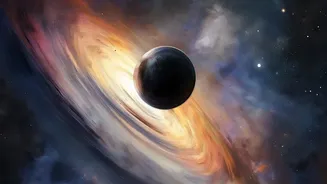
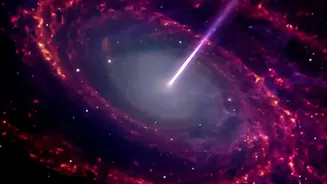
Imagine a star the size of our entire solar system. It’s not burning with the golden light of nuclear fusion like our sun, but glowing an intense, deep red. And at its heart, there isn't a superheated core, but a black hole, voraciously feeding on a colossal
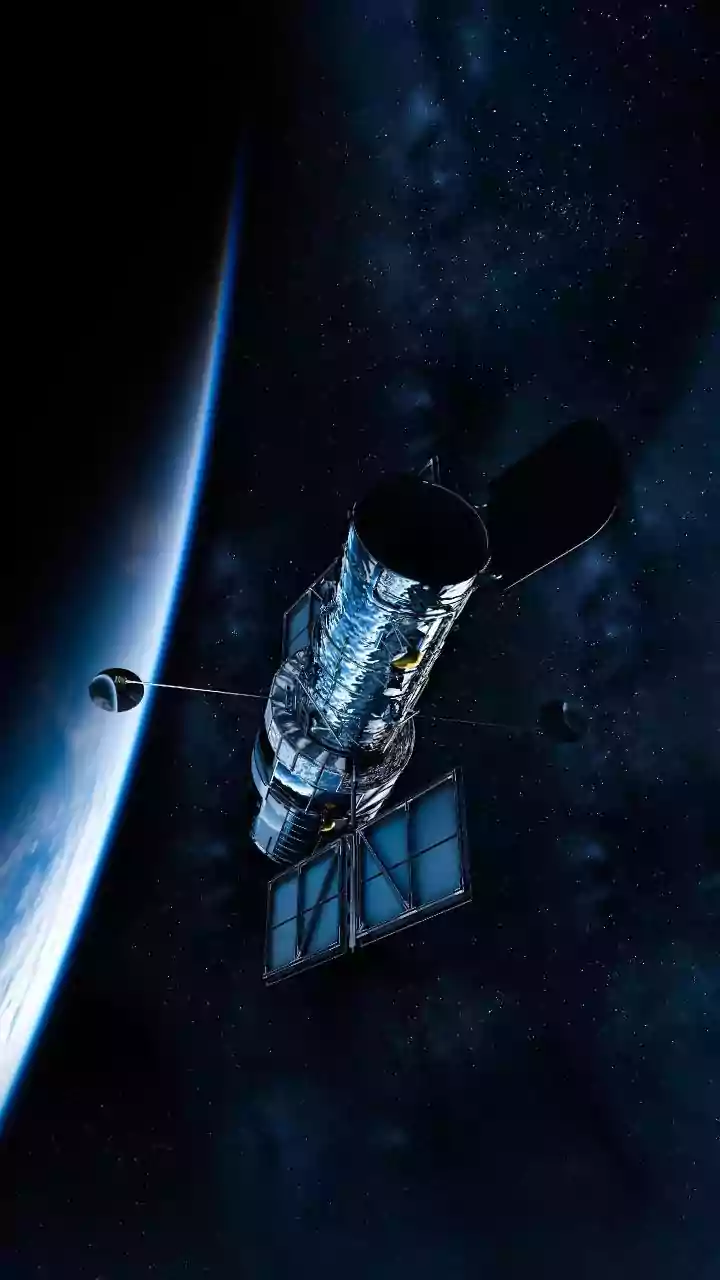
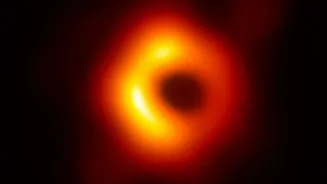
shroud of gas. This isn't science fiction; it’s what a team of astronomers believes they have found, lurking in images from the James Webb Space Telescope (JWST). Officially named MoM-BH-1, this object is being called a 'black hole star' or 'quasi-star'. The theory behind these objects has existed since 2006, but this is the first time scientists have found such a compelling candidate. Located billions of light-years away, we are seeing it as it was just 660 million years after the Big Bang, offering a stunning peek into the universe’s infancy.
What Makes a 'Black Hole Star'?
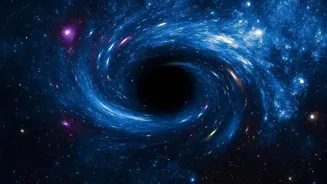
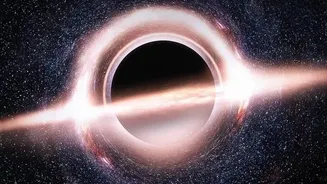
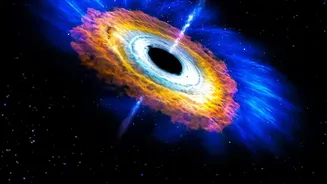
Unlike the stars we know, which generate energy by fusing elements like hydrogen and helium in their cores, a quasi-star is powered by a completely different engine. The model suggests that a massive black hole, potentially 100,000 times the mass of our Sun, sits at the object's centre. This black hole is enveloped by an enormous, turbulent cloud of primordial gas. As the gas falls into the black hole—a process called accretion—it releases an immense amount of energy, causing the entire gaseous envelope to shine brightly. This mechanism explains how MoM-BH-1 can be as large as our solar system yet produce 100 billion times more energy than any single star could. The light it emits is almost entirely from hydrogen and helium, the basic building blocks of the early cosmos.
The Evidence in the Light
So how did scientists even guess they were looking at such a strange object? The clues were hidden in its light. When the team, led by Dr. Rohan Naidu of MIT and the University of Hawaii, analysed the object with the JWST, they noticed its unique properties. MoM-BH*-1 was exceptionally red and showed a dramatic drop-off in brightness at a specific wavelength—a feature known as a 'Balmer break'. While this feature is related to hydrogen gas in stars, the break observed here was far too extreme for any ordinary star, suggesting a stellar atmosphere of an unimaginable scale and density. This, combined with its extraordinary energy output, ruled out conventional explanations and pointed toward something entirely new.
Solving a Cosmic Chicken-and-Egg Problem
The discovery of a black hole star could be a game-changer for cosmology. One of the biggest puzzles about the early universe is how supermassive black holes (SMBHs)—the behemoths found at the centre of most galaxies—grew so large so quickly. Standard models of black hole growth, where they slowly feed on gas and merge with other black holes, don't seem to give them enough time to reach billions of solar masses in under a billion years. Quasi-stars offer a potential solution. They could have served as 'heavy seeds' for these giants. A black hole star would have started with a significant mass advantage, allowing it to grow into a supermassive black hole much faster than a smaller, star-sized black hole ever could. This discovery could also finally explain the mysterious 'little red dots' that have been appearing in deep-field images from the JWST since it began operations.