






A Portrait from a Distance
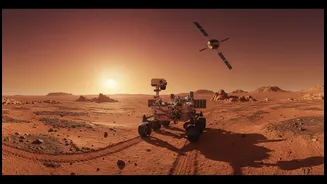
The stunning image was captured by the High-Resolution Imaging Science Experiment (HiRISE) camera aboard NASA's Mars Reconnaissance Orbiter (MRO). From its orbital viewpoint, the MRO caught Perseverance as a small, greenish dot against the rust-colored
terrain of a region west of Jezero Crater, nicknamed "Arbot" by the science team. The image is so detailed that the faint, winding tracks left by the rover's wheels are visible, tracing its long journey across the planet's surface. Capturing this shot was a feat of precise timing, showcasing the incredible capabilities of the orbiter, which has been circling Mars for nearly two decades.
The Marathon on Another World
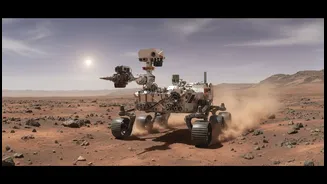
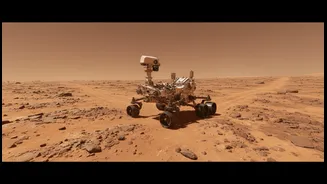
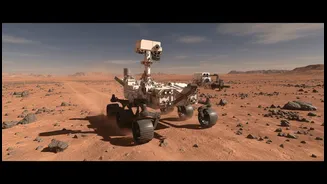
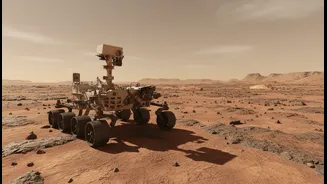
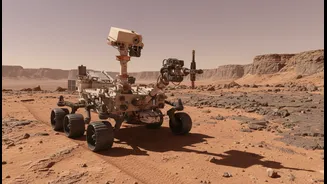
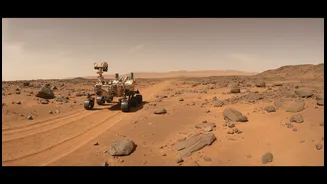
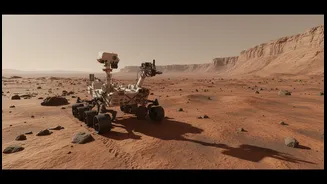
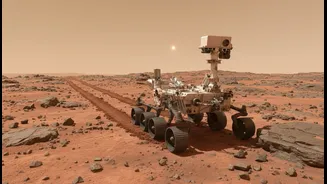
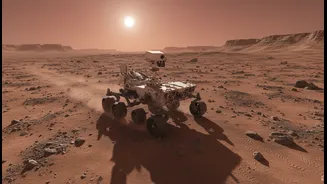
On June 14, 2026, after five years and four months of driving, Perseverance officially crossed the 26.2-mile (42.195-kilometer) mark—the exact distance of a marathon. It accomplished this on its 1,890th Martian day, or sol. This achievement is not just a symbolic milestone; it's a testament to the rover's durability and advanced navigation systems. For comparison, NASA's previous long-distance champion, the Opportunity rover, took more than 11 years to cover the same distance. Perseverance did it in less than half the time, demonstrating a significant leap in our ability to explore other worlds.
More Than Just a Long Drive
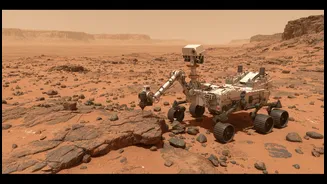
Perseverance's journey hasn't been a simple point-to-point drive. Its primary mission in Jezero Crater is to search for signs of ancient microbial life and to collect compelling rock and soil samples for a potential future return to Earth. Each stop along its marathon route has been a calculated scientific investigation. The rover has drilled into rocks, analyzed their chemical composition, and captured thousands of images of the ancient river delta it calls home. It has navigated treacherous terrain, from sandy pits to fields of sharp rocks, all while carrying out complex scientific work. The distance covered is impressive, but the science gathered along the way is the true prize.
The Unsung Hero in Orbit
The Mars Reconnaissance Orbiter is a crucial partner in Perseverance's success. Launched in 2005, the MRO acts as a scout and a vital communication relay for missions on the surface. Its HiRISE camera helped mission planners select a safe and scientifically interesting landing site for Perseverance back in 2021. It continues to provide detailed maps that help the rover team plot safe and efficient routes, avoiding hazards that could end the mission. This collaboration between the orbiter in the sky and the rover on the ground highlights the sophisticated, multi-faceted approach required for modern planetary exploration. The MRO's longevity and reliability have made it an indispensable asset for NASA's entire Mars program.
Beyond the Finish Line
Having completed its marathon, Perseverance is not stopping for a rest. The rover continues to push further into the unknown, with its sights now set on potentially surpassing Opportunity's all-time off-world driving record of 28.06 miles (45.16 kilometers). Scientists are eager to guide it toward new geological formations within Jezero Crater that might hold clues about Mars' watery past and its potential to have once harbored life. Each drive extends the boundaries of our knowledge and pushes the limits of robotic exploration. Some scientists even speculate it could become the first rover to complete an ultramarathon on Mars. The journey is far from over.