
What Exactly Happened?
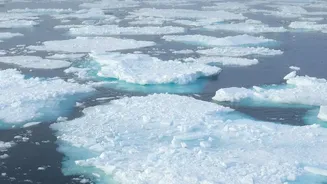
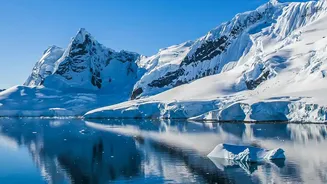
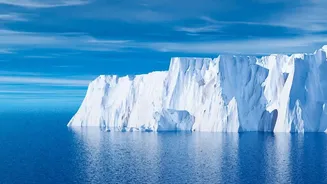
Every year, the sea ice surrounding Antarctica goes through a dramatic cycle. It melts to its smallest size in February (summer) and expands to its largest size, or 'maximum,' in September (winter). This year, that winter peak was officially recorded
on September 14. Scientists at the National Snow and Ice Data Center (NSIDC) confirmed the maximum extent was 17.59 million square kilometres. While that number sounds huge, it's what the data reveals when compared to past years that is causing concern. This peak is the third smallest since satellite records began in 1979.
Just How Low Is It?
This year's maximum is about one million square kilometres below the long-term average. To put that in perspective, that's a missing area of ice roughly twice the size of Spain. Perhaps more worrying is the recent trend. The four lowest winter sea ice peaks in the satellite era have all occurred in the last four years. This isn't just a one-off bad year; scientists are describing it as a clear indication of a system that has changed and a pattern that is no longer an anomaly.
Why Is the Ice Disappearing?
Unlike the Arctic, where sea ice has been on a steady decline for decades, Antarctica's sea ice has been more variable. However, recent events suggest a new phase. Scientists point to a combination of factors. Warmer ocean water is a primary suspect. Heat that has been stored deep in the Southern Ocean is now mixing with the surface layer, making it harder for ice to form. Changes in wind patterns, partly influenced by the El Niño climate phenomenon, are also playing a role. Stronger or more persistent winds in areas like the Amundsen Sea can churn up the ocean and break apart the forming ice. Some research points to a 'triple whammy' of strengthened winds, the upwelling of this warm water, and feedback loops that keep the ice in a low state.
Why Does Sea Ice Thousands of Kilometres Away Matter?
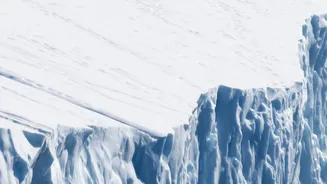
Antarctic sea ice is a critical part of Earth's climate system. Its vast white surface acts like a giant mirror, reflecting the sun's energy back into space and helping to keep the planet cool—a process known as the albedo effect. When there is less ice, the darker ocean water below is exposed. This dark water absorbs sunlight and heat, which in turn warms the ocean further and makes it even harder for ice to grow back. This creates a dangerous feedback loop that can accelerate warming. While melting sea ice doesn't directly raise sea levels because it's already floating, it does have an indirect and serious effect. Less sea ice means the massive ice shelves along the coast are more exposed to battering waves and warm ocean water. These ice shelves act as a brake, slowing the flow of land-based glaciers into the sea. If they weaken and collapse, it could speed up the melting of the entire Antarctic Ice Sheet, which holds enough water to raise global sea levels by many metres.
What Does This Mean for the Future?
The consistently low winter peaks are a stark warning. This is no longer seen as a future problem, but a 'now problem,' as one expert put it. The changes have immediate consequences for Antarctica's unique ecosystem, which depends on the ice. Species like krill, the foundation of the Antarctic food web, and Emperor penguins, which use the ice to breed and raise their chicks, are under direct threat. For the rest of the world, the message is clear: what happens in Antarctica doesn't stay in Antarctica. The continued loss of sea ice is a powerful indicator of a warming planet and signals potential shifts in global weather patterns and accelerating sea-level rise that will impact coastal communities everywhere.