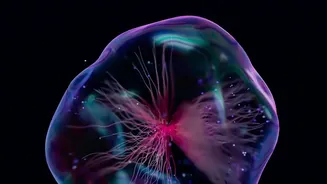









Your Memory is Not a Recording
For decades, we’ve held a common misconception about memory, viewing it as a filing cabinet or a video recorder that stores experiences perfectly. However, a wealth of research confirms that memory is not a passive playback system but an active, reconstructive
process. Every time you recall an event, your brain isn't just pulling up a file; it's rebuilding the memory from scratch. This process is influenced by your current emotions, beliefs, and even information you've learned since the event occurred. This means your memory of a childhood holiday isn't the original event, but a reconstruction based on the last time you thought about it. This creative process is a fundamental feature, not a bug, allowing our brains to be flexible and adaptive.
The Science of False Memories
If memory is a reconstruction, it’s also susceptible to errors. Everyone has false memories—recollections of events that never happened. Studies by pioneering researchers like Dr. Elizabeth Loftus have shown that false memories can be surprisingly easy to implant. The 'misinformation effect' demonstrates that our recollections can be distorted when we're exposed to misleading information after an event. This can happen through leading questions or by being told another person's mistaken version of events. These aren't necessarily lies; they are genuine beliefs. The brain pieces together real bits of information—people, places, feelings—into a new narrative that feels completely true. This has profound implications, especially in legal contexts where eyewitness testimony is often treated as infallible.
How Emotion Shapes What We Recall
Highly emotional events feel unforgettable. We often believe we can recall traumatic or joyous moments with photographic clarity, a phenomenon known as 'flashbulb memory'. However, research shows a more complicated relationship between emotion and memory accuracy. Intense emotions can make memories feel more vivid and boost our confidence in them, but this doesn’t make them more accurate. In fact, strong emotion can sometimes make our memories less reliable. Negative emotions, for example, can create a 'tunnel memory', where we remember a central, threatening detail (like a weapon) with great clarity but forget peripheral details (like the perpetrator's face). Conversely, positive emotions may lead to broader, but less detailed and more error-prone, memories.
New Frontiers in Brain Research
Modern neuroscience is providing unprecedented insights into the mechanics of memory. Recent studies using brain imaging are challenging long-held beliefs. For instance, new findings from 2026 suggest that the brain may not use entirely separate pathways for recalling facts (semantic memory) and personal events (episodic memory), as previously thought, but rather overlapping networks. Other research from earlier in 2026 shows that the brain reactivates memories even if they don't reach our conscious awareness, suggesting forgotten memories may not be truly gone. Another recent study from August 2026 found that the very act of recalling a memory changes how the brain represents it the next time, highlighting its dynamic nature. Furthermore, research is showing that significant declines in memory accuracy may begin as early as middle age, a transition point that is becoming a new focus for scientists.
Living With an Imperfect Memory
Understanding that memory is a creative and sometimes flawed process is not a cause for alarm. This malleability is what allows us to learn, adapt, and even heal from trauma by updating painful memories. It explains why our perspective on past events can soften and change over time. While we must be cautious in situations that demand high accuracy, like legal testimony, we can also appreciate the brain's incredible ability to weave our experiences into a coherent and meaningful life story. It's a reminder that our memories are not just a record of where we have been, but an integral part of who we are right now.