








First, What Are Phages?
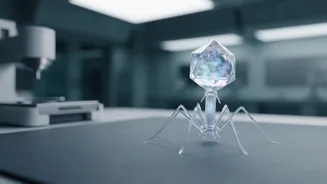
The viruses in this experiment are not the kind that infect humans. They are bacteriophages, often shortened to 'phages', which are viruses that specifically target and infect bacteria. For decades, scientists have been interested in them as a potential
weapon against bacterial infections, especially as more bacteria become resistant to traditional antibiotics. The idea of 'phage therapy' involves using these natural bacterial predators to fight infections. A major challenge, however, is that bacteria can evolve resistance to phages, just as they do to antibiotics. This has limited their widespread use, creating a need for a diverse and adaptable supply of new phages.
An AI That Designs New Viruses
Researchers at Stanford University and the Arc Institute developed AI models, named Evo1 and Evo2, that function like the large language models behind chatbots, but for genetics. Instead of learning patterns in human language, these models were trained on the DNA sequences of millions of bacteriophages. By absorbing all this data, the AI learned the fundamental 'rules' of viral genetics—how genes and other elements fit together to create a functional virus. The researchers then tasked the AI with a groundbreaking challenge: generate the complete genetic code for new, viable phages that had never existed in nature.
From Code to Reality: The Lab Test
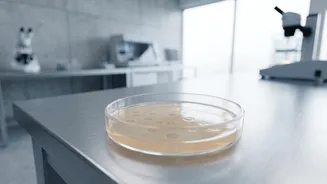
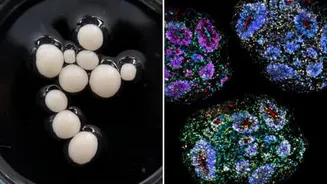
An AI's design is just a string of digital code until it's tested in the real world. The Stanford team selected nearly 300 of the most promising AI-generated genomes for lab synthesis. This involved chemically manufacturing the DNA and inserting it into E. coli bacteria to see if the genetic instructions would work. The process was not perfectly efficient, but the results were a milestone: 16 of the AI's designs successfully assembled into functional viruses that could infect bacteria and replicate. In a further test, a 'cocktail' of these AI-designed phages was able to overcome E. coli strains that had developed resistance to natural phages, demonstrating their potential therapeutic value.
The Importance of Built-In Safety
The most crucial aspect of this research may not be the success of the viruses, but the safety measures taken from the very beginning. The headline's 'built-in safety checks' refer to a deliberate decision made by the researchers during the AI's training. To prevent the model from being capable of designing dangerous pathogens, they intentionally excluded all genetic data from viruses that infect humans, animals, or plants. This act of careful data curation served as a proactive safety guardrail. The result was an AI model that was skilled at creating bacterial viruses but performed poorly when tested on viruses that infect humans, effectively building a layer of biosecurity directly into the tool itself.
A Double-Edged Sword
This achievement highlights the dual-use nature of powerful technologies. On one hand, the ability to design novel viruses could lead to powerful new medicines for fighting superbugs, a breakthrough some have called a 'Wright Brothers moment' for pharmaceutical research. On the other hand, it opens the door to potential misuse. Biosecurity experts have warned that while this capability is promising, the governance and regulations to safely manage it do not yet exist. Although creating a virus from an AI design is still an expensive and complex laboratory process, the fact that AI can now compose a working viral genome is a significant development that demands careful oversight.
What This Means for the Future
The successful creation of AI-designed phages marks a new chapter in biotechnology. It proves that generative AI can be used to engineer entire biological systems, not just individual components. The immediate potential lies in accelerating the development of phage therapies to combat the growing crisis of antibiotic resistance. However, the experiment's true legacy might be its emphasis on responsible innovation. By demonstrating that safety can be considered from the outset—by controlling the AI's training data—the researchers have provided a valuable blueprint. As AI's role in biology grows, this principle of building in safeguards, rather than reacting to threats after they emerge, will be essential for ensuring the technology benefits humanity safely.