







The Unseen Highways in the Sky
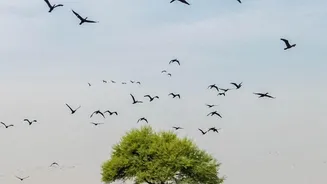
They are often called flyways: vast, invisible superhighways in the sky that birds have used for millennia. These corridors connect their breeding grounds in the north, often as far as the Arctic, to their wintering homes in the south. India plays a crucial
role in one of the most significant of these, the Central Asian Flyway (CAF), a route spanning 30 countries from Siberia to the Indian Ocean. For countless species, including waterbirds, raptors, and songbirds, this flyway is not just a path but a lifeline, dotted with essential 'stopover' sites—wetlands and grasslands where they rest and refuel on their arduous journey. Think of it as a chain of service stations on a national highway; if several are shut down, the entire transport network is at risk of collapse.
What New Science Reveals
Recent scientific breakthroughs are transforming our understanding of these migrations. Thanks to advanced tracking technologies like miniature GPS loggers and even tiny cameras, researchers can now map these journeys with astonishing precision. This new evidence confirms that birds follow remarkably consistent paths year after year. A recent global review highlighted that protecting isolated habitats is not enough; we must protect the entire connected corridor. For example, recent analyses of tracking data have allowed scientists to map six major marine flyways, providing a blueprint for where to focus conservation efforts for seabirds, nearly 42% of which are threatened. This data-driven approach moves beyond guesswork, allowing conservationists to pinpoint the most critical habitats and the most severe threats along a bird's full annual cycle.
Mounting Threats Along the Journey
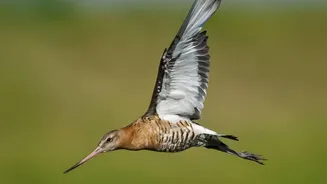
A migratory bird’s journey is fraught with peril. A global review found that over half of the world's migratory bird species are in decline, facing a gauntlet of human-made threats. In India, a major risk comes from the rapid expansion of infrastructure. Power lines, often invisible to fast-flying birds, cause fatal collisions and electrocutions. Wetlands, the critical refuelling stops, are disappearing at an alarming rate—three times faster than forests—due to urbanisation and agriculture. Furthermore, light pollution can disorient birds that navigate by the stars, while climate change disrupts the seasonal timings of food availability, leaving exhausted travellers with nothing to eat. Hunting and the use of mist nets also pose a significant danger at stopover sites.
A Coordinated Plan for Protection
The new evidence makes one thing clear: nature knows no borders, and neither can our conservation efforts. Protecting a single wetland in India is vital, but it’s not enough if a critical habitat in Kazakhstan or Siberia is destroyed. This science is now driving policy. A landmark moment came in February 2024 at the UN Convention on Migratory Species (CMS) conference, where nations formally established the Central Asian Flyway Initiative. Coordinated by a unit hosted by the Government of India, this initiative aims to unite the 30 countries along the flyway to share data, protect key sites, and implement bird-friendly policies. This includes practical steps like making power lines more visible with bird diverters, restoring degraded wetlands, and tackling illegal hunting through transboundary cooperation.