




The Exoplanet Gold Rush
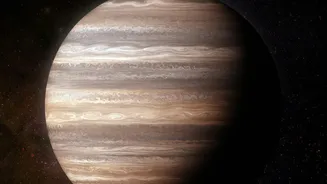
In recent decades, the number of known exoplanets—planets orbiting stars other than our Sun—has exploded from a handful to nearly 6,000. Most of these have been discovered using the transit method. This technique involves watching a star for a tiny, periodic
dip in its brightness, which indicates that a planet is passing in front of it from our point of view. By studying this starlight as it filters through the planet's atmosphere, scientists can tease out chemical fingerprints to learn what the planet is made of. This field, known as transmission spectroscopy, is our best tool for characterizing distant worlds and one day finding signs of life.
A Star-Sized Problem
However, this method has a fundamental weakness known as stellar contamination. Stars are not perfect, uniform spheres of light. They have features like cooler, dark starspots and hotter, bright faculae, much like our own Sun. When a planet transits, these active regions on the star's surface can distort the light signal, either mimicking or masking the very atmospheric features scientists are trying to measure. For example, the presence of water in a cool star's atmosphere can create a signal that looks confusingly similar to water in the planet's atmosphere. This uncertainty makes it difficult to trust the data and draw firm conclusions, a major hurdle in the search for habitable worlds.
Enter Pandora, The Specialist
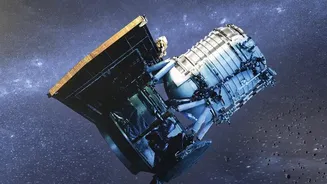
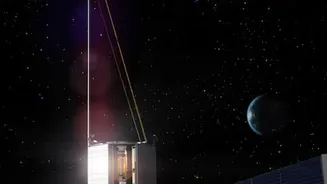
This is the problem NASA's Pandora mission was specifically designed to solve. Launched on January 11, 2026, Pandora is an ambitious small satellite, or SmallSat, created to untangle the light from the planet and its host star. As the first mission launched under NASA's Astrophysics Pioneers program, it's a new breed of fast, focused, and lower-cost project aimed at tackling very specific questions in astronomy. Pandora's primary goal isn't to find new planets, but to make the data we have on existing ones much more accurate. It's a foundational mission, built to improve the reliability of all exoplanet science.
A Two-Light Approach
Pandora's unique advantage is its ability to make long, simultaneous observations in two different kinds of light. While a planet transits, Pandora's 18-inch telescope will monitor the host star in visible light, which is excellent for tracking the star's surface activity like spots. At the same time, it uses a near-infrared detector to measure the chemical signatures passing through the planet's atmosphere. By comparing these two simultaneous datasets, scientists can effectively subtract the star's 'noise' from the planet's 'signal'. This allows them to cleanly separate the two and get a true reading of the planet's atmosphere.
Making Big Telescopes Better
During its year-long primary mission, Pandora will study at least 20 exoplanets, observing each one multiple times for extended periods. Unlike flagship observatories like the James Webb Space Telescope (JWST), which are in high demand and can only afford short looks at targets, Pandora will stare for 24 hours at a time. This long-duration observation is key to its method. The data from Pandora will not only stand on its own but will also be used to enhance and validate observations from JWST, effectively doubling the precision of some measurements. It provides the crucial context that allows scientists to confidently interpret the spectacular data from more powerful telescopes.