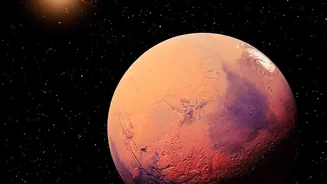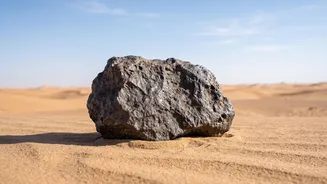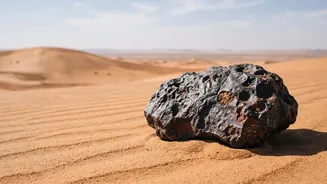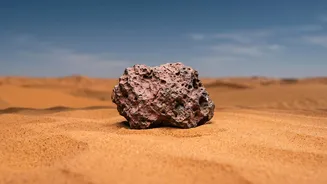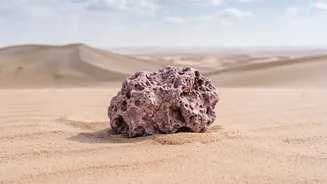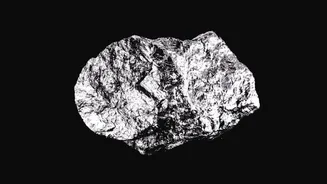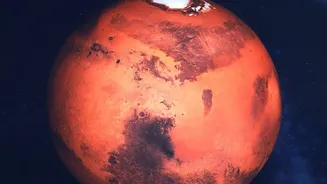



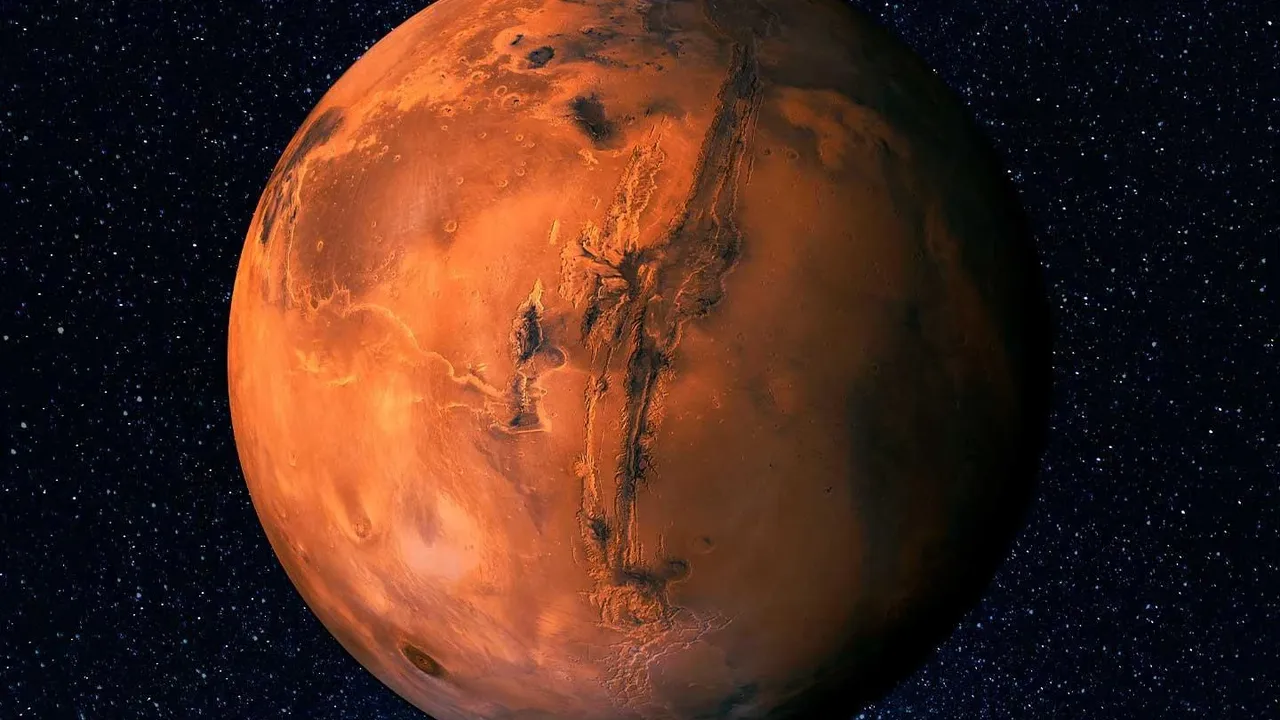

Sometimes, the biggest discoveries come in small packages. A unique, rose-hued rock found in the Sahara Desert has been identified as a messenger from Mars, carrying secrets of the Red Planet's formation from over 4.1 billion years ago.
A Messenger From the Ancient Red Planet
Discovered in a
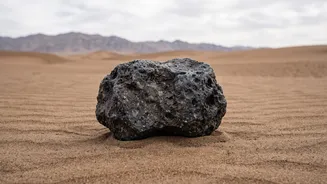
salt plain in Mali in 2022, the meteorite was named Teghaza 001. After careful analysis by NASA-funded scientists, this nearly 800-gram rock was confirmed to be a piece of Mars, blasted off the planet by an asteroid impact millions of years ago before eventually landing on Earth. What makes Teghaza 001 so special is its incredible age. Using crystals called zircons found within the rock, which act like geological time capsules, researchers dated its formation to at least 4.1 billion years ago. This makes it one of the three oldest Martian meteorites ever found, offering a rare glimpse into the planet's infancy, a time when life was just beginning to emerge on Earth.
More Than Just a Rock
The meteorite's distinct rose colour is just the beginning of its unique story. Its chemical makeup is unlike any of the other 400-plus Martian meteorites in our collections. While most Martian samples are a specific type of volcanic rock called shergottite, Teghaza 001 is different. It has a unique mix of igneous minerals, telling a story of how the planet's very first crust was formed from cooling magma. According to scientists, this is the first sample we have ever seen from a region of the Martian crust that was previously unsampled, matching the mineralogy observed by orbiters in the planet's heavily cratered and ancient southern highlands.
A Portrait of a Watery Past
Perhaps the most significant revelation from Teghaza 001 is the strong evidence that it interacted with water. Its composition indicates that the rock was altered by water on Mars's surface billions of years ago. This finding helps confirm a picture of early Mars as a much wetter and more dynamic planet than the cold, dry world we see today. The presence of water during the planet's earliest geological history has profound implications, suggesting that the conditions necessary for life may have existed very early on. This meteorite helps scientists understand why Earth remained a water-rich world while Mars dried out.
The 'Rosetta Stone' for Mars
Because of its great age and unique composition, some scientists have referred to Teghaza 001 as a 'Rosetta Stone' for Mars. It provides a key to deciphering the planet's earliest chapters. Unlike Earth, where plate tectonics have recycled and destroyed most of the planet's original crust, Mars's ancient surface is better preserved. Rocks like Teghaza 001 and the famous 'Black Beauty' meteorite (NWA 7034), another ancient sample, provide an invaluable window into how terrestrial planets like our own form and evolve. By studying these messengers from the past, we can piece together not only the history of Mars but also gain a deeper understanding of Earth's own origins.