





A Postcard from the Red Planet
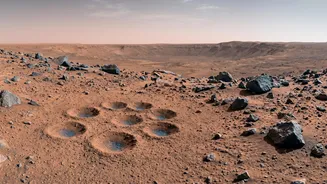
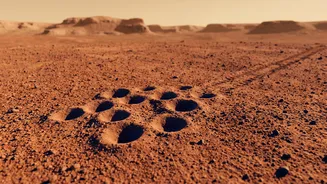
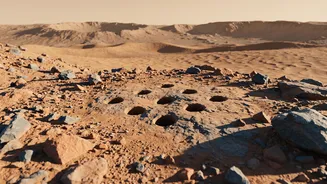
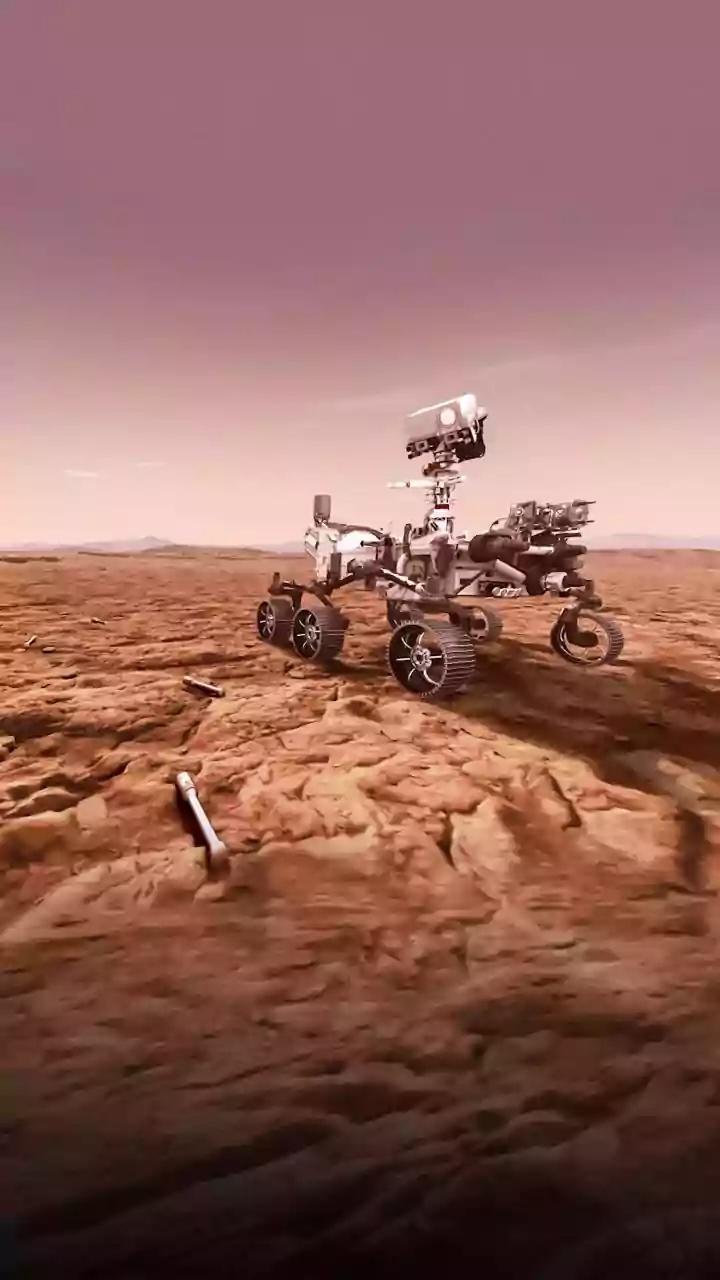
While navigating a valley on Mount Sharp, the Curiosity rover encountered something peculiar. Dotted across the reddish terrain were small, shallow divots in the bedrock, each about a centimetre wide. Mars is no stranger to holes; billions of years of meteorite
impacts have left their mark. But these were different. They were unusually broad and shallow, unlike anything the rover had seen in its many years of exploration. This sparked immediate interest, as the usual explanation for such features didn't quite seem to fit this new puzzle. The science team used the rover's suite of instruments to get a closer look, hoping to unravel the story behind these enigmatic formations.
The Prime Suspect: Ancient Water
The leading theory among mission scientists points to Mars's watery past. The most common way such cavities form is through a process called diagenesis. On both Earth and Mars, harder mineral deposits can form within softer sedimentary rock when water flows through it. Over eons, as wind and sand blast the surface, the softer surrounding rock erodes away, while the more resistant mineral nodules remain. Eventually, these nodules can also weather out, leaving behind a small hole. Many of the odd shapes Curiosity has found, from tiny rock "flowers" to stick-like structures, are believed to be the result of this exact process. These features are essentially mineral fillings of ancient cracks, left standing after the original rock disappeared.
An Imperfect Fit
However, the newly discovered holes in the Valle Grande region don't perfectly match this theory, which is the source of the debate. Typically, when erosion leaves a cavity, there are signs of the harder nodule that once filled it, either nearby or within the hole itself. In this case, there were no obvious pebbles or nodules in or around the pits that looked like they had once occupied them. This absence has left scientists puzzled. It suggests another process might be at play, or perhaps a variation on the typical erosion story. Mars, it seems, still has a few geological tricks up its sleeve, forcing researchers to reconsider their assumptions.
Why Every Little Hole Matters
While a few tiny holes might seem insignificant on a planetary scale, they hold crucial clues to Mars's grandest story. Every rock formation, every mineral vein, and every eroded pit is a piece of a much larger puzzle: understanding how Mars transformed from a world that may have hosted lakes and rivers into the cold, dry desert we see today. These geological debates are not just academic exercises; they directly inform the search for signs of past life. Formations created by water are prime targets for finding preserved organic molecules—the building blocks of life. Understanding the history of water on Mars, even through tiny clues like these holes, helps scientists know where to look next.