




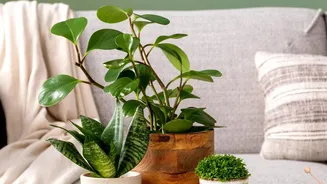

The Great Air Purification Myth
The idea that houseplants are tiny green air filters dates back to a 1989 NASA study. Researchers found that, in a small, sealed chamber, certain plants could remove harmful volatile organic compounds (VOCs) from the air. This finding blossomed into a multi-million
dollar marketing angle for the houseplant industry. The problem? Your home is not a sealed space station. Later analysis of this and other studies revealed the inconvenient truth: the air-cleaning effect of plants in a normal room is negligible. Due to natural ventilation from open windows, doors, and building air systems, you would need an absurd number of plants—somewhere between 100 to 1,000 per 10 square feet—to make a meaningful dent in air quality. So, unless you plan on living in a literal jungle, your ficus isn't doing much to combat airborne toxins.
The Real Superpower: Your Brain on Plants
If plants aren't cleaning the air, are they useless? Far from it. Their true power isn't chemical, it's psychological. This is the core of the 'biophilia hypothesis', the idea that humans have an innate need to connect with nature. Surrounding ourselves with greenery, even indoors, taps into this biological predisposition. Numerous studies show that the mere presence of plants can reduce stress, improve mood, increase productivity, and even boost our attention spans. Interacting with plants—watering them, seeing a new leaf unfurl—has a calming effect that has been shown to lower physiological stress by suppressing nervous system activity. The benefit isn't from what they remove from the air, but from what they add to our mental and emotional state.
Put Plants Where You Can See Them
To harness these psychological benefits, placement is everything. The biggest mistake people make is buying a 'low-light' plant and sticking it in a dark, forgotten corner. For a plant to improve your well-being, you need to see it. Place plants in your direct line of sight in the areas where you spend the most time. A small plant on your office desk, a collection on the shelves behind your television, or a trailing pothos in the kitchen can provide micro-doses of nature throughout the day. These visual cues are what trigger the positive psychological responses. Out of sight is literally out of mind, and a plant you never see provides zero mental health benefits.
Think Like a Plant: Placement for Health
A happy, thriving plant is more aesthetically pleasing and provides stronger psychological benefits than a sad, dying one. Strategic placement is also about meeting the plant's needs. Before you buy, assess the light in your home. North-facing windows offer soft, indirect light perfect for ferns and calatheas, while south-facing windows provide the intense sun that succulents and cacti crave. Grouping plants with similar light and humidity needs can also make care easier. And don't forget airflow. Placing plants too close together can inhibit circulation, while putting them directly under a vent can cause stress from temperature fluctuations. A healthy plant is a beautiful plant, and its health starts with being in the right spot.
Your Green Interior Designer
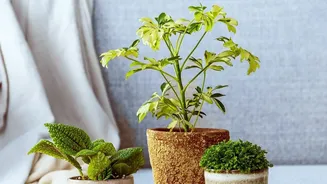
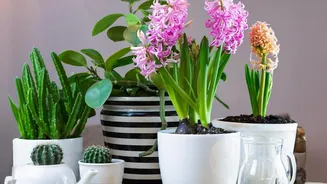
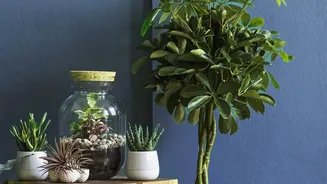
Beyond their personal benefits, plants are powerful design tools. They add life, texture, and colour to sterile spaces. Use plants to create focal points or define areas within a larger room. A tall fiddle-leaf fig can add vertical interest to a corner with high ceilings, while a cluster of smaller pots on a sideboard creates an attractive vignette. Ancient philosophies like Feng Shui have long recognized the power of plant placement to influence a room's energy, or 'chi'. According to these principles, placing plants in entryways invites positive energy, while avoiding cluttering pathways is crucial for flow. Whether you follow ancient practices or modern design theory, the principle is the same: plants can shape how a space feels and functions.