







The Monsoon's Cleansing Effect
To understand why the air gets so bad, it helps to first understand why it's relatively clean during the monsoon. From July to September, Delhi-NCR benefits from nature's own air purification system. Strong south-westerly monsoon winds carry moisture
and, crucially, disperse pollutants. The frequent and heavy rains act as a natural scrubber, literally washing particulate matter and other contaminants out of the atmosphere. This combination of strong winds and regular rainfall keeps the Air Quality Index (AQI) at manageable levels, offering a temporary respite from the pollution that plagues the region for much of the year. This period of cleaner air, however, is fleeting, as the underlying sources of pollution have not gone away; they have simply been washed away or blown elsewhere for a time.
The Calm Before the Smog
As the monsoon withdraws in late September and early October, the weather patterns over northern India undergo a significant transformation. The strong, pollutant-dispersing winds die down. Wind speeds become sluggish and the direction often shifts, now coming from the north and northwest. This change is critical. Without strong winds to blow them away, pollutants start to accumulate. This period marks the transition season, where the atmosphere over the landlocked capital region becomes increasingly stagnant. The withdrawal of rain means the natural washing mechanism is gone, and the air's capacity to hold pollutants begins to build, setting the stage for the severe pollution episodes to come.
The Lid on the City: Temperature Inversion
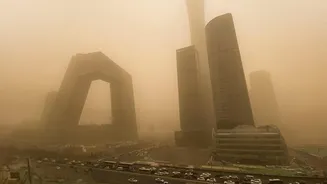
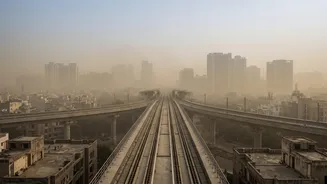
Perhaps the most significant meteorological factor in Delhi's winter pollution is a phenomenon called temperature inversion. Normally, the air closer to the ground is warmer and rises, allowing pollutants to disperse vertically into the upper atmosphere. During autumn and winter nights, however, the ground cools rapidly, chilling the air just above it. A layer of warmer air then settles on top of this cooler, denser air mass, acting like an atmospheric lid. This inversion traps everything underneath it. The mixing height, which is the altitude pollutants can rise to, can shrink from about a kilometre in summer to just a few hundred metres in winter. This effectively concentrates all the pollution in a much smaller volume of air, right where people breathe. This phenomenon is why smog often appears thickest in the early mornings.
The Arrival of Stubble Smoke
Coinciding perfectly with these unfavourable weather changes is the post-harvest season in the neighbouring states of Punjab and Haryana. In October and November, farmers burn the leftover stubble from their rice paddy harvest to quickly clear the fields for the next crop, wheat. The new, north-westerly wind patterns carry enormous plumes of smoke directly over Delhi-NCR. Studies suggest that stubble burning can be responsible for a huge spike in particulate matter, contributing as much as 50-75% of the increase in PM2.5 levels during this period. These tiny, harmful particles from crop burning become trapped under the inversion layer, drastically worsening the air quality and giving the smog its characteristic acrid smell.
Local Pollutants in a Trapped Environment
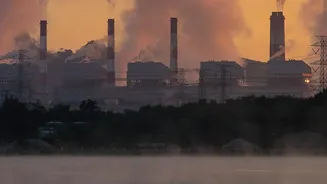
While smoke from farm fires is a major episodic contributor, it combines with a constant flow of local pollution. With the atmospheric lid firmly in place, emissions from within the National Capital Region have nowhere to go. The primary local sources include vehicular emissions, which can account for a significant portion of the pollution mix. Added to this are industrial emissions, dust from widespread construction and demolition activities, and the burning of waste. Even household sources, like burning wood or biomass for heating in colder weather, add to the toxic cocktail. During the post-monsoon months, these ever-present local pollutants are no longer dispersed, but are instead trapped and concentrated, creating the perfect storm for hazardous air quality.