








The Core Theme: A People-Centric Vision
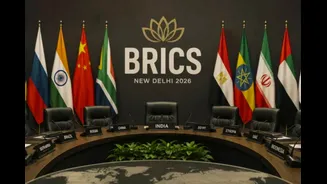
India's leadership for the 2026 summit is guided by the theme “Building for Resilience, Innovation, Cooperation and Sustainability.” This framework redefines the BRICS acronym itself, signalling a shift toward a more action-oriented and development-focused
agenda. Officials have emphasised that the goal is to place human welfare at the centre of the bloc's priorities, extending the “Humanity First” approach that was a hallmark of India's G20 Presidency. The vision aims to transform the 11-member group, which now represents nearly half the world's population, into a vehicle for stability and a more influential voice for the Global South.
Pillar 1: Building Resilience
A primary focus for India is strengthening the resilience of BRICS nations against a range of global shocks. This includes building robust economies and societies that can better withstand supply chain disruptions, health emergencies, and climate-related disasters. The agenda pushes for enhanced cooperation on energy security, aiming to ensure reliable and affordable power while accelerating the transition to cleaner sources. This priority stems from the lessons of recent global crises and seeks to make the bloc a collective shock absorber, enhancing stability for member countries and their partners.
Pillar 2: Driving Innovation
Technology and innovation form another critical pillar of India's agenda. New Delhi is advocating for deeper collaboration in areas like artificial intelligence, fintech, and especially the development and adoption of Digital Public Infrastructure (DPI). India's plan includes a proposed BRICS Digital Public Infrastructure Repository to facilitate knowledge sharing and the scaling of digital solutions for public good. The focus isn't on technology for its own sake, but on using it to improve lives, expand economic opportunities, and drive inclusive growth across the developing world.
Pillar 3: Deepening Practical Cooperation
India is keen to move BRICS beyond routine political coordination and towards delivering measurable outcomes that benefit citizens directly. This involves deepening cooperation in trade, investment, health, and education. A significant proposal is the BRICS invoice discounting mechanism, designed to help small and medium-sized enterprises (MSMEs) access trade finance. Furthermore, a Global Value Chains Action Plan aims to strengthen trade corridors and manufacturing integration, making supply chains more resilient and interconnected. Empowering youth through skill development, entrepreneurship, and greater participation in governance is also a key aspect of this cooperative push.
Pillar 4: Advancing Sustainability
The fourth pillar of India's chairship is sustainability, which aims to ensure that economic growth and environmental responsibility go hand in hand. The agenda calls for accelerating collective efforts on climate action, promoting green finance, and managing energy transitions in a way that aligns with national development priorities. This includes cooperation on clean energy, climate resilience, and disaster preparedness. By championing a sustainable development model, India hopes to secure a better future for the populations of BRICS nations and the broader Global South.