




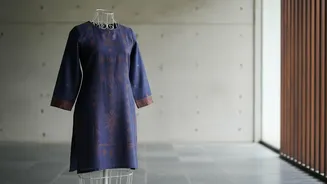
A Revolution Against Mill-Made Cloth
In the early 20th century, British colonial policies had crippled India's legendary textile industry. Once the world's envy, Indian weavers found themselves impoverished as cheap, machine-made cloth from British mills flooded the market. India was relegated
to a mere supplier of raw cotton. The Swadeshi movement, formally launched on August 7, 1905, was a direct response to this economic subjugation. It called upon Indians to boycott foreign goods and embrace those made in their own country. At the heart of this call was a return to indigenous textiles, transforming handloom from a relic of the past into a potent symbol of national pride and economic freedom.
Khadi: The Fabric of Freedom
No single fabric embodied the spirit of Swadeshi more than Khadi. Mahatma Gandhi elevated this humble, hand-spun, and handwoven cloth to the status of a national symbol, calling it the 'fabric of freedom'. He saw it as a powerful tool for self-sufficiency, capable of providing a livelihood to millions in rural India and breaking the country's economic dependence on Britain. The charkha, or spinning wheel, became an emblem of this revolution. The simple act of spinning cotton thread was no longer just a domestic chore; it was a patriotic duty and an act of non-violent resistance that anyone, rich or poor, could perform. Freedom fighters and common citizens alike began wearing Khadi, turning it into the unofficial uniform of the independence movement.
The Weaver as a Freedom Fighter
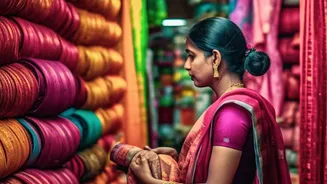
The Swadeshi movement reframed the identity of the artisan. Weavers were no longer just skilled labourers; they were frontline soldiers in an economic war for self-rule. By choosing to weave with Indian yarn, they directly participated in the boycott of foreign materials and helped build a self-reliant village economy. This was especially empowering for women, who took to the charkha in large numbers, contributing to their household income and the nation's freedom in a tangible way. The movement gave weavers a renewed sense of purpose and dignity, validating their ancestral skills as essential to the national project. Their looms, once silenced by industrial imports, now echoed with the sounds of resilience.
A Tapestry of Regional Revival
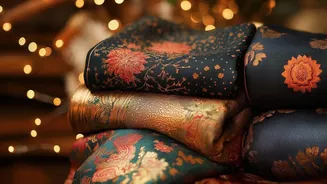
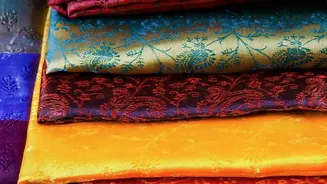
While Khadi was the most visible textile of the movement, the spirit of Swadeshi sparked a broader renaissance in India’s diverse handloom traditions. The call to value indigenous products encouraged the preservation and promotion of unique regional weaves that had been languishing. In Bengal, the intricate and artistic Jamdani weave found new appreciation. In the south, the complex geometric patterns of Pochampally Ikat from Andhra Pradesh were celebrated. The movement reminded the nation of the rich tapestry of skills that existed across the subcontinent, from the fine silks of Banaras to the sturdy cottons of the Deccan. This revival was not just about economics; it was a cultural reawakening, a reclaiming of identities that had been suppressed under colonial rule.