







A New Rocket for Critical Tests
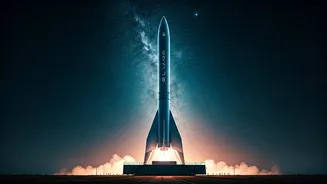
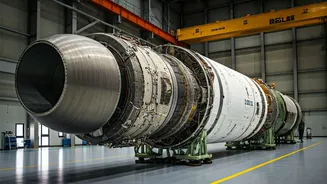
In a significant development in early July 2026, ISRO successfully conducted the first ground test of a solid motor for a new test vehicle called the Sub-Orbital Launch Vehicle for Experiments (SOLVE). This isn't the giant rocket that will go to orbit,
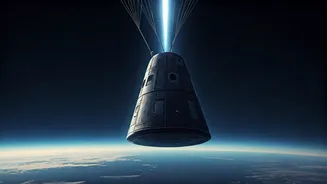
but a dedicated, smaller vehicle designed for a very specific and crucial job: testing the parachute system for the Gaganyaan crew module. According to ISRO, SOLVE will carry the crew module to an altitude of 10 to 17 kilometres and release it. This will allow engineers to repeatedly test the complex parachute deployment sequence under realistic conditions, a vital step in ensuring the capsule can bring astronauts back to Earth safely. The motor for SOLVE is a modified version of the reliable strap-on boosters from the Polar Satellite Launch Vehicle (PSLV).
The Art of a Safe Landing
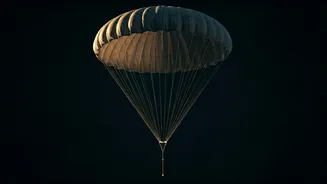
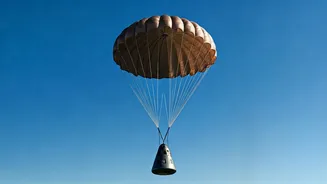
Getting astronauts into orbit is only half the challenge; bringing them home safely is paramount. The Gaganyaan crew module relies on a sophisticated deceleration system, and its backbone is a series of ten parachutes. The landing sequence is a carefully choreographed event. After the module re-enters the atmosphere, two small drogue parachutes deploy first to stabilize and begin slowing the capsule. Following this, pilot chutes pull out the three main parachutes. These massive chutes are what gently lower the nearly 5.7-tonne module for a splashdown in the ocean. The system is designed with redundancy, meaning that even if one of the three main parachutes fails to open, the remaining two are sufficient for a safe landing.
Putting the Parachutes Through Their Paces
Before trusting the system with human lives, ISRO is conducting a battery of grueling tests. In April 2026, the second Integrated Air Drop Test (IADT-02) was successfully completed. During this test, an Indian Air Force Chinook helicopter lifted a simulated crew module to an altitude of about 3 kilometres and dropped it over the sea near Sriharikota. The entire parachute sequence, from the drogues to the main chutes, was validated as the module descended for a successful recovery by the Indian Navy. These airdrop tests are complemented by ground-based static tests, like the recent one for the SOLVE motor, to ensure every component functions perfectly under the extreme forces of a real mission.
The Human Element and the Road Ahead
While the hardware undergoes rigorous testing, the human component is also in full preparation. India's four astronaut-designates have been undergoing extensive training. This includes not just physical and academic training but also behavioral studies, such as Mission MITRA, which assesses their response and interoperability in isolated, high-stakes environments. The path to the first crewed flight, or H1 mission, is paved with several more crucial steps. ISRO plans for uncrewed test flights before the final mission. The first of these, G1, will carry Vyommitra, a humanoid robot, to test the life-support systems and monitor the cabin environment. The first crewed mission is currently slated for 2027. This mission aims to launch a crew of three into a 400-kilometre orbit for a three-day mission before bringing them safely back to Earth, which will make India the fourth nation to achieve independent human spaceflight.