









The Nuclear Shadow That Won't Fade
The central pillar of the US-Iran conflict remains Iran's nuclear program. For years, the international community has worried about Tehran's potential to develop a nuclear weapon, a fear that drove the US and Israel to launch military strikes against
Iranian facilities in February 2026. Despite this, the core issue persists. The recent, fragile diplomatic efforts, including a Memorandum of Understanding signed in June, have revolved around this very question. Washington's primary demand in any negotiation is the verifiable denuclearization of Iran, while Tehran views its program as a sovereign right and a crucial deterrent. This fundamental disagreement ensures that even after a devastating conflict, the nuclear question remains the primary, and perhaps insurmountable, obstacle to any lasting peace.
An Unbreakable Web of Sanctions
Economic pressure has long been Washington's primary tool for confronting Iran short of war. The 'maximum pressure' campaigns, which crippled Iran's economy, were a key feature of the pre-war landscape. The conflict did not end this strategy; it simply added a military dimension to it. In the aftermath of the fighting, economic warfare continues. The US imposed a naval blockade in April 2026 and has recently fluctuated on sanctions relief for Iranian oil, revoking a general license in July. These sanctions are not just about the nuclear program; they are also tied to Iran's ballistic missile development, its regional influence, and human rights issues. This makes them incredibly difficult to untangle, as lifting them requires progress on multiple fronts, many of which are non-starters for hardliners in Tehran.
The Strait of Hormuz Chokepoint
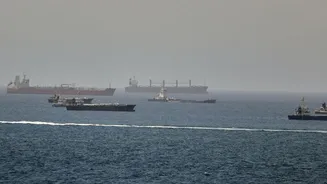
The military and economic spheres collided dramatically in the Strait of Hormuz, a narrow waterway through which a significant portion of the world's oil passes. During the war, Iran closed the strait, causing massive economic disruption and triggering a direct US military response to reopen it. As of early August 2026, the status of the strait remains a critical point of contention and a key focus of urgent diplomatic talks, with Oman acting as a mediator. The issue perfectly illustrates the interconnectedness of the stalemate. Control over the strait is a powerful economic lever for Iran, a vital national security interest for the United States, and a major factor in global energy stability. Any breakdown in talks or renewed hostility could once again threaten this chokepoint, linking the global economy directly to the US-Iran standoff.
Regional Power Plays and Proxy Wars
The US-Iran conflict is not just a bilateral issue; it is a fight for influence across the Middle East. The 2026 war quickly spread, with Iran launching retaliatory strikes on US allies and bases throughout the region, and its proxy allies, like Hezbollah in Lebanon, engaging in conflict with Israel. Iran's support for groups in Iraq, Syria, Lebanon, and Yemen is a core grievance for the US and its regional partners, Saudi Arabia and Israel. From Washington's perspective, Iran is a destabilizing force sponsoring terrorism. From Tehran's perspective, this 'Axis of Resistance' provides strategic depth and pushes back against American and Israeli influence. Any agreement between the US and Iran would have to address these complex regional dynamics, but neither side is willing to cede influence, locking them in a perpetual struggle for regional dominance.
Domestic Politics and a Deep Trust Deficit
Underpinning the entire stalemate is a profound lack of trust and hostile domestic politics on both sides. In Washington, policy towards Iran is a deeply partisan issue, with any attempt at diplomacy facing accusations of appeasement. In Tehran, hardliners often use anti-American sentiment to consolidate power and resist concessions that could be framed as surrender. This dynamic was on full display in early August 2026, with conflicting reports about the status of negotiations. Decades of hostility, from the 1979 Islamic Revolution to the 2026 war, have created a chasm of mistrust. Leaders on both sides are constrained by political realities at home, making the bold compromises needed for a breakthrough politically perilous, if not impossible.