





The Social Contract in India
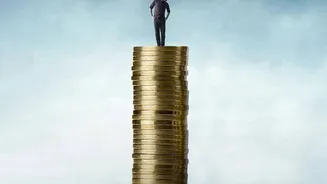
In India, personal income tax is a cornerstone of the nation's finances and a fundamental part of the social contract. It is a direct tax levied progressively, meaning higher earners contribute a larger percentage of their income. These funds are the lifeblood
of the country, financing everything from vast infrastructure projects like highways and airports to essential public services including healthcare, education, and national defence. The tax system is also used as a tool for economic policy, encouraging savings and investments through various deductions. For a rapidly developing nation of over a billion people, this broad-based tax system is indispensable for fostering inclusive growth and ensuring the government can meet its extensive responsibilities.
Monaco's Grand Bargain
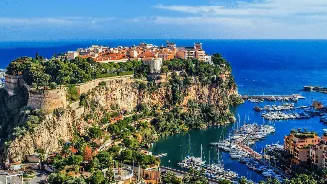
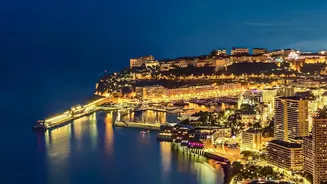
On the French Riviera lies the world's second-smallest sovereign state, Monaco, which operates on a completely different philosophy. In 1869, Prince Charles III made a landmark decision to abolish personal income tax for its residents. This wasn't an act of pure generosity but a strategic move. After losing 80% of its territory (and its agricultural income) to France, Monaco needed a new economic model. The Prince pivoted to creating a haven for aristocratic tourism, building the grand Monte Carlo Casino, luxury hotels, and an opera house. The revenue from these ventures was so significant that it allowed the government to fund itself without taxing its people's income, a policy that remains the principality's most famous characteristic.
How a Tax-Free State Pays Its Bills
If residents don't pay income tax, how does Monaco's government afford to function? The answer lies in a diversified and unique revenue model. A major source of income is a Value Added Tax (VAT), which is levied at the same rate as in France (currently 20%) on goods and services. Another significant contributor is corporate tax. Companies that generate more than 25% of their turnover outside Monaco are subject to a tax on their profits. Furthermore, the state profits handsomely from its ownership of enterprises, including the legendary casino, and from high duties on real estate transactions. This combination of consumption taxes, specific business taxes, and state-owned commercial interests keeps the government running without public debt.
The Catch: Paradise Comes at a Price
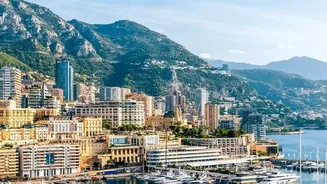
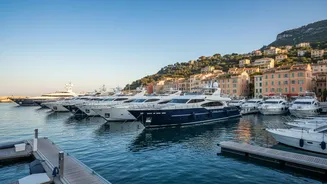
Before you pack your bags, it's essential to understand the catch. Life in this tax-free paradise is not accessible to everyone. To become a resident, one must prove immense financial self-sufficiency. This typically requires opening a Monaco bank account and depositing a minimum of €500,000, though some banks require much more. Applicants must also secure accommodation, which is no small feat in one of the world's most expensive real estate markets. A one-bedroom apartment can easily cost millions of euros to purchase. Finally, all applicants must have a clean criminal record. These steep entry barriers ensure that Monaco's population remains small and extremely wealthy, a model that simply wouldn't be scalable or desirable for a large country.
Two Worlds, Two Philosophies
The contrast between India and Monaco is more than just about tax rates; it's about fundamentally different economic and social structures. India's system is built on the principle of widespread participation in nation-building, where tens of millions of taxpayers contribute to the collective good of a massive and diverse population. It is a system designed for a continental-scale democracy. Monaco, on the other hand, is a boutique model for a tiny, exclusive city-state. It leverages its unique sovereignty to attract a specific demographic of high-net-worth individuals, funding itself through consumption and commerce rather than personal income. French citizens are a notable exception; due to a 1963 treaty, they generally remain subject to French income tax even if they live in Monaco.