


Decoding the Food Label Lingo
The language on our food packages can be confusing, but Indian food safety regulations provide clear definitions. The Food Safety and Standards Authority of India (FSSAI) outlines several key dates. The “Date of Manufacture” or “Date of Packaging” (often
shown as Pkd. or Mfd.) tells you when the food was made or placed in its final container. This is not an indicator of shelf life, but rather the product's age. Then there's the “Best Before” date, which relates to quality, not safety. A product is perfectly safe to eat after this date, but it might lose some of its flavour, freshness, or nutritional value. Finally, the “Use-By” or “Expiry” date is a safety deadline. After this date, the food is not considered safe to consume and should be discarded, as it could pose a health risk.
The Packed-On Date Misconception
The “Packed-On” date is simply a record of when the product was packaged. For durable goods like dried fruits, this date is far less critical than it is for highly perishable items like milk or fresh meat. With dates, which are naturally low in moisture and high in sugar, the packed-on date is more of an age marker than a freshness deadline. Their long shelf life means the time between packing and spoiling can be very long. A packet of dates from a few months ago is likely still in excellent condition, whereas a carton of milk would be long gone. Therefore, reading a packed-on date as a strict deadline to consume the product is a misunderstanding that contributes directly to food waste.
The Unique Nature of Dates
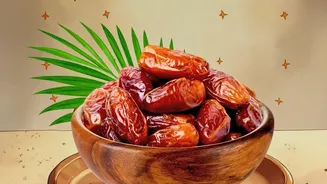
Dates are a remarkably shelf-stable fruit. Thanks to their low moisture and high sugar content, they naturally resist spoilage. This means they can last for a very long time if stored correctly. Dried date varieties can last up to a year at room temperature, and even longer in the refrigerator. Softer varieties like Medjool might have a slightly shorter room-temperature shelf life of around six months but will also keep for up to a year when chilled. Freezing extends their life even further, preserving them for several years without significant loss of quality. This inherent durability is why the 'best-before' date is more relevant than the 'packed-on' date, and even that is a conservative estimate of quality.
Trust Your Senses: How to Tell if Dates Are Bad
Instead of relying solely on the printed date, your senses are the best tool for judging if dates are still good to eat. First, look for any visible signs of spoilage like mould, which can appear as fuzzy green or white spots. Also, check for pests; it's a good practice to break dates open before eating. Next, smell the dates. Fresh dates have a mild, sweet, caramel-like scent. If they smell sour, fermented, or otherwise unpleasant, they have likely gone bad. Finally, consider their texture. While some crystallisation of sugar on the surface is normal and looks like a white film, a slimy coating is a sign of spoilage. If the dates are excessively hard and dry, they might not be enjoyable, but are not necessarily unsafe.
Smart Storage for Maximum Freshness
How you store dates makes all the difference in their longevity. For short-term storage, an airtight container in a cool, dark pantry away from heat sources like the stove is sufficient. This will protect them from air, moisture, and pests. For longer-term storage, the refrigerator is your best option. Keeping dates in a sealed container in the fridge can extend their freshness for up to a year, as the cool temperature slows moisture loss and prevents them from absorbing odours from other foods. If you've bought dates in bulk, the freezer is an excellent choice. Place them in a freezer bag, remove as much air as possible, and they can last for years.