




The Physics of Patience
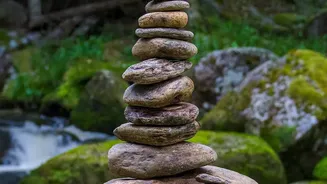
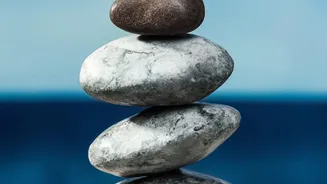
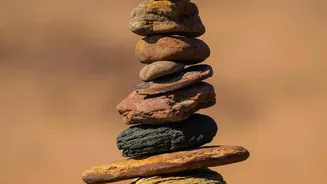
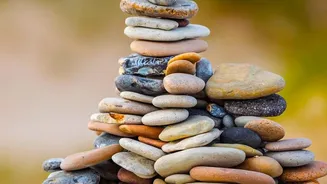
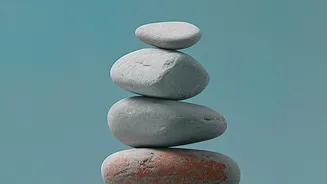
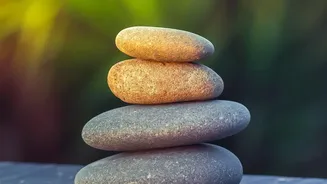
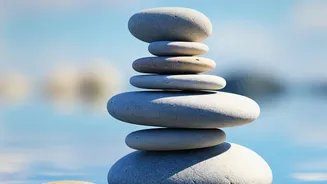
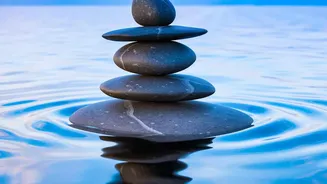
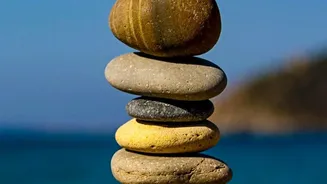
At its core, stone balancing is the simple act of stacking rocks in improbable, gravity-defying arrangements without the use of any adhesives or supports. It’s not magic; it’s a deep, intuitive application of physics. An artist or practitioner must find
the natural balance point of each stone. This often involves identifying three tiny points of contact—a natural tripod—that create a stable base. To do this, you have to slow down and become incredibly sensitive, feeling for the subtle shifts in weight and the almost imperceptible moment a stone “clicks” into place. Your hands learn to listen to the stones, detecting the faint tremors that signal instability long before your eyes can. This process requires immense patience and a gentle, persistent approach, making the physical act inseparable from a mental state of calm.
A Dialogue Between Mind and Stone
This is where focused attention becomes paramount. Stone balancing provides immediate, tangible feedback for a wandering mind. If you start thinking about your to-do list or get distracted by a noise, your focus breaks, your hand may tremble, and the entire structure can collapse in an instant. The stones are honest teachers; they cannot be fooled and will not pretend to be balanced just because you want them to be. This cause-and-effect relationship creates a powerful training loop for your brain. To succeed, you are forced to anchor your awareness entirely in the present moment, observing the delicate interplay between your hands and the rocks. It becomes a form of active meditation, where the goal isn't to empty the mind, but to fill it completely with a single, quiet task.
Entering the Flow State
When you are deeply absorbed in balancing stones, you may find that time seems to melt away. This is the psychological phenomenon known as a “flow state,” a term coined by psychologist Mihaly Csikszentmihalyi. Flow is a state of complete immersion in an activity, where concentration comes naturally, self-consciousness fades, and the task itself becomes its own reward. Stone balancing is a perfect trigger for flow because it meets all the key criteria: it has a clear goal (balance the stone), provides immediate feedback (the stone either stands or falls), and requires a perfect match between your skill and the challenge at hand. Practitioners often describe losing themselves in the process for hours, feeling a sense of deep engagement and inner peace.
More Than Just a Hobby
The benefits of the intense focus required for stone balancing extend far beyond the riverbank or shoreline. Regularly engaging in this practice can enhance your ability to concentrate in other areas of your life, from work projects to personal conversations. It improves hand-eye coordination and fine motor skills as you make minute adjustments based on tactile feedback. Furthermore, the act of creating something beautiful and temporary, only to let it go, teaches a powerful lesson in non-attachment. Many artists dismantle their creations before they leave, reinforcing the idea that the value is in the process, not the outcome. This practice of building and releasing fosters resilience, patience, and a greater sense of emotional balance.
How to Begin Your Own Practice
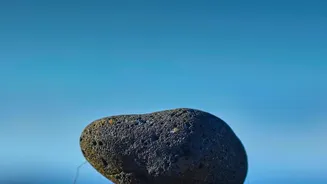
Getting started is simpler than it looks. You don’t need special equipment or a dramatic landscape. Find a quiet spot with a variety of stones—a local park, a beach, or even your own garden will do. Beginners are often advised to start small, perhaps by balancing one rock on its end or trying to stack three simple, flattish stones. The key is to be patient with yourself. Feel the texture and weight of each rock. Try to find the small divots and bumps that can serve as contact points. Remember that the goal isn't to create a towering masterpiece on your first try, but to slow down, breathe, and tune into the quiet conversation between gravity and stone.