




What is SMOPS-2026?
SMOPS-2026 was the second International Conference on Spacecraft Mission Operations, held in Bengaluru, India, and jointly organized by the Indian Space Research Organisation (ISRO) and other international bodies. The event brought together global space
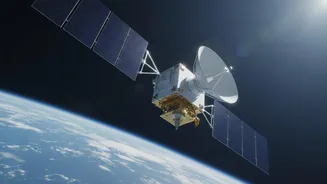
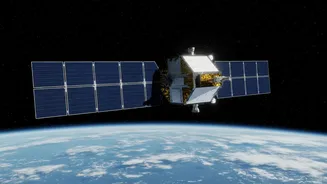
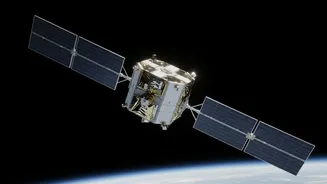
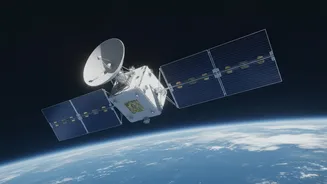
agencies like NASA and ESA, scientists, and industry leaders to discuss the future of managing space missions. A central theme was the increasing role of AI and automation in everything from mission design to managing large satellite constellations and interplanetary exploration. Discussions highlighted how AI is no longer a theoretical concept in space but a necessary tool for handling the growing complexity of operations, such as managing space traffic and enabling deep-space missions where communication delays are significant.
The Shift from 'In the Loop' to 'On the Loop'
One of the most significant changes driven by AI is the evolving role of the human mission controller. The traditional model was 'human-in-the-loop' (HITL), where a person directly makes or approves every critical decision the system proposes. However, as AI systems become more capable, the industry is moving towards a 'human-on-the-loop' (HOTL) model. In this framework, the AI has the autonomy to perform tasks, make decisions, and execute maneuvers on its own, such as avoiding space debris or optimizing a satellite's orbit. The human operator's role becomes that of a strategic supervisor, monitoring the AI's performance, setting high-level goals, and intervening only when necessary or if the AI flags an issue it cannot solve. This approach allows for faster reaction times than humanly possible and frees up human experts to focus on more complex, strategic problems.
Benefits of Increased Autonomy
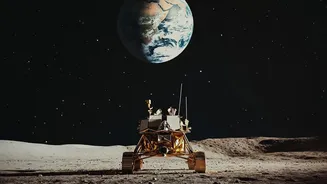
Entrusting AI with greater control over spacecraft offers substantial benefits. For one, it dramatically increases efficiency. AI can process vast amounts of data from spacecraft sensors to optimize fuel usage, manage power systems, and schedule data transmissions far more effectively than a human could. This is crucial for managing large 'mega-constellations' of thousands of satellites, where manual control is simply impossible. For deep-space missions to Mars and beyond, AI autonomy is not just a benefit but a necessity. With communication delays ranging from several minutes to hours, a spacecraft must be able to navigate and respond to unexpected events on its own in real time. This capability, enabled by on-board or 'edge' AI, allows missions to explore hazardous but scientifically interesting terrains and react instantly to system failures without waiting for instructions from Earth.
Managing the Risks
Handing over the controls of a multi-billion dollar spacecraft to an AI naturally comes with risks. A primary concern is cybersecurity; an AI system could be vulnerable to attacks that might disrupt its operations or compromise the mission. Another challenge is the 'black box' problem, where complex AI systems may make decisions for reasons that are not immediately clear to their human supervisors. To mitigate these risks, robust safety protocols are essential. This includes building in clear 'fail-safes' and veto power, allowing human operators to instantly retake control if the AI behaves unexpectedly. Developing 'explainable AI' (XAI) that can articulate its reasoning is also a major area of research. Ultimately, the goal is to build trust in these autonomous systems through rigorous testing, validation, and maintaining a clear and effective chain of command where the human remains the ultimate authority.