






The Tale of Two Malls
Begin your journey at the heart of Nainital, the Mall Road, officially named Govind Ballabh Pant Marg. Constructed by the British between 1841 and 1885, this road runs parallel to the Naini Lake, connecting the two ends of town, Mallital (the head of the lake)
and Tallital (the foot of the lake). Originally, it served as a promenade for British families. Historically, there was an unwritten rule: the Upper Mall was for the British, while the Lower Mall was used by Indians. This colonial-era artery, flanked by shops and period-style hotels, serves as the perfect starting point to understand the town's layout and its past.
A Sanctuary in the Wilderness
From Mallital, a short walk leads to one of the town's oldest and most serene structures: St. John in the Wilderness Church. Established in 1844, this Anglican church is a fine example of Neo-Gothic architecture, nestled amidst a dense deodar forest. The church earned its name when the Bishop of Calcutta, Daniel Wilson, fell ill while laying its foundation and had to take shelter in an unfinished house in the forest. Inside, you'll find stained-glass windows and a brass plaque memorializing the victims of the catastrophic 1880 landslide that reshaped Nainital. The peaceful graveyard behind the church adds to its hauntingly beautiful charm.
The Seat of Summer Power
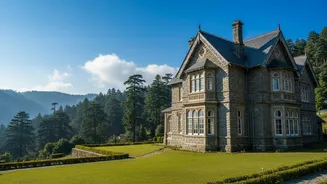
A more ambitious but rewarding destination is the Governor's House, or Raj Bhawan. Built between 1897 and 1900, it served as the summer residence for the Governor of the North-Western Provinces during the British Raj. Designed in a Victorian Gothic style reminiscent of a Scottish castle, the sprawling estate covers over 200 acres. While it is now the official residence of the Governor of Uttarakhand, parts of the magnificent 113-room structure and its manicured gardens are open to the public. The architecture, featuring turrets, pointed arches, and locally sourced stone, offers a grand glimpse into the administrative and social life of the colonial elite.
Echoes of an Educational Legacy
Nainital's cool climate made it an ideal location for British-style boarding schools. As you explore, you'll notice the imposing structures of institutions like Sherwood College and St. Joseph's College. These schools, established in the mid-to-late 19th century, are architectural landmarks in their own right. Their stone facades, clock towers, and sprawling campuses are integral to the town's colonial landscape. While access to the grounds may be restricted, their presence on the hillsides is a powerful reminder of Nainital's evolution as a premier educational hub during the British era, a legacy that continues to this day.
A Hunter-Conservationist's Abode
No colonial tour of Nainital is complete without acknowledging one of its most famous residents, Jim Corbett. His former home, Gurney House, is located on Ayarpatta Hill. This quaint cottage was built in 1881 and is where the legendary hunter-turned-conservationist lived before moving to Kenya in 1947. Now a private residence, the owners graciously welcome visitors by appointment. A tour offers a journey back in time, with much of Corbett's original furniture and possessions lovingly preserved, providing a personal look into the life of the man who was deeply connected to the Kumaon hills.