





The Anatomy of a Lifeline Offer
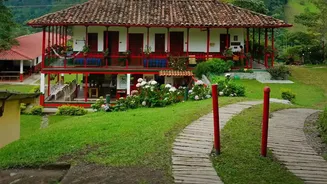
In the heart of Soria, one of Spain's most sparsely populated provinces, the village of Arenillas launched a remarkable initiative. With its population dwindling to around 40 permanent residents, the town council and a local cultural association decided
to act decisively. They offered a fully renovated, rent-free municipal house to a family willing to relocate permanently. But this wasn't just a giveaway. The package was intricately tied to the village's survival, including a guaranteed job as a municipal mason for building upkeep and the opportunity to manage the local community bar—the social heart of the village. The goal was clear: attract new blood not as temporary tenants, but as integrated, year-round neighbours.
A Village on the Brink
Arenillas's radical offer is a direct response to a crisis known as 'España Vaciada' or 'Emptied Spain'. For decades, vast swathes of Spain's interior have seen younger generations migrate to cities for work and opportunities, leaving behind aging populations and the shells of once-vibrant communities. Soria is an epicenter of this phenomenon, with a population density so low it has been compared to Lapland. For villages like Arenillas, the consequences are stark: schools close, businesses shutter, and the social fabric unravels. The local school in Arenillas, for instance, shut its doors about 30 years ago. Without new families, and specifically children, the village faced the real possibility of disappearing completely. Free school transport to a neighboring town 20 kilometers away became part of the modern offer, a necessary adaptation to keep family life viable.
What 'Community Commitment' Really Means
The offer from Arenillas was not for passive residents. The long-term commitment was a concrete set of expectations designed to embed newcomers into the local ecosystem. The primary requirement was for a family, preferably with school-age children, to help ensure a generational future. The jobs offered were not random; they were essential. A municipal mason is vital for maintaining the village's infrastructure, while running the social bar is crucial for preserving community life. Rodrigo Gismera, president of the Arenillas Cultural Association, noted that the bar is "what gives life to a town, what creates unity and community." The successful family would not just live in Arenillas; they would be responsible for maintaining its physical structures and social cohesion. This is a model of integrated revitalization, where housing and employment are fused to ensure newcomers both receive support and contribute meaningfully from day one.
A Nationwide Trend of Rural Reinvention
Arenillas is not alone in its creative fight for survival. Across Spain, other towns have launched similar schemes. Ponga, in the Asturias region, has previously offered cash incentives to new residents who commit to living there for at least five years, with additional payments for each child born. In Griegos, a town of just 132 residents, leaders offered three months of free rent followed by a heavily discounted rate, with deductions for each child. These initiatives are part of a broader, grassroots movement where local governments are no longer waiting for national solutions. They are turning their biggest liability—empty houses—into their most powerful recruitment tool. While some offers focus on cash and others on rent, the common thread is a transaction: a home in exchange for a commitment to keeping a community alive.
The Overwhelming Response and the Reality Check
The response to the Arenillas offer was staggering, demonstrating a deep-seated desire for an alternative way of life. The town council received thousands of inquiries from across Spain and around the world. However, the offer came with a crucial legal reality: applicants needed to already have the right to live and work in Spain. The village could not sponsor visas, a common condition for these types of programs. This highlights the difference between a viral news story and the practicalities of international relocation. The initiative was a lifeline for those already in the country struggling with urban costs, not a simple open door for anyone dreaming of a Spanish rural escape. Ultimately, the immense interest proved the concept's appeal, but the selection process underscored the deep commitment required.