







The High Cost of Sitting Still
Our bodies are not designed for the prolonged periods of sitting that define many modern professions. Research increasingly shows that a sedentary lifestyle is linked to a host of health problems. Sitting for hours on end can lead to poor posture, strained
neck and shoulder muscles, and chronic lower back pain. It also shortens the hip flexor muscles, which can cause issues with hip joints over time. Beyond the musculoskeletal system, extended sitting slows circulation, particularly in the legs, which can contribute to swelling and even increase the risk of more serious conditions like deep vein thrombosis (DVT). Studies have also linked it to an increased risk of chronic issues such as heart disease, type 2 diabetes, and certain cancers.
What Exactly is Desk Yoga?
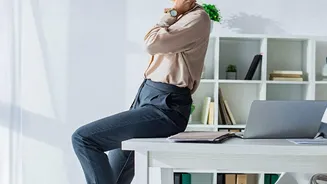
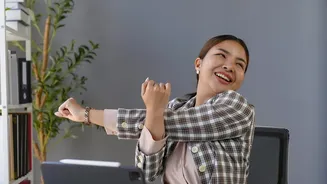
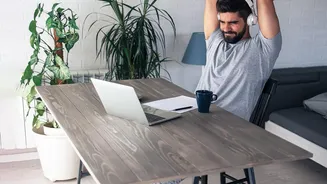
Don't be intimidated by the word "yoga." Desk yoga isn't about performing complicated poses or needing a full hour and a yoga mat. It's a series of simple, modified stretches and movements that can be done right at your workstation, often without even leaving your chair. Think of it as introducing small "movement snacks" into your day. These practices are designed to be discreet, quick, and effective, targeting the specific areas of the body that become tight and strained from sitting. The goal is not to have a full workout but to relieve muscle tension, improve posture, and promote physical comfort throughout the workday.
More Than a Stretch: A Mental Refresh
The benefits of incorporating small movements into your workday extend beyond the purely physical. Taking just a few minutes to stretch can act as a powerful mental reset. It helps break up the monotony of tasks, which can improve focus and concentration when you return to your work. Deep breathing, an integral part of yoga, is a proven technique for stress management, helping to calm the nervous system and reduce anxiety. By increasing blood flow and invigorating the nervous system, these brief movement breaks can combat the dreaded afternoon slump, boosting your energy levels and overall productivity. Many find that this practice improves their mood and helps them manage workplace pressures more effectively.
Seated Cat-Cow for Spine Health
This movement is excellent for relieving back tension and increasing spinal mobility. Sit tall in your chair with both feet flat on the floor. Place your hands on your knees. As you inhale, arch your spine and look up toward the ceiling, rolling your shoulders back and away from your ears (Cow Pose). As you exhale, round your spine, dropping your chin to your chest and letting your shoulders and head come forward (Cat Pose). Repeat this fluid movement 5-10 times, coordinating it with your breath.
Neck Rolls for Tension Release
Many people hold a great deal of tension in their neck and shoulders from staring at a screen. To release it, sit upright and gently drop your right ear toward your right shoulder, feeling a stretch along the left side of your neck. Hold for 15-30 seconds, breathing deeply. Slowly roll your chin down to your chest, and then over to the left side, bringing your left ear toward your left shoulder. Avoid rolling your head all the way back, as this can compress the neck. Repeat this gentle arc 3-5 times on each side.
Wrist and Finger Stretches
Constant typing and mouse use can lead to strain in the hands and wrists. To counter this, extend your right arm in front of you with the palm facing up. With your left hand, gently bend your right fingers down toward the floor until you feel a stretch in your forearm. Hold for 20 seconds. Then, flip your hand so the palm faces down and gently pull your fingers toward your body. Hold again. Repeat on the left arm. Afterwards, make fists and then spread your fingers wide several times to improve circulation.
Seated Spinal Twist
Twists are wonderful for digestion and for releasing tension in the spine. Sit tall at the edge of your chair. As you exhale, gently twist your torso to the right, using your right hand on the back of the chair for a light leverage. Your left hand can rest on your right thigh. Keep your hips facing forward as much as possible and use your breath to deepen the twist, looking over your right shoulder if it's comfortable for your neck. Hold for three deep breaths, then slowly release and repeat on the other side.