




Why Your Desk Is Your Hips' Worst Enemy
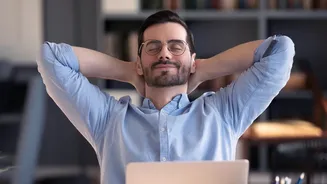
Our bodies are designed for movement, but many of us spend the majority of our waking hours in a single position: sitting. This prolonged state of sitting has a direct and often detrimental effect on our hips. When you're seated, your hip flexor muscles,
which run along the front of your hips, are held in a constantly shortened position. Over time, these muscles can become tight and stiff. Simultaneously, the muscles on the opposite side, your glutes, become inactive and weak from underuse. This combination of tight flexors and weak glutes creates a significant muscular imbalance around the pelvis, which is the central hub for nearly all your body's movements. This imbalance doesn't just stay in the hips; it triggers a chain reaction that can affect your entire body.
The Domino Effect of Poor Hip Mobility
Limited hip mobility is rarely an isolated issue. When your hips can't move through their full range of motion, other parts of your body are forced to compensate, often leading to pain and dysfunction elsewhere. The most common casualty is the lower back. Tight hip flexors can pull the pelvis forward, increasing the arch in the lower back and putting excess strain on the lumbar spine. This can lead to chronic aches and a greater risk of injury. Beyond back pain, poor hip mobility can manifest as knee pain, as the joint is forced to absorb stress it wasn't designed for. It can also hinder your athletic performance, reducing your power in activities like running and squatting, and even affect your posture and balance in everyday life.
Desk-Job Yoga: A Practical Mobility Reset
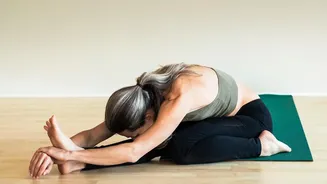
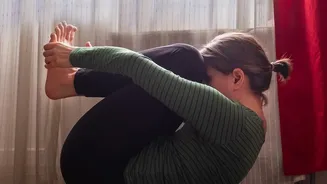
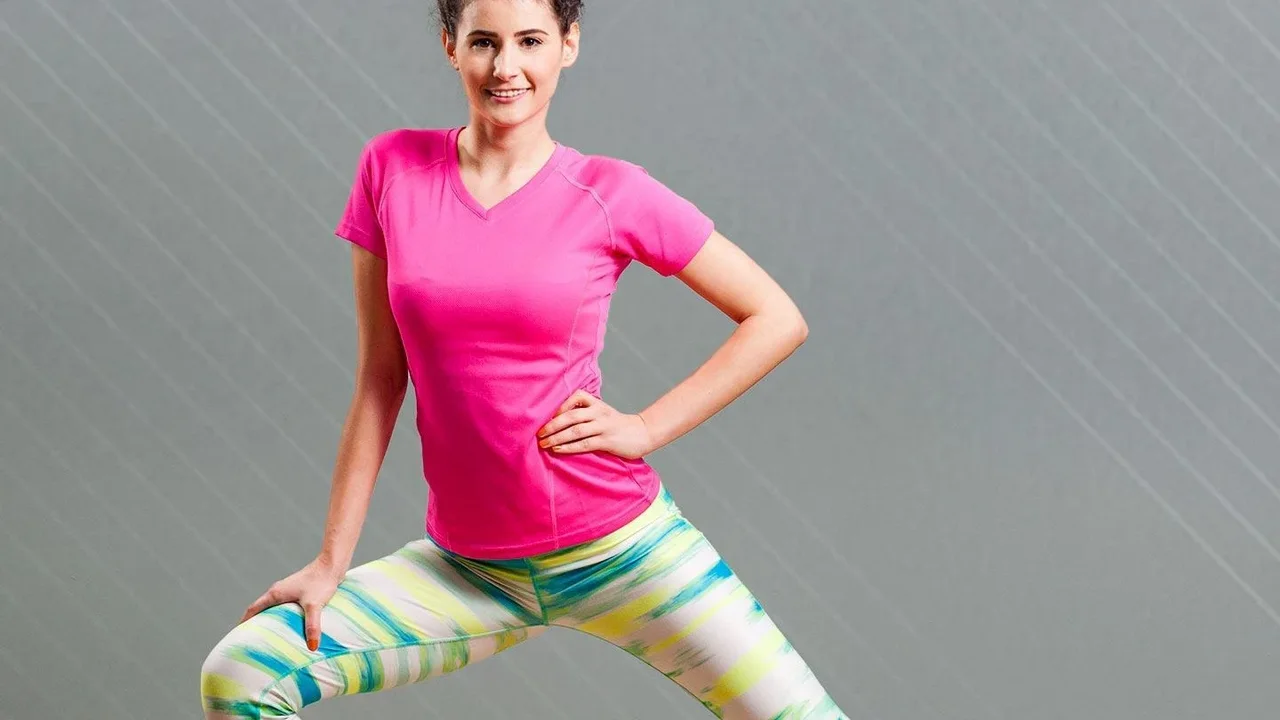
The good news is that you can counteract these effects without needing a full yoga studio. So-called "desk-job yoga" focuses on simple, targeted movements you can do at or near your workstation to restore mobility. The goal is to gently lengthen the muscles that have become tight and reactivate those that have gone dormant. Some effective and discreet options include: Seated Pigeon Pose: While sitting, cross one ankle over the opposite knee. Gently press down on the elevated knee until you feel a stretch in your outer hip and glute. Hold for 30 seconds and repeat on the other side. Seated Cat-Cow: Sit at the edge of your chair with your feet flat on the floor. On an inhale, arch your back and look up, opening your chest. On an exhale, round your spine and drop your chin to your chest. Repeat this five to ten times to bring movement to your spine. Standing Lunge: Step one foot back into a lunge position, keeping your back leg straight. Gently bend your front knee and press your back heel toward the floor to feel a stretch in the hip flexor of the back leg. Hold for 30 seconds per side.
Beyond Stretches: Building Healthier Habits
While targeted stretches are incredibly beneficial, the most sustainable solution is to integrate more movement throughout your entire day. The negative effects of sitting are less about the position itself and more about how long we stay in it. Set a timer to remind yourself to stand up, walk around, and change positions at least once every hour. Consider a standing desk to alternate between sitting and standing. When you are sitting, pay attention to your posture. Ensure your chair height allows your feet to rest flat on the floor with your knees at or slightly below hip level to prevent excessive hip flexion. Ultimately, the key is to think of mobility not as a 10-minute task, but as a continuous practice. Your body was made to move, and giving it frequent opportunities to do so is the best defence against the stiffness of a sedentary job.