






The Imported Plant Problem
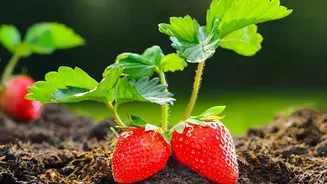
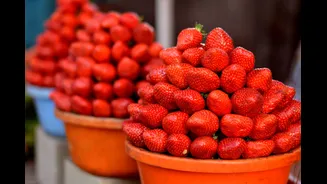
For years, India's thriving strawberry industry, which is concentrated heavily in the Mahabaleshwar-Panchgani belt of Maharashtra, has been built on a foreign foundation. Farmers have almost exclusively relied on planting materials imported from countries
like the United States and Europe. Varieties such as Chandler, Sweet Charlie, and Winter Dawn, originally developed for temperate climates in California and Florida, form the backbone of cultivation. This dependence comes at a significant cost. Farmers face high prices for imported saplings, which can include royalty payments and expensive logistics. Furthermore, these plants are not always perfectly suited to India's diverse and often harsher agro-climatic conditions, leading to potential challenges with heat stress, regional pests, and overall yield consistency. This reliance creates a vulnerability in the supply chain and puts a financial strain on growers, especially small and marginal farmers.
The Quest for a Desi Strawberry
In response to these challenges, a significant push towards agricultural self-reliance is taking root. Indian agricultural research institutions are embarking on a mission to develop indigenous strawberry varieties tailored specifically for local conditions. The goal is to breed plants that are not only high-yielding but also more resilient to India's weather patterns and soil types. One of the most notable initiatives involves a collaboration between the Mahatma Phule Krishi Vidyapeeth and the Bhabha Atomic Research Centre. This partnership is reportedly using advanced techniques like low-dose gamma irradiation to induce genetic variations, aiming to create India's first truly indigenous, climate-resilient strawberry cultivar. Such efforts signal a major ambition: to reduce import dependence and empower local farmers with greater control over their crops.
More Control and Better Profits
The development of homegrown varieties promises to fundamentally change the economics of strawberry farming in India. The most immediate benefit for farmers would be a significant reduction in input costs. By having access to locally produced, affordable saplings, growers could bypass the premium prices, import duties, and royalties associated with foreign plants. This alone could dramatically improve profit margins. Beyond cost savings, locally adapted cultivars are expected to offer greater crop stability. Varieties bred to withstand local pests and diseases could lead to more consistent yields, reducing the financial risks of crop failure and potentially lowering the need for chemical inputs. This increased stability and control over the production cycle is crucial for securing the livelihoods of the thousands of families involved in strawberry cultivation.
Beyond Mahabaleshwar's Slopes
While Mahabaleshwar accounts for an estimated 85% of the country's strawberry production, the development of hardier, more adaptable varieties could unlock new possibilities for expansion. Cultivars that are more tolerant of heat and different soil types could make strawberry farming viable in non-traditional regions across India. This expansion is already beginning, with modern heat-tolerant varieties enabling cultivation in plains and subtropical regions that were previously unsuitable. As new Indian-bred varieties become available, this trend could accelerate, spreading the economic benefits of this high-value crop to new communities. By creating strawberries that can thrive outside the specific cool climate of the Western Ghats, India can diversify its production base, ensuring a more stable national supply and creating new income opportunities for farmers in other states.