







Chand Baori, Rajasthan
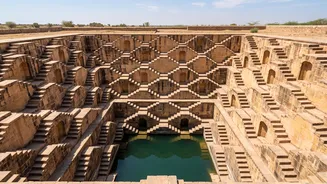
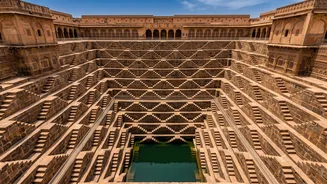
Perhaps the most visually dramatic stepwell in India, Chand Baori in the village of Abhaneri is a mesmerising sight. Constructed in the 8th-9th century, it is one of the deepest and largest in the world, plunging 13 stories and approximately 100 feet
into the earth. Its 3,500 narrow steps are arranged in a perfect, symmetrical, crisscross pattern that creates a dizzying optical illusion. This geometric design wasn't just for aesthetics; it ensured that people could access the water regardless of how much the level fluctuated. The structure's inverted pyramid shape also helped minimise evaporation and kept the air at the bottom significantly cooler, making it a natural community gathering spot during intense summer heat.
Rani ki Vav, Gujarat
A UNESCO World Heritage Site, Rani ki Vav in Patan is less a well and more a subterranean temple dedicated to water. Built in the 11th century by Queen Udayamati, it was designed as an inverted temple to signify the sanctity of water. Silted over by the Saraswati River, it was rediscovered and excavated in the 20th century, revealing its seven levels of stunningly preserved art. The walls, pillars, and galleries are adorned with over 500 principal sculptures and a thousand minor ones, depicting deities, mythological scenes, and secular life. The structure showcases the peak of Maru-Gurjara architectural style and is celebrated as an exceptional example of ancient water management technology.
Adalaj ni Vav, Gujarat
Located near Ahmedabad, the Adalaj Stepwell is a beautiful example of Indo-Islamic architectural fusion. Built in 1499, its story is one of tragedy and diplomacy. Started by a Hindu ruler, Rana Veer Singh, it was completed by the Muslim sultan Mahmud Begada after the Rana's death in battle. The five-story-deep structure is octagonal in shape and features intricately carved pillars, niches, and windows. Hindu and Jain symbols, like the 'tree of life', blend seamlessly with Islamic floral and geometric motifs. This fusion is a direct result of its unique history. The stepwell was designed not just to store water but also to provide a cool resting place for travellers and serve as a social hub.
Agrasen ki Baoli, Delhi
Hidden amidst the high-rises of central Delhi, Agrasen ki Baoli offers a dramatic descent into history. This protected monument consists of 103 stone steps arranged in three levels, flanked by arched niches. While its origins are traditionally attributed to the legendary King Agrasen, the current structure is believed to have been rebuilt in the 14th century during the Tughlaq period. The 60-metre-long and 15-metre-wide stepwell once held a reservoir that provided water and a cool retreat for the community. Its impressive stone architecture provides a stark, quiet contrast to the bustling city that has grown around it over centuries.
Toorji Ka Jhalra, Jodhpur
Built in the 1740s by the consort of Maharaja Abhay Singh, Toorji Ka Jhalra is a testament to the tradition of royal women overseeing public waterworks in Rajasthan. For many years, this Jodhpur stepwell was submerged and filled with debris, but a recent restoration has brought it back to life. The excavation revealed intricate carvings of dancing elephants, lions, and water spouts in the region's famous rose-red sandstone. More than 200 feet deep, the structure was designed to manage fluctuating water levels, with a Persian Wheel originally used to draw water to upper levels. Today, it’s a popular social spot for both locals and tourists.
Panna Meena Ka Kund, Jaipur
Located near Amer Fort, this 16th-century stepwell is known for its stunning geometric precision. Panna Meena Ka Kund features unique, symmetrical crisscrossing staircases on three sides, creating a beautiful and functional design that allowed people to access water from multiple points. The fourth side has a recessed balcony. This kund was more than a water source; it was a vital community space for socialising, especially for women. The mustard-coloured steps create a visually captivating pattern, making it a favourite for those looking to appreciate the simple yet profound beauty of ancient engineering.
Dada Harir ni Vav, Ahmedabad
Another gem in Ahmedabad, this five-storey stepwell was built around 1499 by Bai Harir Sultani, a superintendent of the royal harem of Sultan Mahmud Begada. Built in the Solanki architectural style from sandstone, the well is octagonal in plan. It features a striking blend of intricate Islamic floral and geometric carvings with Hindu and Jain symbols. The structure was designed with an east-west axis to allow sunlight to illuminate the landings and detailed carvings only for a brief period each day, keeping the interior cool. Its design also accounted for seasonal water fluctuations, ensuring year-round access.
Neemrana Baoli, Rajasthan
Not far from the famous Neemrana Fort-Palace lies one of India's most remarkable stepwells. This nine-storey subterranean structure is a feat of 18th-century engineering. Built to provide water and employment during a famine, it plunges deep into the earth, requiring nearly 200 steps to reach the bottom during the dry season. Like many stepwells, it also served as a cool resting spot (sarai) for travellers. Though it has seen neglect over the years, its sheer scale and impressive depth offer a glimpse into the architectural ingenuity required to access groundwater in this arid region.