

The Secret to Survival: Cryptobiosis
The key to this incredible feat isn't that microbes could live and thrive on the lunar surface, but that they could enter a state of suspended animation called cryptobiosis. Think of it as a biological emergency shutdown. Faced with impossible conditions
like a vacuum, extreme cold, and a lack of water, some organisms can pause all metabolic processes. They aren't growing, reproducing, or moving; they are simply waiting. If these dormant microbes were later returned to a more hospitable environment with water and nutrients, they could potentially wake up and resume their normal functions. This isn't active living; it's the ultimate form of endurance, pressing pause until the conditions for life return.
Mapping the Moon's Hidden Niches
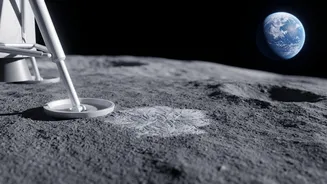
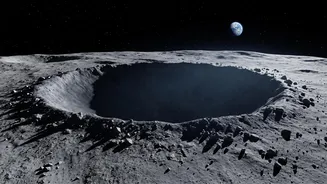
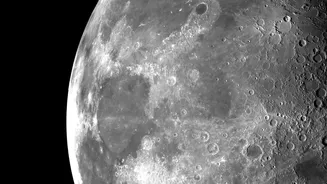
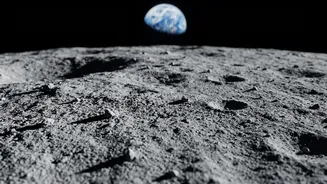
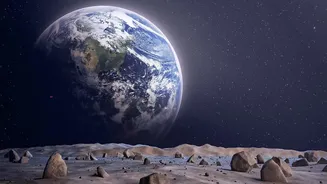
For a long time, the lunar surface was considered a sterile environment, uniformly hostile to life. However, a recent study published in August 2026 challenges this view. Scientists used data from NASA's Lunar Reconnaissance Orbiter and India's Chandrayaan-1 mission to create detailed maps of the Moon's south pole. They discovered that the terrain is full of tiny 'niches' that offer protection from the deadliest aspects of the lunar environment, especially solar ultraviolet (UV) radiation. These aren't comfortable havens; they are permanently shadowed regions inside craters or even the simple shadow cast by a rock. In these small pockets, temperatures are more stable and radiation is less intense, creating tiny zones where a dormant microbe could potentially hold on for days or even weeks.
Earth's Toughest Travellers
To test this idea, researchers simulated these lunar conditions and modelled how known hardy microbes would fare. The results were surprising. The champion survivor wasn't a rare extremophile from a deep-sea vent but Aspergillus niger, a common black mould you might find in a damp bathroom. This fungus, which has been found aboard the International Space Station, showed incredible resistance to UV radiation, even more so than the famously tough bacterium Deinococcus radiodurans, which is known for its ability to withstand massive doses of radiation. The study showed that these organisms, typically not even considered 'extremophiles', have an unexpected resilience to the harshness of space, a finding that has significant implications for future exploration.
The Planetary Protection Problem
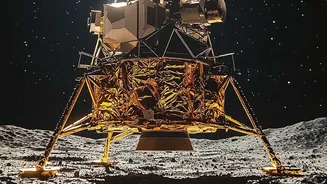
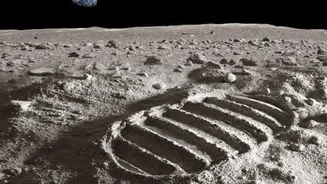
The finding that our microbial hitchhikers could survive on the Moon raises important questions for future missions. With NASA's Artemis program and a planned Chinese-Russian base both targeting the lunar south pole, the risk of biological contamination is very real. Every time humans land, they bring a microscopic crew with them. If these microbes can survive, they could complicate the scientific search for the Moon's original chemistry. Scientists want to study the Moon as a pristine time capsule of the solar system's history. Distinguishing between ancient lunar compounds and microbes brought from Earth could become a major challenge. This has led to calls for stricter contamination controls to preserve the Moon's scientific integrity before we leave a permanent human footprint.
Bigger Questions About Life in the Universe
Beyond just the Moon, this research touches upon one of science's most profound questions: could life travel between planets? The idea, known as panspermia, suggests that life might not be unique to Earth but could be distributed across the cosmos, transported on asteroids or comets. For decades, scientists have tested this theory by exposing bacteria and other organisms like tardigrades (or 'water bears') to the vacuum of space. Studies on the International Space Station have shown that bacterial spores can survive for years if shielded from direct UV light. If common Earth microbes possess the ability to enter a dormant state and endure such extreme conditions, it lends weight to the possibility that life, in its simplest forms, might be more tenacious and widespread than we ever imagined.