




The Legend and The Leap
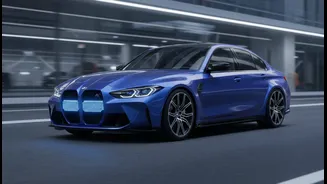
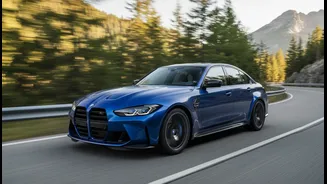
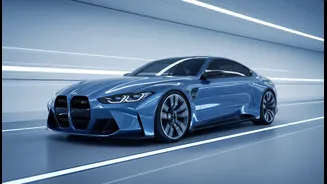
For nearly four decades, the BMW M3 has been more than just a car; it has been the benchmark. From the original four-cylinder screamer to the twin-turbocharged inline-six of today, each generation has defined the sports sedan segment. It’s a name that
carries immense weight, built on decades of motorsport victories and a reputation for delivering a near-perfect blend of daily usability and track-day thrills. This history creates enormous brand equity, but it also presents a monumental challenge. How do you transition a legend powered by howling combustion engines into the silent, instant-torque world of electric vehicles? BMW’s answer is both simple and bold: you don’t change the name, you evolve the soul.
A New Heart for a Famous Name
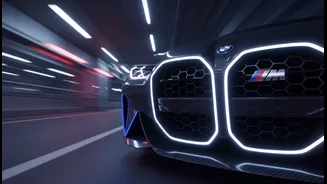
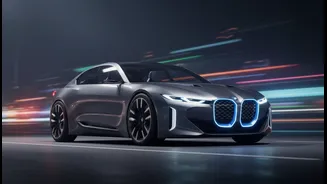
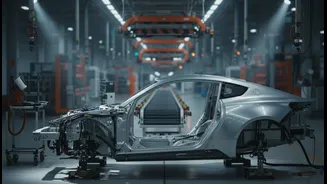
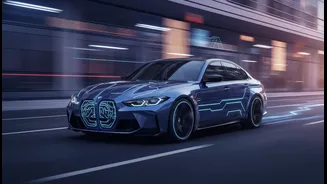
Recent sightings and official comments confirm that the next-generation M3, expected around 2027, will be electric. Built on the advanced 'Neue Klasse' platform, it will feature a quad-motor setup, one for each wheel, controlled by a central super-computer dubbed the 'Heart of Joy'. This technology allows for unprecedented torque vectoring and stability control, promising a driving experience that is uniquely M. Crucially, BMW M CEO Frank van Meel has been adamant that the car will be called simply “M3.” He argues that the M3 has always been defined by its performance promise, not its powertrain technology, having used four, six, and eight-cylinder engines throughout its life. An electric motor is just the next step in that evolution. By keeping the name, BMW is making a powerful statement: the character of an M3 is about driving dynamics, not fossil fuels.
The Perils of Renaming
Not every manufacturer has shown such confidence. The most prominent cautionary tale is the Ford Mustang Mach-E. While a commercially successful and competent EV, its launch was plagued by controversy. Purists cried foul, arguing that attaching the legendary 'Mustang' name—synonymous with a two-door, V8-powered pony car—to a four-door electric SUV was brand heresy. The decision was purely for marketing, an attempt to make a new EV stand out in a crowded field. But it created a rift with the car's most ardent fans and even led to Ford's own CEO later making comments that seemed to distance the Mach-E from being a “true” Mustang. This illustrates the risk: when you repurpose an iconic name for a vehicle that fundamentally changes the body style and purpose, you risk diluting the very brand equity you sought to leverage.
A Smarter Path Forward
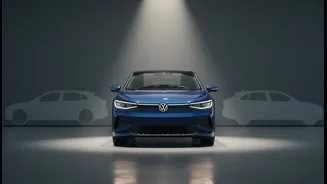
Other brands seem to be learning this lesson. Dodge, for instance, is transitioning its quintessential muscle car into the electric era by keeping the 'Charger' name for its new Daytona EV. Like BMW, Dodge understands that the name signifies an attitude and a performance promise that transcends the engine. The brand is even engineering a synthetic exhaust note to retain the auditory drama its customers expect. Meanwhile, other automakers like Volkswagen and Mercedes-Benz are reportedly moving away from confusing, alphanumeric EV sub-brands (like 'ID.' and 'EQ') and planning to use their established model names for electric versions. The trend is clear: familiarity and trust are powerful assets. Erasing decades of brand history to signal a new powertrain is proving to be a strategic misstep.