





A New Strategy for Lunar Exploration
For decades, the model for space exploration was simple: a government agency like NASA designed, built, and flew its own hardware. But to return to the Moon sustainably, NASA is now acting more like a customer than a manufacturer. The centrepiece of this
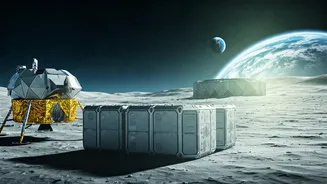
new era is the Commercial Lunar Payload Services (CLPS) initiative. Started in 2018, this multi-billion dollar program hires American companies to provide an end-to-end delivery service for NASA's scientific instruments and technology demonstrations. Instead of buying a rocket and a lander, NASA simply buys a spot for its cargo on a commercially operated mission to the lunar surface. This approach is designed to be faster, more affordable, and to stimulate a vibrant commercial space economy that can support future exploration, including the ambitious Artemis program which aims to land humans back on the Moon.
The High-Risk, High-Reward Gamble
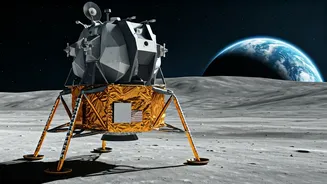
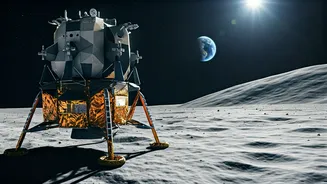
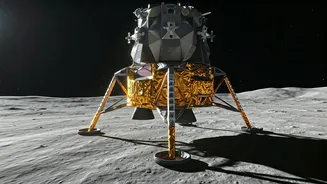
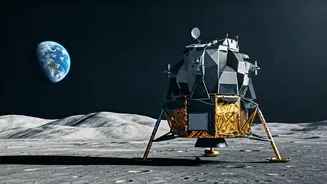
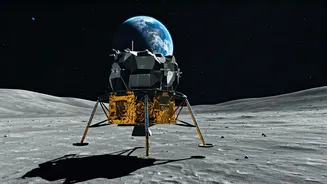
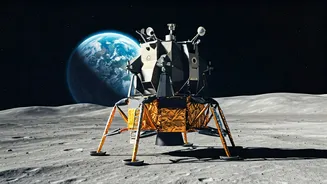
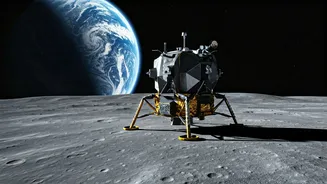
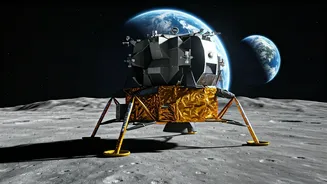
This commercial strategy is not without significant risk. The early CLPS missions have been a dramatic illustration of both the perils and promise of this approach. In January 2024, the first CLPS mission, Astrobotic Technology's Peregrine lander, suffered a critical propellant leak shortly after launch and never reached the Moon. The mission ended with the spacecraft making a controlled re-entry into Earth's atmosphere. However, just one month later, the narrative flipped. Houston-based Intuitive Machines successfully landed its Odysseus spacecraft near the Moon's south pole, marking the first time a private company had ever soft-landed on the lunar surface and the first US landing since the Apollo era. Though the lander tipped upon arrival, it proved the model could work. These contrasting outcomes highlight NASA's philosophy: accept a higher risk of failure in these uncrewed missions to learn quickly, iterate, and drive progress faster than would be possible with traditional government programs.
Paving the Way for Human Return
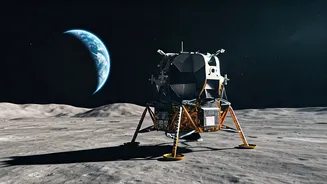
Every robotic CLPS mission is a crucial step towards putting astronauts back on the Moon. These landers are robotic scouts, sent ahead to do the vital prep work. They carry instruments to study the lunar environment, such as the radiation that astronauts will face. They are tasked with searching for resources, particularly water ice, which is believed to be trapped in permanently shadowed craters near the lunar south pole. This ice could one day be harvested to provide drinking water, breathable air, and even rocket propellant for future missions. The landers also test critical technologies, like precision landing systems and how rocket exhaust interacts with the dusty lunar surface, providing essential data to ensure the safety of the much larger and more complex human landing systems being developed for Artemis.
Building a Sustainable Lunar Economy
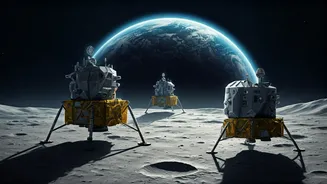
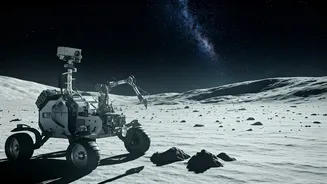
The long-term vision for the CLPS program extends beyond NASA's immediate needs. The goal is to seed a self-sustaining lunar economy where NASA is just one of many customers. By funding these initial missions, the agency is helping companies like Intuitive Machines, Astrobotic, and Firefly Aerospace develop and prove their lander technologies. Recent contract awards in June 2026 for four more missions to be flown by 2028 underscore this commitment. The plan includes a steady cadence of missions, potentially evolving into larger landers capable of delivering more complex cargo. This could eventually include rovers, habitats, power systems, and communication networks, creating the foundational infrastructure for a permanent human settlement on the Moon and preparing for the next giant leap to Mars.