


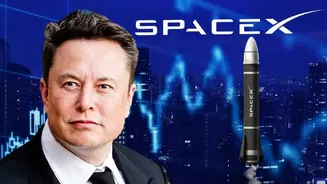

In a world anxious about AI replacing jobs, Elon Musk offers counterintuitive advice. Instead of deep specialization, he urges young people to build the broadest possible knowledge base. Here’s why he thinks this is the key to thriving.
AI Masters the Niche, Humans See the Whole Picture
Elon Musk's core
argument is that artificial intelligence is becoming exceptionally good at narrow, specialized tasks. As AI models and robots advance, their ability to write code, analyze data, or even perform technical procedures will surpass human speed and efficiency in many domains. In this future, the competitive advantage shifts. It moves away from being the person who can do a specific, repetitive task and toward the person who knows what task needs to be done. Musk believes the most valuable skill will be the ability to formulate the right questions and direct AI effectively. This requires a wide-angle view of the world—understanding not just one field, but how technology, culture, economics, and human psychology intersect.
Thinking from First Principles
Musk’s approach is deeply rooted in what he calls “first principles thinking,” a method he credits to his study of physics. Instead of reasoning by analogy (doing things the way they've always been done with minor tweaks), he advocates for breaking a problem down to its most fundamental truths and building up from there. He famously applied this to create SpaceX. Instead of accepting the high price of existing rockets, he asked what rockets are made of, calculated the raw material cost, and realized he could build them far more cheaply himself. This method requires pulling knowledge from diverse fields—materials science, engineering, software, and finance. A broad education across sciences, arts, and engineering provides the mental toolkit needed to see these fundamental truths and connect them in novel ways.
The Power of Connecting Dots
Innovation rarely happens in a vacuum. Major breakthroughs often come from combining ideas from different disciplines. This concept of being an “expert generalist” is central to Musk's success. An expert generalist studies widely, understands the core principles connecting different fields, and then applies them to their main area of focus. While AI is a powerful tool for execution, human creativity shines in this cross-disciplinary thinking. A broad knowledge base allows a person to see analogies and connections that a narrowly trained AI might miss. This ability to synthesize disparate information is crucial for problem-solving, creating new products, and identifying new market opportunities—skills that are difficult to automate and thus more valuable in an AI-driven economy.
It’s Not About Schooling, It’s About Learning
Musk often distinguishes between “schooling” and “education.” For him, education is a lifelong, self-driven pursuit of knowledge, not just the collection of degrees. He believes most people can learn far more than they think they can. His advice isn’t simply to attend more classes, but to cultivate an insatiable curiosity. This means reading widely, exploring topics outside your comfort zone, and viewing knowledge as a “semantic tree.” He advises understanding the trunk and main branches—the fundamental principles of a field—before getting lost in the leaves, or minor details. This approach creates a robust mental framework where new information has something to hang onto, making learning more efficient and effective.
So, What Should You Actually Study?
Musk’s advice translates into a practical strategy: don't just go deep, go wide. He recommends a combination of arts, sciences, engineering, and general knowledge. The goal is not to be a master of none, but to develop literacy across multiple important domains. This allows you to communicate with specialists, understand the implications of different technologies, and frame better instructions for AI systems—a skill sometimes called “prompt engineering.” As AI takes on more of the “how,” the enduring human advantage will lie in understanding the “what” and the “why.” Other experts agree, pointing to the rising importance of human-centered skills like critical thinking, communication, leadership, and creativity, all of which are nurtured by a broad education.