





A World Remade
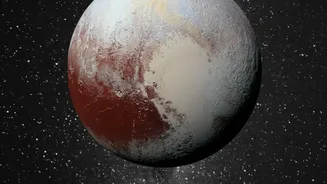
Our modern understanding of Pluto was born on July 14, 2015, when NASA's New Horizons spacecraft flew past the dwarf planet, capturing the first detailed images of its surface. Before this encounter, Pluto was just a faint, blurry dot. New Horizons unveiled
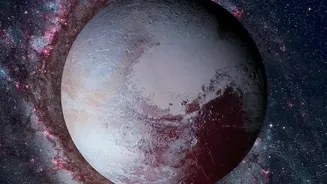
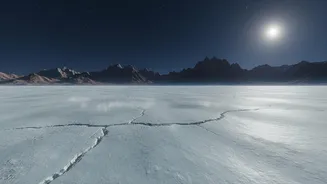
a stunningly complex world with towering mountains made of water ice, vast plains, and a giant, heart-shaped glacier named Tombaugh Regio. A key feature within this heart is Sputnik Planitia, a massive basin filled with nitrogen ice that is larger than Texas and Oklahoma combined. The nearly complete absence of impact craters on this feature told scientists that its surface was geologically young and constantly being renewed. This discovery alone confirmed Pluto was far from a dead world.
Signs of Subsurface Liquid
Now, a new analysis of those decade-old images has yielded another incredible insight. Scientists at the Southwest Research Institute identified dark, linear streaks and patches along the northern edges of Sputnik Planitia. These markings strongly resemble features found on Earth's own glaciers, like those in Greenland, where meltwater darkens the surface of the ice and snow. However, Pluto’s atmosphere is far too cold and thin for liquid nitrogen rain to be possible. This led researchers to a startling conclusion: the liquid must be coming from below.
Nitrogen, Not Water
When we think of liquid on other worlds, we usually think of water. But on Pluto, where surface temperatures hover around minus 230 degrees Celsius, water ice is as hard as rock. The liquid in question is almost certainly nitrogen. Computer models suggest that deep beneath Sputnik Planitia's kilometers-thick ice sheet, the immense pressure could be enough to melt the nitrogen at its base. This liquid nitrogen, being more buoyant than the solid ice above it, could then be forced upward through cracks and fissures in the glacier. Once on the surface, it would briefly wet the landscape, creating the dark patches seen by New Horizons before freezing again.
The Engine of a Cryovolcano
This process is a form of cryovolcanism—volcanic activity involving icy materials instead of molten rock. While the idea of ice volcanoes on Pluto isn't new, this finding is the first evidence of recently flowing liquid on the surface. Other studies have pointed to massive cryovolcanoes, some rivaling the size of Mauna Loa in Hawaii, that may have erupted a slushy mix of water and ammonia in the past. The discovery of potential liquid nitrogen flows adds another layer to the planet's geological activity. It suggests that different dynamic processes are at work, reshaping various parts of Pluto's surface over different timescales.
Why It Matters for an Icy World
This discovery fundamentally changes our view of how small, icy worlds can operate. It shows that even in the frigid outer reaches of the solar system, a planet can generate enough internal pressure to create liquids and sustain active geology. Alan Stern, the principal investigator for the New Horizons mission, noted that "Pluto never stops surprising us." This finding suggests that Pluto has time-variable features, meaning its surface could be changing even now. It expands the definition of a dynamic world and reinforces the idea that even the coldest, most distant corners of our solar system can hold secrets of active, ongoing processes.