








More Than Just a Conference
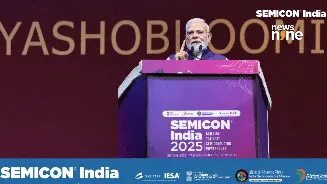
SEMICON India is the nation's flagship event for the semiconductor industry, bringing global leaders, investors, and policymakers to New Delhi. Organized by the India Semiconductor Mission (ISM) and the global industry association SEMI, the three-day
conference at Yashobhoomi convention centre is where partnerships are forged and strategic plans are laid out. This year's theme, "Silicon to Systems: Building the Ecosystem," reflects a defining moment for India. The event has grown significantly, with the 2026 edition projected to host over 500 exhibitors, including nearly 300 international companies from more than 40 countries, making it a critical meeting point for the entire global value chain.
The Engine Behind the Ambition: India Semiconductor Mission
The driving force behind this momentum is the India Semiconductor Mission (ISM), a government initiative launched in 2021 with a massive financial commitment to build a domestic chip ecosystem. The initial phase, Semicon 1.0, came with an outlay of ₹76,000 crore (around $10 billion) to attract companies to set up manufacturing facilities in India. This has already led to the approval of several key projects. Building on this, the government has launched Semicon 2.0, an enhanced phase focused on creating a sustainable ecosystem that includes chip design, fabrication (fabs), assembly, testing, and packaging (ATMP). The goal is to reduce India's heavy reliance on imports, which currently account for nearly all of its semiconductor needs, and enhance national security by ensuring a domestic supply of these critical components.
Why Chips are the New Oil
Semiconductors, or microchips, are the brains of all modern electronics. They are essential components in everything from smartphones, computers, and cars to advanced medical equipment, 5G telecommunications, and critical defence systems. The recent global chip shortage, exacerbated by geopolitical tensions and supply chain disruptions, highlighted the strategic vulnerability of nations dependent on a handful of manufacturing hubs. For India, developing a domestic semiconductor industry is not just an economic opportunity; it is a matter of technological sovereignty and self-reliance (Atmanirbhar Bharat). A thriving local ecosystem would fuel innovation, create high-skilled jobs, and support the growth of numerous other industries.
The Global Race and India's Position
India is entering a fiercely competitive global arena. Established players like the US and the EU are investing billions through initiatives like the CHIPS and Science Act to bolster their own domestic production. However, India has a unique advantage in its vast pool of design talent and a large, growing domestic market. The government's strategy focuses on leveraging these strengths while attracting global giants to set up manufacturing facilities. SEMICON India serves as the prime platform to showcase this progress, with past events resulting in significant investment announcements and partnerships. The Prime Minister's personal involvement underscores the national importance of this mission, sending a clear signal to global investors about India's commitment.
The Road Ahead is Steep but Strategic
Despite the clear vision and strong government backing, the path to becoming a semiconductor powerhouse is challenging. Setting up a modern fabrication plant requires immense capital investment, often billions of dollars, and access to uninterrupted, ultra-pure water and stable power—significant infrastructure hurdles. There is also a critical need to develop a highly specialized workforce trained in advanced manufacturing and a robust supply chain for raw materials. The government is actively addressing this by supporting academic institutions and startups through programs like the Design-Linked Incentive (DLI) scheme. Overcoming these challenges will require sustained focus, strategic global partnerships, and flawless execution.