



A Discovery High in the Himalayas
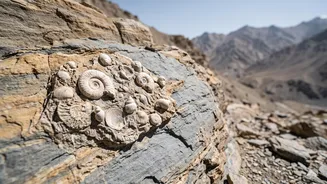
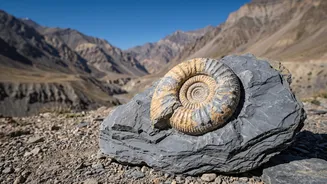
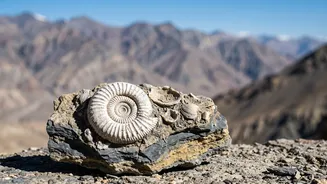
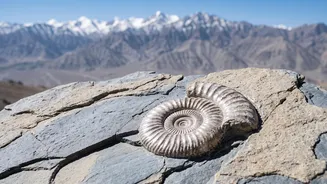
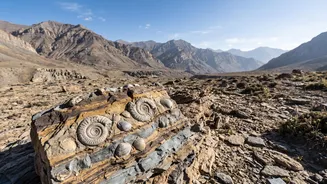
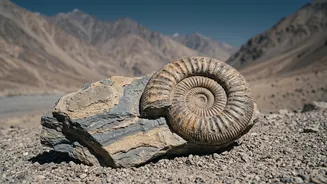
In the cold, arid landscape of Nyoma in eastern Ladakh, thousands of metres above sea level, geologists have unearthed a remarkable collection of marine fossils. A recent expedition led by geologist Dr. Ritesh Arya, founder of the Tethys Fossil Museum,
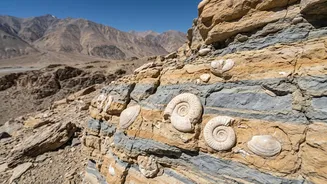
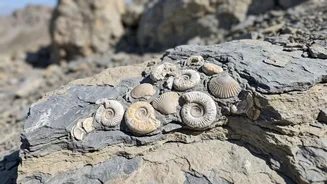
uncovered a rich deposit of shells belonging to ancient sea creatures. The collection includes a variety of spiral-shaped gastropods (ancient snails), bivalves (clams), and oyster-like forms. Preliminary analysis dates these fossils to the Eocene epoch, approximately 34 to 38 million years ago. This isn't the first time hints of a marine past have been found in the region, but this new, extensive collection provides a much clearer window into a time when Ladakh’s rocky terrain was a vibrant coastal environment.
A Message From a Lost Ocean
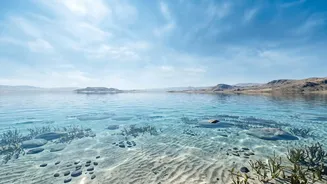
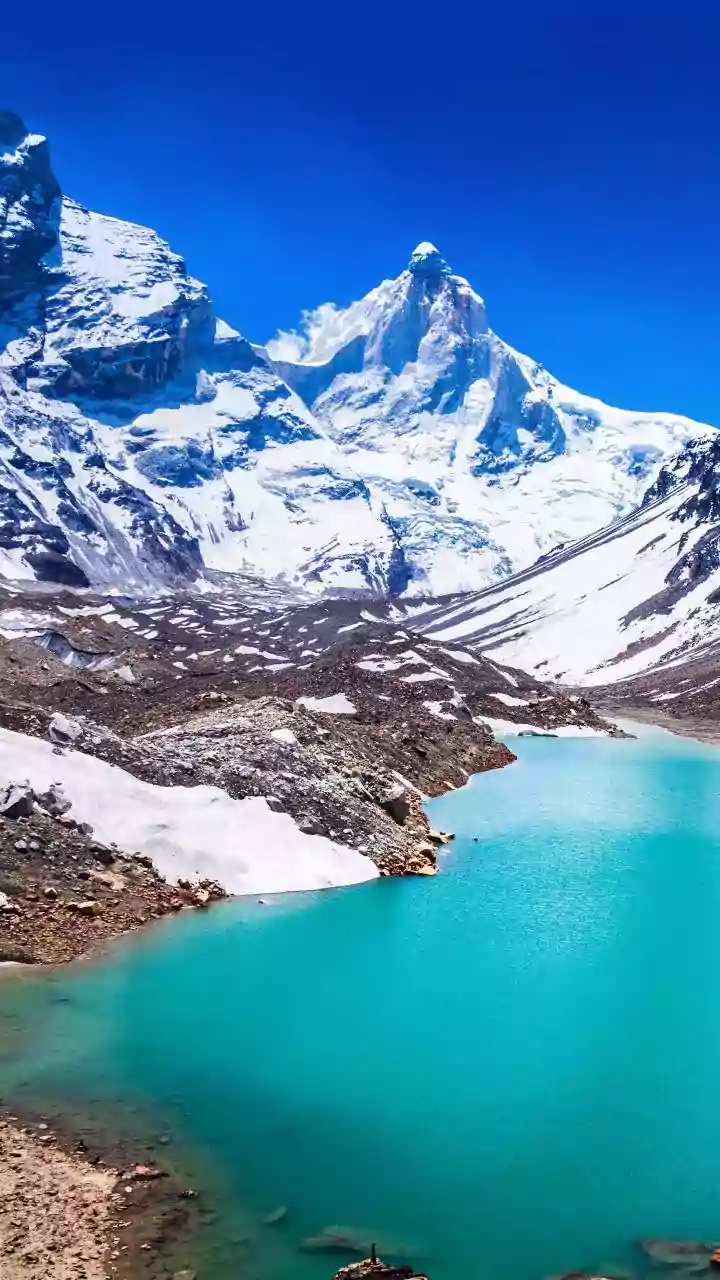
To understand the significance of finding sea life in the mountains, we have to travel back in time. For hundreds of millions of years, a vast body of water called the Tethys Ocean separated the ancient supercontinents. The landmass that is now the Indian subcontinent was an island drifting northwards. Around 50 million years ago, it began its colossal collision with the Eurasian plate. This slow-motion geological event was one of the most powerful forces to shape our planet. As the Indian plate pushed into Asia, the Tethys Ocean was squeezed out of existence, and the immense pressure buckled the earth's crust, thrusting the seafloor upwards to form the Himalayan mountain range. The fossils found in Ladakh are remnants of that lost ocean, a final message from the creatures that lived in its waters.
The Subathu Connection Puzzle
For geologists studying the Himalayas, the Subathu Formation—a band of sedimentary rock found near Shimla in Himachal Pradesh—has long been a key piece of evidence. These rocks are famously rich in marine fossils from the Eocene epoch and are considered to be a clear record of the Tethys Sea's final stages in the region. The question has always been: how far did this shallow sea extend? While fossils have been found in various parts of the Himalayas, connecting them into a coherent shoreline has been a geological puzzle. The fossils in the Subathu Formation provided a benchmark, but the full extent of this ancient sea remained a subject of debate.
Forging a 38-Million-Year-Old Link
The latest discovery in Ladakh provides the crucial missing link. Upon finding the fossils at Nyoma, Dr. Arya immediately noticed their striking similarity to those regularly collected from the Subathu Formation hundreds of kilometres away. He described the recognition as the 'real surprise' of the expedition. The preliminary comparison of the fossil types, including the distinctive Turritella-type gastropods, and their estimated age, strongly suggests a direct connection. This evidence indicates that the shallow, warm marine environment documented in the Subathu rocks wasn't an isolated bay but extended much farther east into Ladakh than previously confirmed. Essentially, the Nyoma discovery helps draw a more complete map of the Tethys Sea's shoreline just before it vanished from the region.
A New Timeline for the Himalayas
This fresh angle changes our understanding of the Himalayan origin story. The direct link between the Nyoma and Subathu fossils helps refine the timeline for the final retreat of the Tethys Sea from the India-Asia collision zone. It confirms that a shallow marine environment persisted across this vast area up to around 34-38 million years ago. The presence of not just marine shells but also fossil palms and wood suggests a landscape vastly different from the high-altitude desert of today—likely a subtropical coast fringed with vegetation. While detailed studies are still needed to confirm the precise age and species, the discovery injects critical new data into our knowledge of the region’s deep past, providing a clearer picture of the epic geological forces that transformed a sea into the roof of the world.