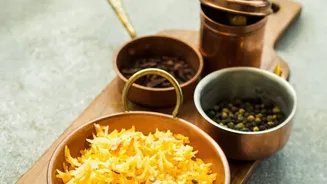





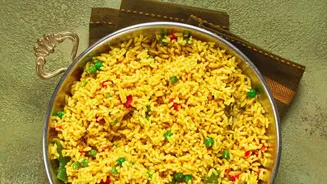
Often called 'red gold', saffron is the world's most expensive spice, prized for its unique flavour and vibrant colour. But its value comes from an incredibly delicate and laborious process: the careful, manual collection of threads from a flower.
The Flower Behind the Spice
Saffron
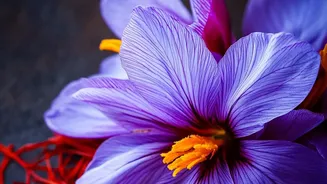
threads are not seeds or leaves, but the dried stigmas of the Crocus sativus flower, a beautiful light purple bloom that is a member of the iris family. Each flower, which grows from a bulb-like structure called a corm, produces only three tiny, crimson stigmas. These three delicate threads are the entirety of the harvest from a single bloom, and they must be handled with extreme care to protect their precious properties. It's this biological reality that sets the stage for saffron's rarity and high cost.
A Harvest Against the Clock
The saffron crocus blooms just once a year for a very short period, typically a few weeks in the autumn. Harvesters face a tight and stressful window to gather the entire crop. To make matters more challenging, the flowers must be picked by hand at dawn, often before the sun has fully risen. This early morning work is crucial because heat and direct sunlight can damage the delicate chemical compounds that give saffron its distinct aroma, colour, and flavour. There is no machine that can perform this task; the entire harvest relies on the gentle touch and speed of skilled human hands.
From Flower to Golden Thread
Once the flowers are carefully plucked and placed into shallow baskets to prevent crushing, the second phase of intense manual labour begins. Workers must then sit and, one by one, open each flower to meticulously separate the three red stigmas from the purple petals and yellow stamens. This process, known as stripping, requires immense patience and dexterity to avoid damaging the valuable threads. After separation, the stigmas are dried. This is another critical step, as it reduces the moisture content and concentrates the saffron's unique character. The drying process must be managed perfectly to preserve the spice's quality.
Why It's Worth More Than Gold
The sheer mathematics of saffron production explain its staggering price. To produce just one kilogram of dried saffron, farmers need to cultivate, hand-pick, and process somewhere between 150,000 and 200,000 individual flowers. It takes approximately 150 to 170 flowers to yield a single gram. It's estimated that around 40 hours of intense, back-breaking labour are required just to pick enough flowers for one kilogram of saffron. When you buy this spice, you are paying for hundreds of hours of dedicated manual work, a rare plant with a tiny harvest window, and an agricultural tradition that has remained unchanged for centuries.
A Taste of History
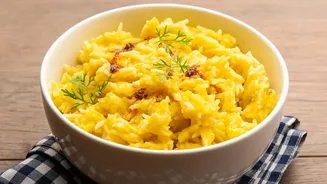
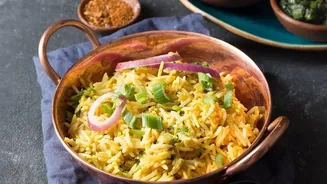
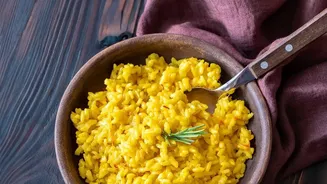
Saffron's history is as rich as its flavour. It has been used for thousands of years across various cultures, not just in food but also as a perfume, a dye, and in traditional medicine. Ancient Greeks and Romans used it, and it has been documented in Chinese medical texts since the 1550s. Today, it remains a cornerstone ingredient in many iconic dishes around the world. It provides the signature golden hue and aroma to Spanish paella, Italian risotto, and Indian biryanis. Its ability to transform both savoury and sweet dishes makes it a treasured ingredient in kitchens globally.