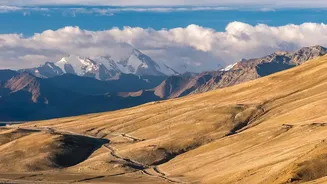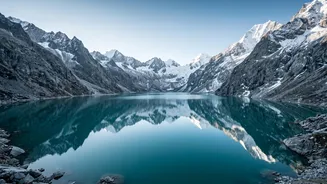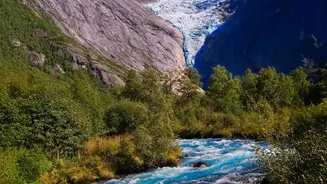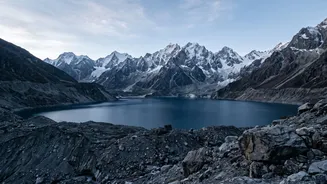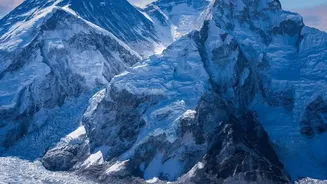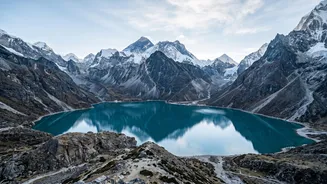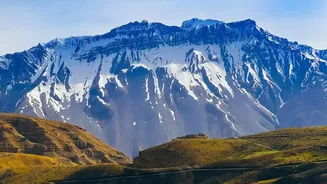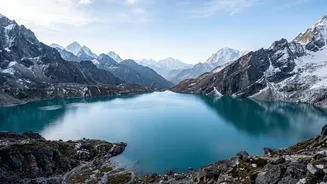



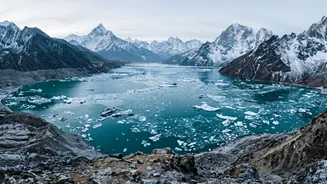
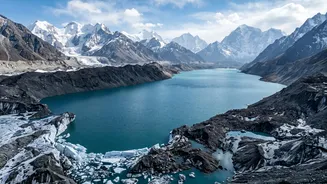
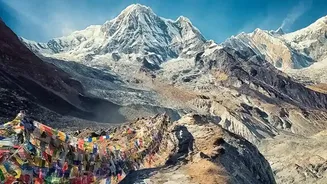
High in the Himalayas, thousands of glacial lakes are swelling, acting like ticking time bombs. As climate change accelerates ice melt, the threat of Glacial Lake Outburst Floods (GLOFs) looms larger, prompting a nationwide review of our readiness.
The Anatomy of a GLOF
A Glacial
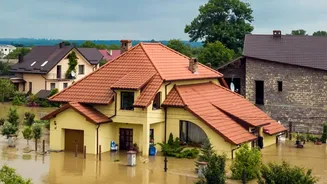
Lake Outburst Flood, or GLOF, is a sudden and violent flood that occurs when the natural dam containing a glacial lake fails. These lakes form as glaciers melt and retreat, leaving behind vast quantities of water trapped by unstable dams made of ice or loose rock and debris known as moraine. An event like a landslide, avalanche, or even just the pressure of rising water levels can cause this dam to breach, unleashing a devastating torrent of water, mud, and boulders downstream. This wall of water can travel for kilometres, destroying everything in its path including villages, roads, bridges, and critical infrastructure like hydropower dams.
A Haunting Wake-Up Call
The destructive power of a GLOF is not theoretical for India. In October 2023, the country witnessed a horrific example when the South Lhonak Lake in Sikkim breached its moraine dam. The resulting flood surged down the Teesta River valley, causing the collapse of the Chungthang dam and widespread devastation. The event claimed dozens of lives, left many more missing, and displaced thousands of people. This tragedy served as a stark and urgent reminder of the Himalayan region's vulnerability. It highlighted deficiencies in hazard assessments and underscored the urgent need for better monitoring and disaster risk reduction measures across all Himalayan states.
Identifying the High-Risk Zones
The threat is not confined to Sikkim. The entire Indian Himalayan region, from Jammu and Kashmir to Arunachal Pradesh, is dotted with thousands of glacial lakes. Following risk assessments, the National Disaster Management Authority (NDMA) has identified numerous vulnerable lakes across the mountain states, including Himachal Pradesh, Uttarakhand, Sikkim, and Arunachal Pradesh. Some of these are classified as 'very high-risk'. Recent events have also shown that the danger is cross-border; a GLOF in Nepal or Bhutan can send floodwaters rushing into West Bengal, Assam, and Bihar, making this a complex regional challenge. The Ministry of Home Affairs has been actively reviewing preparedness in these vulnerable states, pushing for proactive monitoring and planning.
The Race for Readiness
Spurred by past disasters and growing risks, India has begun to ramp up its preparedness efforts. A key focus is the development and installation of Early Warning Systems (EWS). Recently, sensor-based GLOF early warning systems have been installed at high-risk glacial lakes, such as Vasundhara Tal in Uttarakhand and Ghepan Ghat in Himachal Pradesh. These systems use a combination of automated weather stations, water-level monitors, and cameras to provide real-time data to disaster management authorities. The goal is to detect signs of a potential breach early enough to issue timely alerts and evacuate downstream communities. The NDMA is spearheading a national GLOF risk mitigation program, which funds risk assessment, monitoring, and the creation of these warning systems.
Monumental Challenges Ahead
Despite these crucial steps, the path to comprehensive safety is filled with obstacles. The sheer number of lakes, many in remote and inaccessible terrain, makes widespread monitoring a massive logistical and financial challenge. Effective readiness involves more than just technology; it requires building resilient infrastructure, creating clear evacuation routes, and conducting regular community-level training and mock drills. The Union Home Secretary has stressed that preparedness must shift from being merely response-oriented to focusing on preventive mitigation and building community resilience from the ground up. This requires seamless coordination between central agencies, state administrations, scientific bodies, and, most importantly, the local communities who are the first responders in any disaster.