




Fushimi Inari Shrine, Kyoto
The vision of walking through thousands of vibrant red torii gates is one of Kyoto’s most enduring images. Fushimi Inari Shrine is a stunning spiritual site dedicated to the god of rice and sake. The winding paths that snake up the mountain are meant
to be a meditative journey. The reality, however, is often a slow, shuffling queue of people all trying to capture the same photo. During peak hours, typically from 10 a.m. to 4 p.m., the main pathway of Senbon Torii (Thousand Gates) can feel shoulder-to-shoulder, making it hard to appreciate the atmosphere. The magic can quickly fade when you’re more focused on not bumping into selfie sticks than on the spiritual ambiance. For a more peaceful experience, your best bet is to go very early in the morning—think sunrise—or later in the evening when the lanterns cast an atmospheric glow on the lower paths. Another tip is to keep climbing; the crowds thin out significantly the further you ascend the mountain.
Arashiyama Bamboo Grove, Kyoto
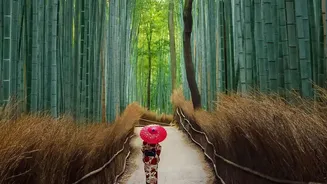
Photos of the Arashiyama Bamboo Grove promise an ethereal walk through a towering, otherworldly forest of green stalks. The sound of wind rustling through the leaves is meant to be a key part of the experience. Unfortunately, the main path through the grove is relatively short, and it's almost always packed with visitors. This popularity has led to issues with overtourism, including noise and even vandalism, with some visitors carving their initials into the bamboo stalks. Finding a moment of serene contemplation here can be a real challenge. The dense crowds can make it feel more like a theme park queue than a tranquil natural wonder. To get a glimpse of its famed beauty without the masses, an early morning visit is essential. Arriving before 8 a.m. gives you a chance to experience the grove with fewer people. Alternatively, some evening events occasionally illuminate the path, offering a different, managed way to see the bamboo.
Senso-ji Temple, Tokyo
As Tokyo’s oldest temple, Senso-ji is a magnificent and historically significant site, drawing massive crowds daily. The journey begins at the Kaminarimon (Thunder Gate) and proceeds down Nakamise-dori, a long street lined with souvenir and snack shops. This entire area is often incredibly congested, especially on weekends and during holidays. The temple itself is a place of worship for many, but the sheer volume of tourists can make it feel more like a bustling marketplace. Trying to take in the temple’s intricate architecture or participate in a quiet prayer can be difficult amid the commotion. The best strategy is to visit early in the morning, right when the main hall opens around 6 a.m., or in the evening after the shops on Nakamise-dori have closed. At night, the temple buildings are beautifully illuminated and the grounds are much quieter, offering a completely different and more reflective atmosphere.
Dotonbori, Osaka
Dotonbori is the electric heart of Osaka's nightlife, famous for its dazzling neon signs, enormous mechanical crabs, and endless street food options. It’s a sensory explosion that many visitors love. However, for the crowd-averse, it can be an overwhelming experience. The narrow streets and riverside walkways are frequently packed shoulder-to-shoulder with people, making it a slow and sometimes stressful shuffle to get anywhere. While some find the chaotic energy to be part of the charm, others may find it detracts from the experience of enjoying the food and sights. The area is a must-see for its visual spectacle, but you don't need to spend hours in the thick of it. A quick stroll to see the Glico Running Man sign and other iconic billboards might be enough. For a slightly less intense experience, explore the smaller side alleys branching off the main drag, where you can find excellent restaurants with fewer crowds.