





The Unmistakable Boom at the Top
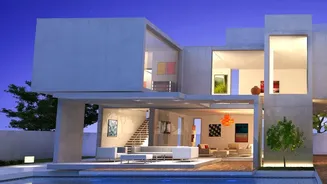
On the surface, the numbers paint a picture of a market dominated by luxury. In the first half of 2026, homes priced above ₹1 crore accounted for a staggering 84% of all residential sales in the NCR. This marks a seismic shift from 2018, when this segment
comprised a mere 18% of sales. Developers have responded in kind, with new launches in Delhi-NCR increasingly concentrated in the premium and luxury categories. This segment, broadly defined as properties costing ₹1 crore and above, with luxury often starting at the ₹3 crore mark, is seeing unprecedented demand. This surge is fuelled by a confluence of factors: rising household incomes, a post-pandemic desire for larger and better-equipped homes, and significant investment from High-Net-Worth Individuals (HNIs) and Non-Resident Indians (NRIs).
Why the Focus on Premium?
The pivot towards luxury isn't just a demand-side story; it’s also a strategic move by developers. Profit margins on premium homes, which can range from 25-30%, are significantly higher than the 10-12% margins on affordable housing projects. Soaring costs for land, construction materials, and regulatory compliance have made building budget homes financially challenging. In contrast, buyers in the luxury segment are less sensitive to price hikes and interest rate fluctuations. This has created a self-reinforcing cycle: strong demand from affluent buyers encourages developers to launch more high-end projects, which in turn skews the overall sales mix towards the premium end. Major infrastructure upgrades, like the Dwarka Expressway and Noida International Airport, have also expanded the map for luxury developments, making new corridors attractive to discerning buyers.
The Key Qualification: Value vs. Volume
Herein lies the critical qualification mentioned in the headline. The dominance of luxury homes is primarily a story of 'sales value', not 'sales volume'. While the total monetary value of transactions is overwhelmingly driven by expensive properties, it doesn’t mean more luxury units are being sold than affordable ones. For instance, a recent report covering the decade from 2015 to 2025 found that while NCR home prices surged 193%, the actual number of homes sold (sales volume) grew by only a modest 7%. During the same period, new project launches actually declined by 20%. This phenomenon is described as "value concentration rather than volume expansion." The market isn't necessarily selling more homes overall; it's just that the homes being sold are far more expensive, thus inflating the total value of sales and creating the impression of luxury dominance.
A Widening Divide in the Market
This concentration of value at the top has profound implications for the rest of the market. While the premium segment thrives, the supply of affordable housing is shrinking dramatically. In 2020, affordable housing accounted for 62% of all new launches in NCR; by the first half of 2025, that share had plummeted to just 5%. This creates a widening gap, making it increasingly difficult for mid-income and first-time homebuyers to find suitable options. An affordability index for the first half of 2026 found that NCR remained a challenging market, with a majority of households finding property acquisition less accessible. The result is a polarised market: a boom for the wealthy and a squeeze for everyone else.