




An Elemental Mystery
For centuries, gold and platinum have been symbols of wealth, rarity, and permanence. But from a cosmic perspective, their very existence is a puzzle. The universe’s lightest elements, hydrogen and helium, were born in the Big Bang. Stars like our sun
are giant fusion factories, forging heavier elements like carbon and oxygen in their cores. Even the most massive stars, which end their lives in brilliant supernova explosions, can create elements up to the weight of iron. Beyond iron, however, the stellar fusion process breaks down. Creating heavier elements like gold, platinum, and uranium requires more energy than it releases. So, if not in stars, where did these precious materials come from? For decades, scientists suspected that the extreme conditions of supernovae might hold the answer, but the numbers never quite added up; these explosions alone couldn't account for the abundance of heavy elements we see in the cosmos. The universe needed a more powerful forge.
The Crash of Neutron Stars
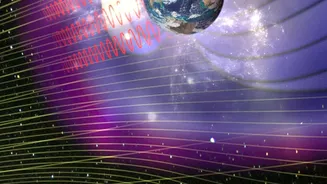
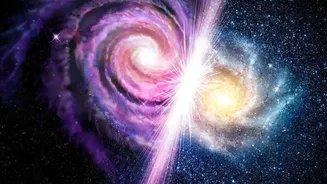
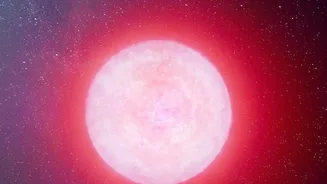
The leading answer to this cosmic riddle lies with neutron stars. These are the ultra-dense remnants of massive stars that have exploded. Imagine the mass of our sun crushed into a sphere the size of a city. A single teaspoon of neutron star material would weigh billions of tons. Occasionally, two such neutron stars are locked in a binary system, orbiting each other in a slow-motion death spiral that can last for millions of years. As they draw closer, they warp the fabric of spacetime, releasing energy in the form of gravitational waves. Eventually, they collide in a cataclysmic event. The merger of two neutron stars is one of the most violent and energetic phenomena in the universe, providing the extreme conditions necessary for what scientists call the rapid neutron-capture process, or 'r-process'. This process is the key to stellar alchemy.
Forging Gold in a Kilonova
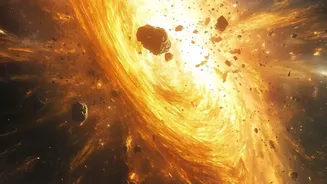
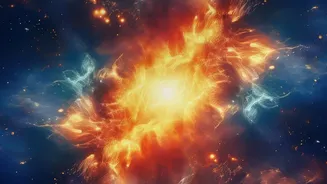
In the chaotic moments of the merger, a vast cloud of neutron-rich debris is blasted into space. This is where the r-process kicks in. Atomic nuclei are bombarded with an intense flood of free neutrons, capturing them one after another so quickly that they don't have time to decay. In a matter of seconds, simple atomic nuclei are transformed into the heaviest elements on the periodic table, including gold, platinum, and uranium. The process doesn't end there. These newly created heavy elements are highly radioactive. As they decay, they release a tremendous amount of energy, causing the ejected material to glow brightly for weeks. This luminous afterglow, about a thousand times brighter than a standard nova, is known as a 'kilonova'. It serves as the smoking gun—a visible sign that heavy element creation has just occurred.
A Signal Across the Universe
This theory remained just that—a compelling theory—until August 17, 2017. On that day, the LIGO and Virgo gravitational-wave detectors picked up a signal, dubbed GW170817, from the direction of the galaxy NGC 4993, about 140 million light-years away. The signal had the exact signature of two neutron stars spiralling into each other. Just 1.7 seconds later, space-based telescopes detected a short gamma-ray burst from the same patch of sky. Immediately, observatories around the world pointed their telescopes at the source. They witnessed the birth of a kilonova. By analysing the light from this event as it faded, astronomers could identify the spectral signatures of freshly synthesized heavy elements, including strontium and likely gold and platinum. The single event was estimated to have created an amount of heavy elements equivalent to many times the mass of the Earth. It was the first time in history that scientists had witnessed the creation of precious metals in real-time, a landmark moment for multi-messenger astronomy.