






The Annual Monsoon Slowdown
From June 15 to October 20, 2026, passengers travelling along the Konkan coast will notice a deliberate change in pace. The Konkan Railway Corporation Limited (KRCL) implements its monsoon timetable, a precautionary measure that affects over 100 train
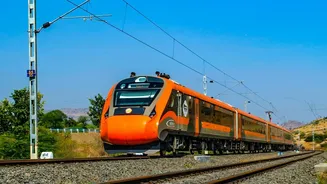
services. This involves rescheduling trains, reducing the frequency of some popular services like the Vande Bharat Express, and imposing strict speed restrictions. Loco pilots are instructed to reduce speeds to as low as 40 kmph during heavy rain and poor visibility, a significant drop from the usual 100-120 kmph. This slowdown isn't an inconvenience; it's the bedrock of a comprehensive safety strategy designed to navigate one of India's most challenging railway terrains during its most volatile season.
A Route of Beauty and Peril
The 740-kilometre Konkan Railway line is an engineering marvel, winding its way through Maharashtra, Goa, and Karnataka. Its path cuts through the rugged Sahyadri mountains, featuring 91 tunnels and countless bridges over roaring rivers. While breathtakingly scenic, this geography becomes hazardous during the monsoon. The region receives intense rainfall, which can trigger landslides, cause boulders to fall from steep cuttings, and flood the tracks. The soil composition, a mix of lateritic rock and clay, becomes unstable when saturated, posing a significant risk. In extreme cases, rising river levels, like at the Vashishti river bridge, can exceed the danger mark, forcing a temporary suspension of all services to ensure passenger safety.
A Fortress of Safety Measures
To counter these dangers, KRCL deploys a multi-layered safety plan. Before the monsoon even arrives, extensive works are carried out, including flattening the slopes of deep cuttings, reinforcing rock faces with netting and bolts, and clearing drainage systems. These efforts have dramatically reduced major disruptions from boulder falls over the past decade. During the monsoon, technology and manpower work in tandem. Flood warning systems are active on key bridges, and anemometers monitor high wind speeds on viaducts. Most crucially, a force of over 650 personnel patrols the entire route on foot, 24/7. These patrolmen, covering beats of up to 5km each, act as the railway's eyes and ears on the ground, watching for any signs of trouble like soil slips or track flooding.
Eyes and Ears on the Ground
The monsoon patrolling system is a cornerstone of Konkan Railway's safety protocol. Night patrolmen walk the tracks from sunset to sunrise, looking for any abnormality that could endanger a train. They communicate with the nearest station master via a network of emergency telephones and walkie-talkies. This human element is critical, providing real-time intelligence that stationary sensors cannot. In addition, stationary watchmen are deployed at the most vulnerable locations for round-the-clock vigilance. This intensified patrolling, combined with reduced train speeds, creates a wider window for detecting and responding to hazards before they can cause an incident, ensuring that passenger safety remains the paramount priority.
Planning Your Monsoon Journey
For travellers, the monsoon schedule means planning ahead is essential. With some trains rescheduled or running on fewer days, it's crucial to check the latest timings before booking and on the day of travel. Passengers can use the National Train Enquiry System (NTES) or the railway's official website for the most current information. While journeys may take longer, this is a direct result of the safety-first approach. Emergency response teams, including Accident Relief Medical Vans equipped with operation theatres, are stationed at key points like Ratnagiri and Verna, ready to be mobilized within minutes. This level of preparedness ensures that even in an emergency, help is close at hand.