




Swap the Crowds for Context
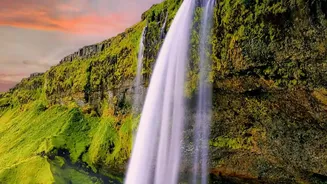
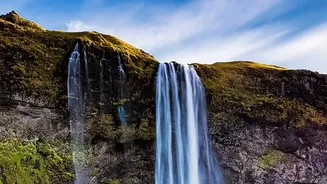
The most famous waterfalls on the South Coast and Golden Circle—Seljalandsfoss, Skógafoss, Gullfoss—are breathtaking, but their popularity means you'll share the view with hundreds. The simplest way to reclaim the experience is to change your timing.
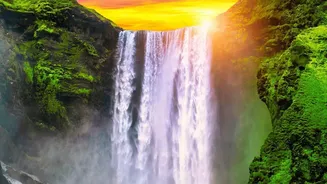
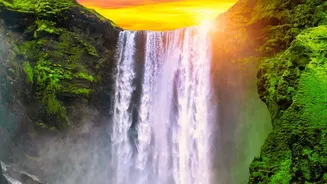
Visiting these icons at sunrise or, during the summer months, under the midnight sun can transform a crowded viewpoint into a personal moment. Travellers report that arriving before 9 AM or after 10 PM often provides a much quieter experience. Instead of just taking a photo, take the time to walk the full perimeter. At Skógafoss, for instance, most visitors stop at the base or climb the stairs to the viewing platform. Very few continue on the Fimmvörðuháls trail that starts from the top, which immediately leads you along the Skógá river to a series of more than 20 other beautiful, lesser-seen waterfalls. Similarly, just a ten-minute walk from the perpetually busy Seljalandsfoss is its hidden neighbour, Gljúfrabúi, tucked away inside a canyon.
Go West for a Different Scale
To truly leave the main tourist trail behind, point your rental car towards the Westfjords. This remote, sparsely populated peninsula is a world away from the Ring Road's rhythm. Its undisputed crown jewel is Dynjandi, a majestic waterfall that is actually a series of seven cascades. The main fall, also known as Fjallfoss, tumbles 100 meters in a shape that resembles a bridal veil, widening from 30 meters at the top to 60 meters at the bottom. A 15-minute hike takes you up past the six smaller falls to the base of the main event, where its thunderous roar—'Dynjandi' means thunderous or roaring—is a full-body experience. Because of its remote location, Dynjandi sees a fraction of the visitors of its southern counterparts, offering a sense of scale and solitude that is hard to find elsewhere.
Venture into the Highlands
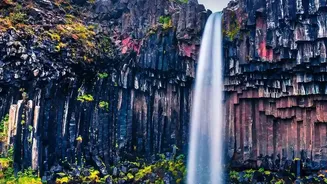
For the adventurous, Iceland's interior Highlands offer access to waterfalls that feel truly primordial. Accessible only during the summer months via rugged F-roads (requiring a 4x4 vehicle), these cascades reward the effort. Háifoss, or 'High Waterfall', is one of Iceland's tallest, dropping 122 meters into a dramatic gorge alongside its smaller neighbour, Granni. The view from the canyon's edge is staggering. Further into the Highlands, you'll find waterfalls like Aldeyjarfoss, framed by a stunning amphitheater of dark basalt columns, and the multi-fall canyon of Sigöldugljúfur, sometimes called the 'Valley of Tears' for its numerous small cascades weeping down mossy walls. The barrier to entry—the need for a capable vehicle and a bit more planning—ensures these places remain wild and uncrowded.
Listen for the Local Legends
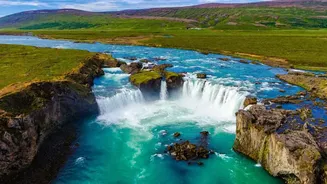
Every major waterfall in Iceland has a story. Reading the landscape means learning its folklore. Goðafoss, the 'Waterfall of the Gods', is named for the legend that in the year 1000, the law-speaker Þorgeir Ljósvetningagoði threw his statues of the Norse gods into the falls to mark Iceland's conversion to Christianity. Skógafoss is said to hide the treasure chest of the Viking settler Þrasi Þórólfsson; legend says a golden ring from the chest was recovered and is now in the nearby Skógar Museum. Even the fearsome Háifoss has a tale of a resident ogress who protected the river from disrespectful travellers. Engaging with these stories adds a layer of meaning to the landscape, transforming a beautiful sight into a cultural landmark and connecting you to the centuries of human experience tied to these powerful places.