







The Energy Security Dilemma
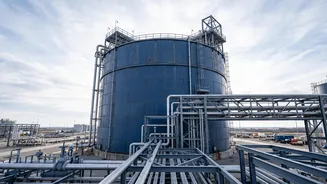
Southeast Asia is one of the world's fastest-growing economic regions, but its thirst for energy makes it vulnerable. The bloc is a net importer of fossil fuels, with many nations heavily reliant on oil and gas that passes through geopolitical flashpoints
like the Strait of Hormuz. Recent global conflicts and supply disruptions have sent shockwaves through these economies. The International Energy Agency (IEA) has warned that risks to the region's energy security are multiplying faster than solutions can be found. For import-dependent countries, this translates directly into higher costs for transportation, electricity, and manufacturing, fueling inflation that squeezes both household budgets and business profits. In response, many governments have been forced to roll out costly subsidies to shield consumers, but these are seen as unsustainable short-term fixes that drain public finances.
Navigating Financial Headwinds
Soaring energy prices don't just impact costs; they create a ripple effect across financial markets. Rising inflation puts pressure on central banks to manage monetary policy carefully, while market volatility makes investors nervous. Recognizing these risks, finance leaders from the ASEAN+3 group (which includes China, Japan, and South Korea) have committed to safeguarding macroeconomic and financial stability, stating they will act if needed to counter excessive market swings. The challenge is not uniform across the region. Economies like Singapore and Malaysia, deeply integrated into global tech supply chains, have shown more resilience. However, others are grappling with weaker external financing and a loss of investor confidence, creating a landscape of economic divergence within the bloc. This financial uncertainty complicates long-term planning and investment, which are crucial for the region's ambitious growth targets.
A Search for Regional Solutions
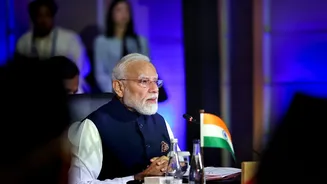
At the recent summit in Manila, held from November 15-17, leaders acknowledged that these problems require a united front. Philippine President Ferdinand Marcos Jr. stressed the need for strengthened connectivity across energy systems and finance to foster more resilient and sustainable growth. One of the key initiatives being advanced is the ASEAN Power Grid (APG), which aims to allow member states to trade electricity across borders. An enhanced memorandum on the APG was signed, seeking to boost cooperation on infrastructure and financing. On the energy supply side, discussions have revived the idea of a regional oil stockpiling initiative, similar to an existing emergency rice reserve, to cushion against future supply shocks. These talks are happening alongside a major push into digital transformation, highlighted by the signing of the ASEAN Digital Economy Framework Agreement (DEFA), which aims to double the region's digital economy to $2 trillion by 2030.
The Path Forward
The outcomes of the ASEAN summit underscore a clear understanding among leaders: stability is paramount. In his opening remarks at the ASEAN Plus Three Summit, President Marcos urged leaders to translate cooperation into concrete safeguards for food and energy supplies, noting that a disruption 'thousands of miles away can reach households across East and Southeast Asia through the price of rice, the cost of energy, or the loss of a day's income'. China's representative also called for unity to fend off risks, highlighting challenges in energy supply and supply chain stability. The focus now is on turning these high-level agreements into practical actions. This includes developing the ASEAN Power Grid, implementing the newly signed digital framework, and finding a workable model for a regional energy reserve. The success of these initiatives will be crucial in determining whether the region can successfully navigate the current economic turbulence and maintain its growth trajectory.