







New Eyes on Earth's Thermostat
Imagine trying to understand a budget by only looking at half the numbers. For decades, that’s been the challenge for climate scientists studying Earth's poles. The planet cools itself by radiating heat absorbed in the tropics out to space, largely through
the Arctic and Antarctic. But a significant chunk of this energy, in the form of far-infrared radiation, has never been systematically measured. This “hidden heat” accounts for nearly 60 percent of the energy Earth loses to space. Without tracking it, our picture of the polar energy budget has been incomplete. The PREFIRE mission, short for Polar Radiant Energy in the Far-InfraRed Experiment, was designed to fill this critical gap.
Meet the PREFIRE Mission
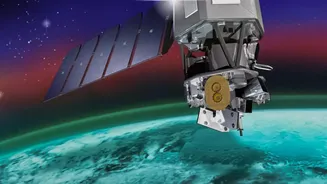
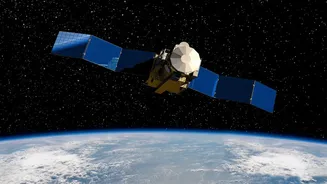
The mission consists of two small satellites, each about the size of a shoebox, called CubeSats. Launched in May and June of 2024, these twin satellites began collecting data in July 2024, embarking on a quest to measure far-infrared energy radiating from the polar regions. Orbiting in asynchronous paths, they pass over the same spots in the Arctic and Antarctic within hours of each other. This unique setup allows them to capture changes over short timescales, revealing how factors like cloud formation or ice melt affect the heat escaping into space. For the first time, scientists are seeing the full spectrum of energy that Earth radiates, a crucial step for understanding the mechanics of climate change.
Decoding Two Years of Data
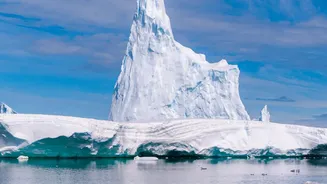
With two full years of observations completed, PREFIRE has captured two complete seasonal cycles at both poles. The data reveals the dramatic, and different, temperature swings between the two regions. In the Arctic, dark, frigid winters yield to summers warm enough to melt tundra and sea ice. In Antarctica, the coldest continent on Earth, summer temperatures often struggle to rise above freezing. By converting these temperature swings and invisible far-infrared readings into a continuous record, NASA has made the invisible visible. This new data offers a much clearer view of not just surface temperature, but how energy moves between the surface, the atmosphere, and space.
Why This Hidden Heat Matters
Measuring this previously unobserved heat is not just an academic exercise. The information is vital for refining weather and climate models, which have had to make assumptions about far-infrared energy. Scientists have long known that different surfaces, like open water versus sea ice, radiate this energy differently. By providing real-time, direct measurements, PREFIRE helps anchor these models in reality. Better models lead to more accurate predictions about everything from sea ice loss and ice sheet stability to changes in weather patterns that can affect shipping routes, river flows, and communities far beyond the poles. Essentially, by understanding how the poles shed heat, we can better predict how the entire planet will respond to a changing climate.