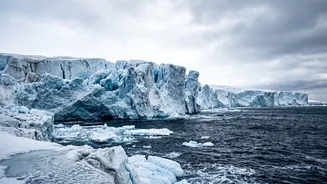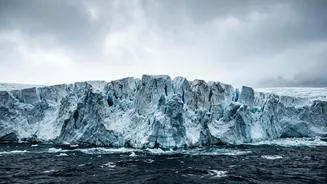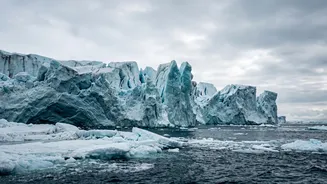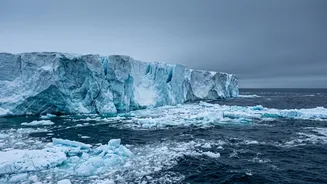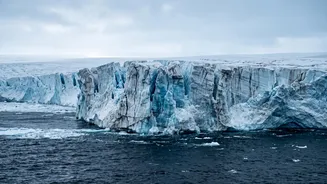







It’s nicknamed the ‘Doomsday Glacier’ for a reason. New research on Antarctica's enormous Thwaites Glacier has sent a chill through the scientific community, suggesting its melt could have a much larger impact on our oceans than we ever thought.
The Doomsday Glacier Explained
Thwaites
Glacier, located in West Antarctica, is one of the largest and fastest-melting glaciers on Earth. Spanning 192,000 square kilometres—roughly the size of the state of Florida or Great Britain—it acts like a massive cork, holding back the rest of the West Antarctic Ice Sheet. If it were to collapse entirely, it holds enough ice to raise global sea levels by over two feet. More alarmingly, its collapse could destabilise the entire ice sheet, which contains enough ice to raise sea levels by a catastrophic 10 feet. For decades, scientists have watched as Thwaites has lost its grip, currently accounting for about 4% of annual global sea-level rise as it sheds billions of tonnes of ice.
What the New Science Reveals
For years, computer models struggled to accurately replicate the glacier's observed retreat. But a recent study, published in Nature Communications, has provided a critical breakthrough. Researchers from the University of California, Irvine, and NASA’s Jet Propulsion Laboratory developed a new model that accounts for a previously underestimated process: how warm ocean water infiltrates deep beneath the glacier. Earlier models treated the 'grounding line'—where ice meets bedrock—as a neat, fixed line. The new research shows this is actually a much wider 'grounding zone', sometimes several kilometres across, where warm, salty ocean water intrudes with the tides, melting the ice from below at a vigorous rate.
Doubling the Danger
By incorporating this new understanding of the grounding zone, the model’s projections became far more alarming. The study suggests that by 2100, Thwaites could contribute up to 30 millimetres to global sea levels. This is double the amount projected by previous conventional models, even without any additional acceleration in global warming. The new model was also able to replicate the glacier's historical changes since the 1990s with far greater accuracy, lending more confidence to its future projections. This finding suggests that our prior estimates for one of the planet's biggest climate risks may have been dangerously conservative.
A Tipping Point Looms
The accelerated melting also threatens to unpin the glacier from a critical underwater ridge that helps hold it in place. The model suggests a 60% probability that Thwaites could become detached from this stabilising ridge by 2100. Losing this anchor would be like pulling the plug in a bathtub, likely causing the glacier's retreat to speed up even more. Some research even suggests that past melting has already committed Thwaites to a state of irreversible ice loss for at least the next 150 years, regardless of our future actions. This highlights the immense inertia in the climate system and the long term consequences of warming that is already locked in.
Why It Matters for India
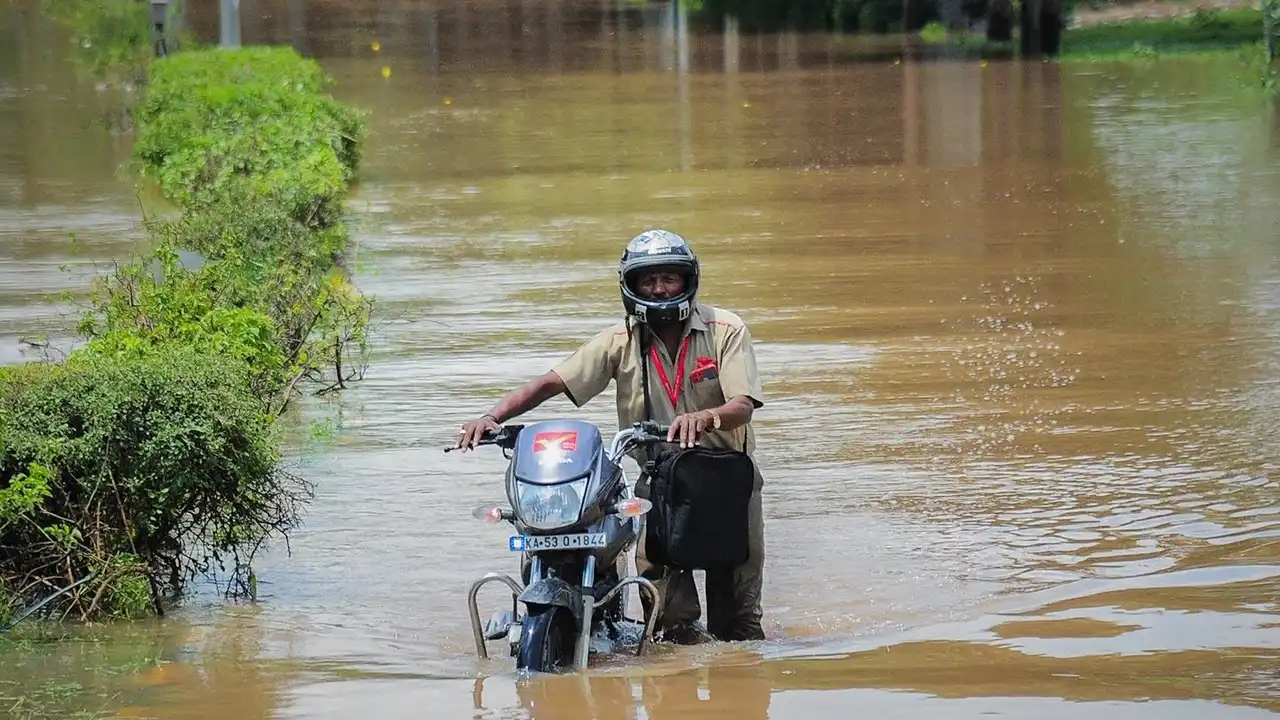
A melting glacier on the other side of the planet can feel remote, but its consequences are global and direct. For India, with its 7,500km coastline and densely populated coastal cities like Mumbai, Kolkata, and Chennai, a 30mm rise from a single glacier is a significant threat. This rise would be part of a cumulative global increase that makes storm surges more destructive, coastal flooding more frequent, and saltwater intrusion into freshwater sources more common. While the complete collapse of Thwaites is a matter of centuries, the accelerated contributions predicted by this new research compound the existing risks from the melting of Himalayan glaciers, which already threaten India’s water security and increase the risk of floods and landslides. The fate of Thwaites is directly tied to the future of our coastlines.