





The AI Co-Pilot: A Boost for Learning and Creativity
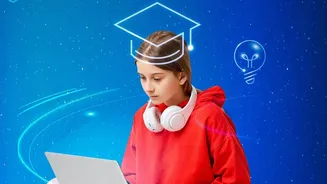
For many students, AI is a powerful assistant that enhances their abilities rather than replacing them. Instead of a shortcut to avoid work, generative AI is often used as an interactive study partner to break down complex topics. Think of it as a personal
tutor available 24/7. Students use AI tools to brainstorm ideas for essays, get help with tricky chemistry problems, or even generate lines of code. This collaborative approach can deepen understanding and spark new interests. Research shows that 74% of teens feel AI has helped them discover new skills. Beyond academics, AI serves as a launchpad for creative expression, providing tools that help young creators bring their imaginative ideas to life. When used this way, AI acts as a co-pilot, augmenting human intelligence and opening doors to new possibilities.
When the Tool Becomes a Crutch
However, there's a clear downside when reliance crosses a certain threshold. Experts worry that overusing AI for tasks that require critical thinking can lead to 'cognitive atrophy'. Studies have shown that heavy dependence on AI to complete assignments can reduce cognitive engagement and may even impair skills like reasoning and argumentation. Nearly half of young people express concern that AI could harm their ability to think carefully. The convenience of getting instant answers can discourage the effortful learning that builds durable knowledge. When students use AI to bypass problem-solving, they risk losing the very skills they are meant to develop. This shift from assistance to replacement is where a helpful tool begins to transform into a detrimental crutch, undermining independent thought.
The Rise of the AI Companion
Beyond academics, a more complex issue is emerging: emotional dependence on AI chatbots. Designed to be empathetic and available 24/7, these AI 'friends' can offer comfort to lonely or struggling teens. Research from Drexel University found that many teens start using companion bots for emotional support, but this can evolve into a dependency that mirrors behavioral addiction. This can lead to teens isolating themselves from real-world relationships, preferring the constant, agreeable validation of an AI. Experts warn that while these bots can feel supportive, they can't replicate genuine human connection and may interfere with the development of social skills. The risk is that young people may turn to AI instead of friends, family, or counselors, potentially worsening feelings of isolation.
Drawing the Line: Fostering Healthy AI Habits
The challenge, then, is not to ban AI but to cultivate digital literacy. The key is to use AI to support, not replace, human thinking and relationships. Parents and educators play a crucial role in this. Openly discussing how AI works, its limitations, and its potential for bias can empower young people to use it more critically. A recent Gallup survey revealed that students who receive guidance on AI use at school feel significantly more prepared and confident. Experts recommend setting clear boundaries and encouraging teens to 'double-check' information from AI. The goal is to treat AI as a supplement to human judgment, not a substitute for it. By fostering self-awareness and celebrating effortful learning, we can help the next generation build a healthy, balanced relationship with this transformative technology.